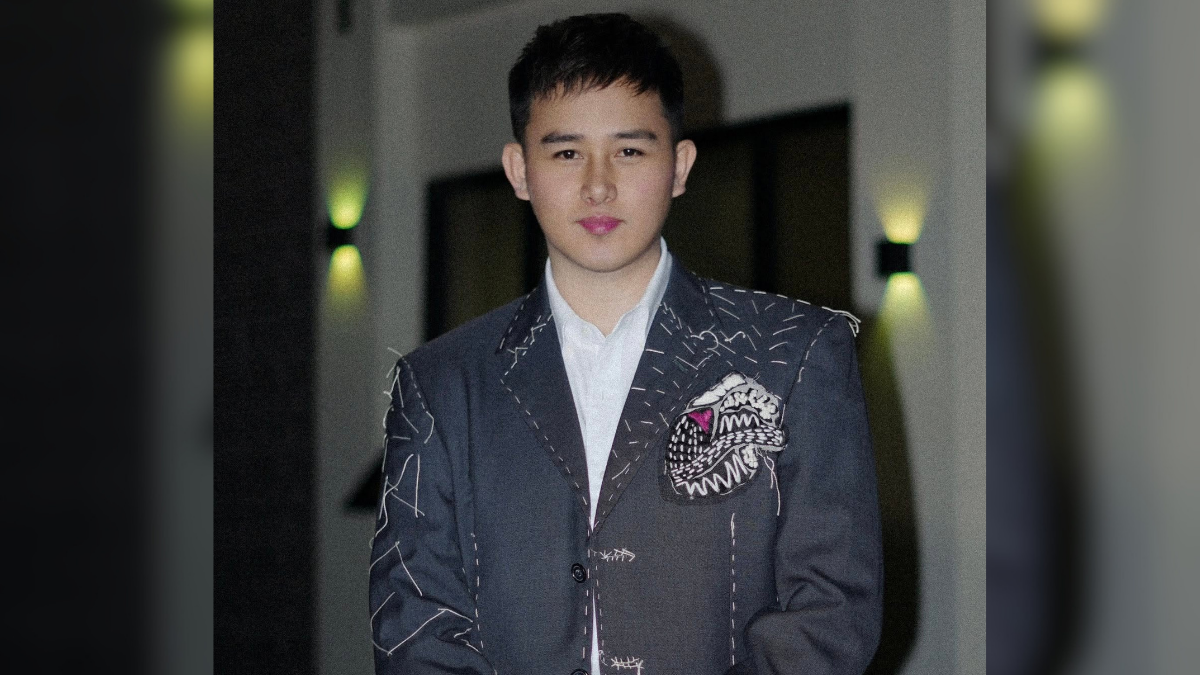

A single pot of sinaing na tulingan, stretched carefully across seven days, was once the difference between sending money home and going hungry. That was the arithmetic of survival for a young waiter in Abu Dhabi who slept in the same building where he worked just to save on transportation. Today, Berting “Ting” Macalalad Joco designs gowns for some of the most recognizable women on Philippine television — a distance the designer crossed not in one leap, but in a thousand small ones.

At 32, the Manila-based designer has built something that looks, from the outside, like a clean success story: a studio under his own name, celebrity clients, creative freedom. But the version of that story Ting tells is messier, more honest, and far more interesting than the highlight reel suggests.
From dining floor to design floor
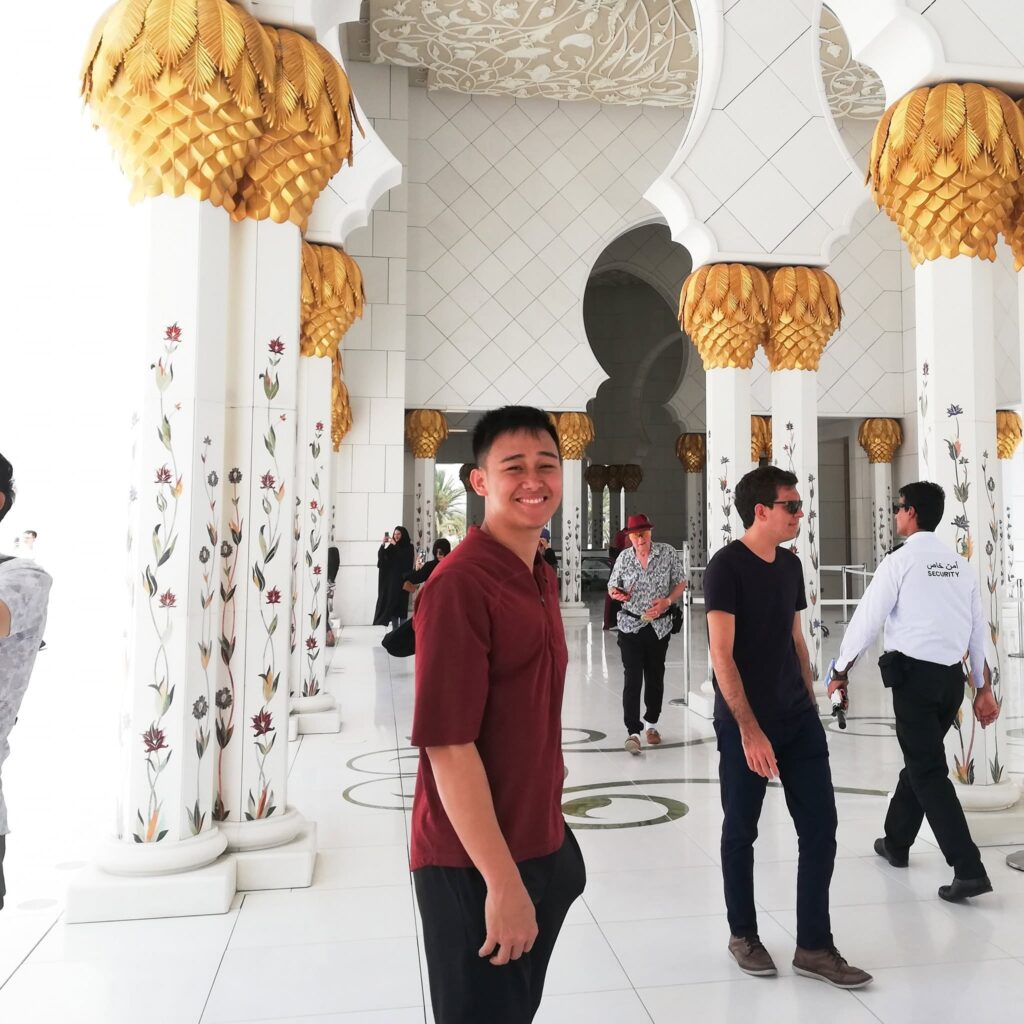
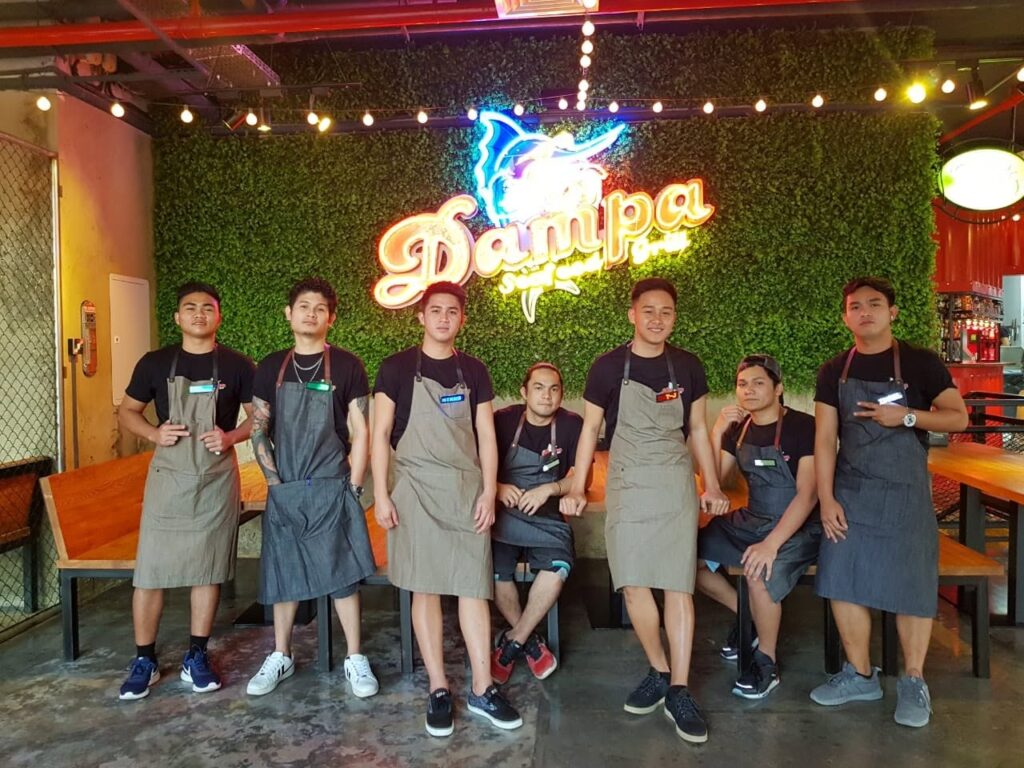
Ting’s introduction to life abroad had nothing to do with fashion. In 2018, the young Mindoreño left for the United Arab Emirates and took a job waiting tables at a Filipino seafood restaurant in Abu Dhabi. He was the eldest of four, and the responsibility sat squarely on him — a sick father, a mother who had stopped working to provide care, a youngest sibling who depended on him almost entirely.
“At that time, I was working paycheck to paycheck, and most of my salary went home to the Philippines,” Ting shares with TGFM. The frugality was relentless and specific. He cooked one dish on a Monday and rationed it through the week. He lived where he worked. Every saved dirham had a destination back home.
But the creative instinct never switched off, even on the dining floor. The waiter began designing costumes for his coworkers — Christmas, Halloween, and Valentine’s competitions — and the wins started stacking up. Colleagues paid him, or they split the prize money. What began as an office diversion quietly became a second income.
Ting didn’t stop there. He took on stage pieces, event costumes, and wedding details for friends from church, plus projects for hospital and hotel functions. If there was a way to earn while making something, the young Filipino found it. “Those experiences allowed me to slowly build my confidence and discover that creativity could become more than just a side hustle,” he says.
That word — raketero, the Filipino term for someone who hustles across any and every gig — is how Ting describes his younger self, and he says it with pride rather than apology. He had supported himself through college the same way: catering jobs, male pageants, singing competitions, events. “If there was an opportunity to earn, I would take it,” the designer says. He carried that mindset onto the plane. “I knew I had different talents, but at that time, I needed a stable income for my family. There were limited opportunities for someone like me in the Philippines, so working abroad became a practical choice.”
The day he had to smile
Then came 2021, and the year turned on him.
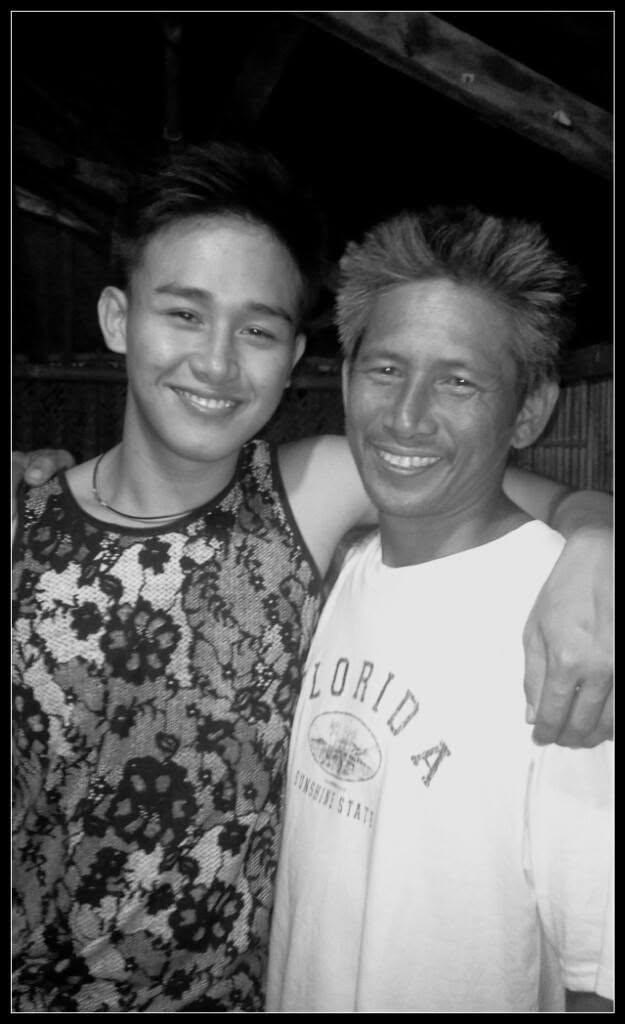
Ting’s father died in the Philippines of lung failure while his son was still in the UAE. He could not fly home. The airfare was steep, work was waiting, and the eldest son made a calculation that many overseas Filipino workers know intimately — that whatever a plane ticket cost would do more good sent home toward the burial.
The cruelty of the timing is what stays with him. On the very day Ting learned his father was gone, he still had to report for his shift. He served guests. He smiled. He processed transactions and made small talk as though the ground beneath him had not just given way.
“I was smiling on the outside, but completely broken inside,” the designer says. He describes it as one of the hardest lessons of the OFW life: “Sometimes, you have to put your personal pain aside because there are people back home who are depending on you.” His family, the same people he was grieving with, became the reason Ting kept moving. He learned to take it one day at a time.

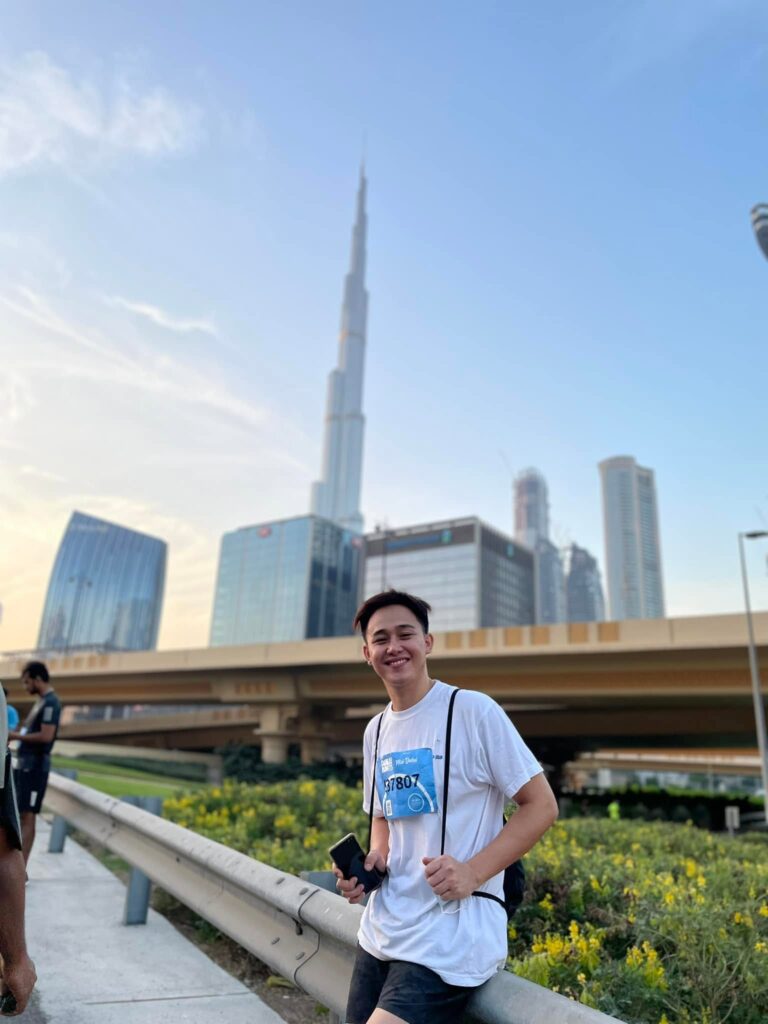
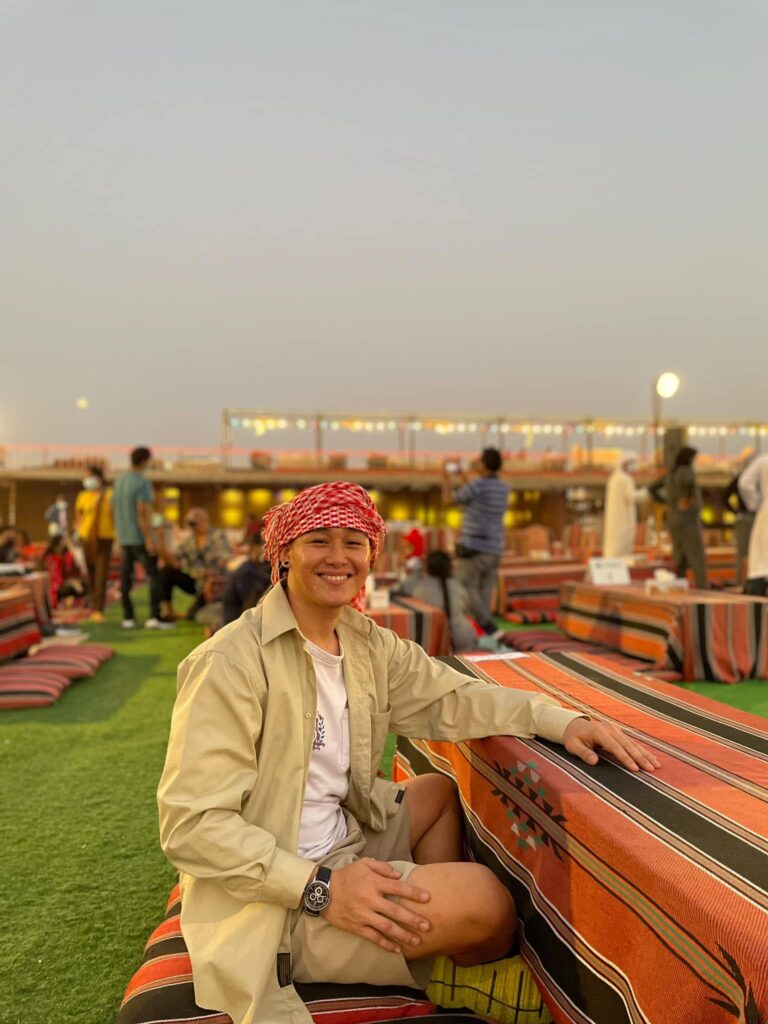
By then the Mindoreño had already relocated — moving to Dubai in 2021 to help open a new branch of the same company, adjusting to a new city while doing the same work. In 2024, a promotion to administrative assistant put Ting in charge of sales, cashiering, scheduling, and the logistics of running a restaurant. Still, the creative side refused to stay contained. He decorated the restaurant’s events, built photo booths and stages for guests, kept designing costumes, and began dressing beauty pageant contestants in Dubai — each project revealing a little more of what he could actually do.


Betting the savings on himself
In 2025, Ting made the decision that reframes everything that came before it. He resigned, and he came home — not empty-handed, but with his gratuity and savings in hand. He assumed the cushion would make the transition easy. Manila had other plans.
“Coming back to Manila made me realize that life here would challenge me in a different way,” the designer says. The money, it turned out, was not the point. The question was what Ting actually wanted to do with himself, rather than coasting on the life he had built abroad. So he made a bet: he invested his savings in his own education and enrolled at the Fashion Institute of the Philippines.
His reasoning was disarmingly simple. “Ngayon, sarili ko naman. Passion ko naman” — now it’s my turn, now it’s my passion. The school pushed Ting harder than he expected and surfaced abilities he hadn’t known he possessed. “It helped me discover potential in myself that I didn’t even know I had,” he says.
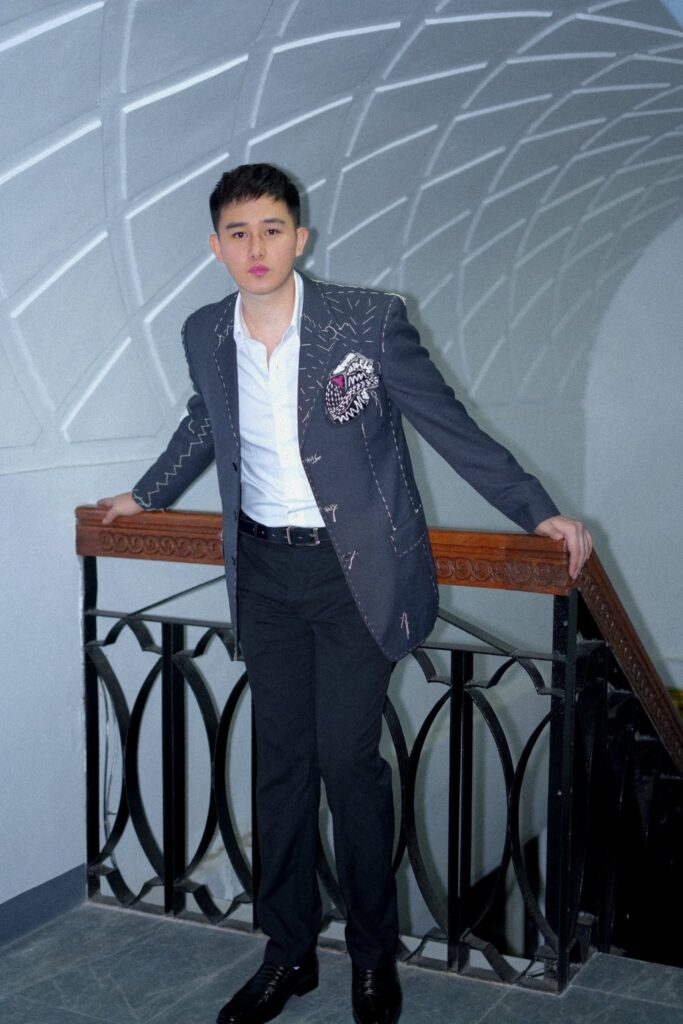
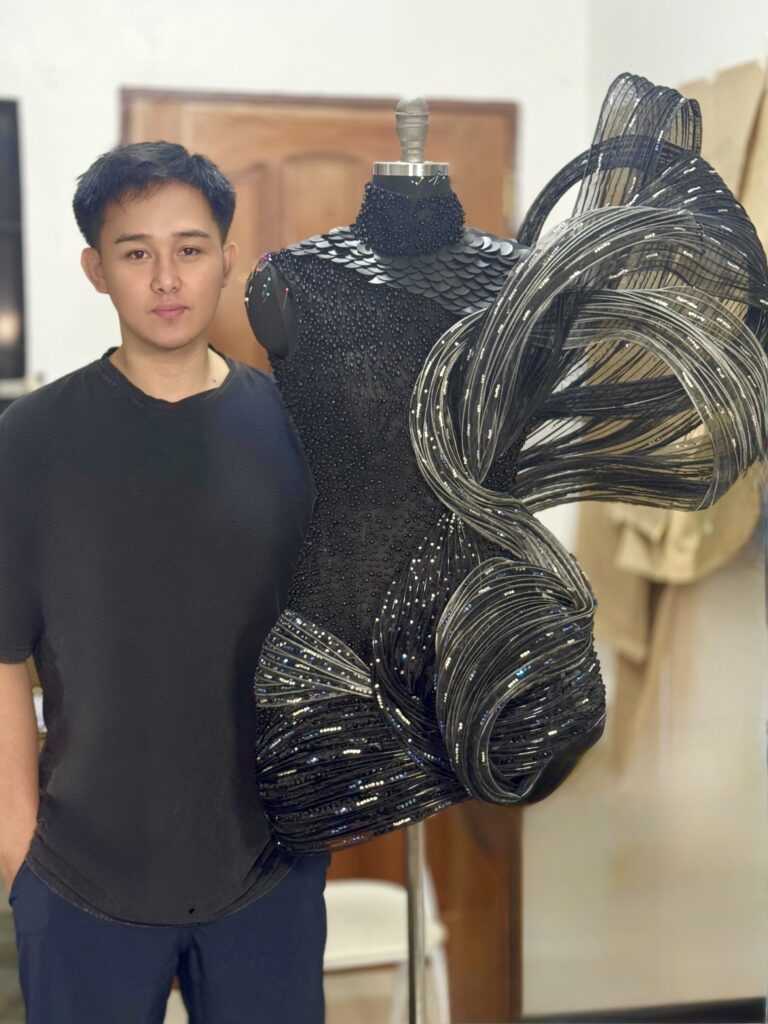
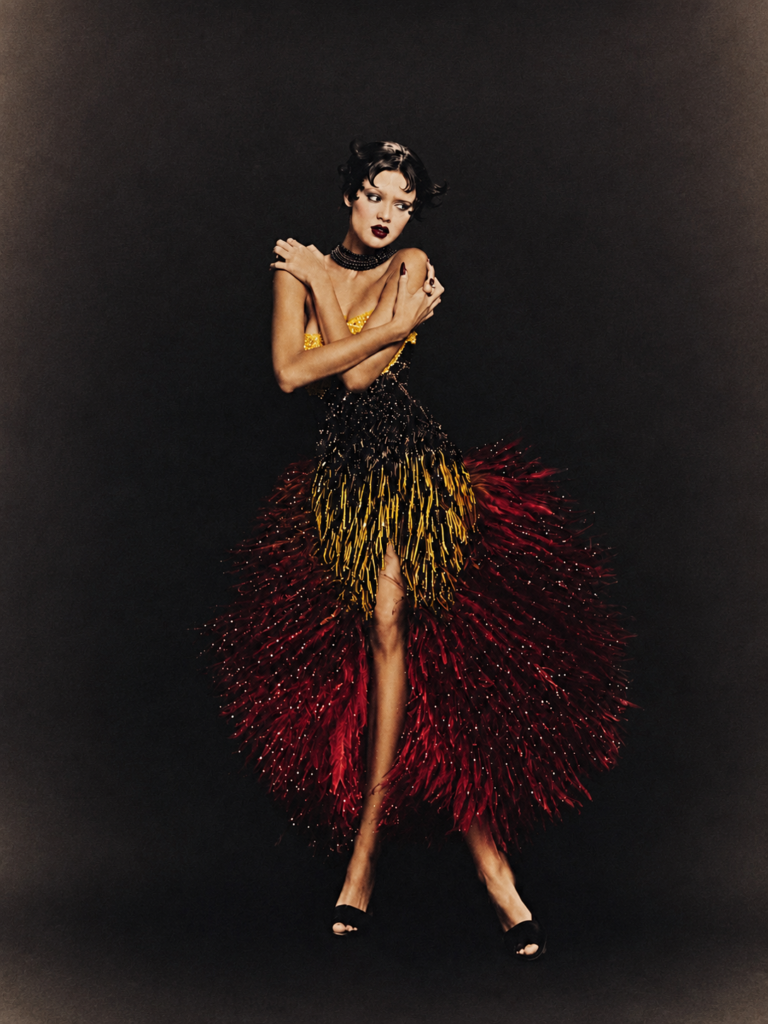
What emerged is a designer with a clear signature. Ting gravitates toward raw, rough, distressed, and unconventional textures, toward corsetry and unusual silhouettes that frame the female figure. For him, a design has two jobs at once: to carry the designer’s voice and to draw out the personality of the woman wearing it. “Fashion is not just about making clothes,” he says. “It is about creating something that makes another person feel seen, beautiful, and confident.”
The proof now walks red carpets. The Manila-based designer has dressed names he once assumed he’d only ever see on a screen — Janine Gutierrez, Michelle Dee, Rhian Ramos, Gazini Ganados, and Julie Anne San Jose among them. Ting is quick to credit the trust and creative latitude he’s been given rather than dwell on the glamour. What satisfies him most isn’t the celebrity of it. “When they wear my designs and proudly post them as if they are the most beautiful version of themselves, that is very fulfilling for me,” he says.





What the raketero kept
The independence and exposure of his years in the Gulf changed how Ting sees the world, and he doesn’t romanticize the return. Life in the UAE was, in a single word, convenient — organized transport, accessible services, a real sense of work-life balance. He admits there was a stretch when he thought he’d never come back at all. “Dito na ako magwo-work. Hindi na ako uuwi sa Pilipinas,” the former waiter remembers telling himself. Stability has a way of making a person want to stay put.
Ting chose the harder, less certain path instead. He now runs a small studio with two trainees, already outgrowing the space, and he’s openly manifesting a bigger one where he can create, teach, and grow. His advocacy points the same direction his instincts always have: inclusive, sustainable fashion, including turning spare fabric and retaso into something worth wearing rather than waste. “I believe fashion is for everyone,” the designer says.
Ting’s advice to fellow OFWs carries the weight of someone who lived every clause of it — build a good network, treat people with kindness, stay grateful to those who helped you when you had nothing. But the line he returns to is the one it took him years to learn: magtira para sa sarili. Help your family, yes, but don’t forget yourself. “Unahin din ang sarili — lagi at lagi.”
The Mindoreño isn’t claiming he’s arrived. He says as much, plainly. “I’m 32, studying again, building my own brand, and still discovering what I’m capable of. It’s never too late to try something new.” Then, the line that sounds like a mantra because it nearly is: “Malayo pa, malayo na” — still a long way to go, but a long way already traveled.