



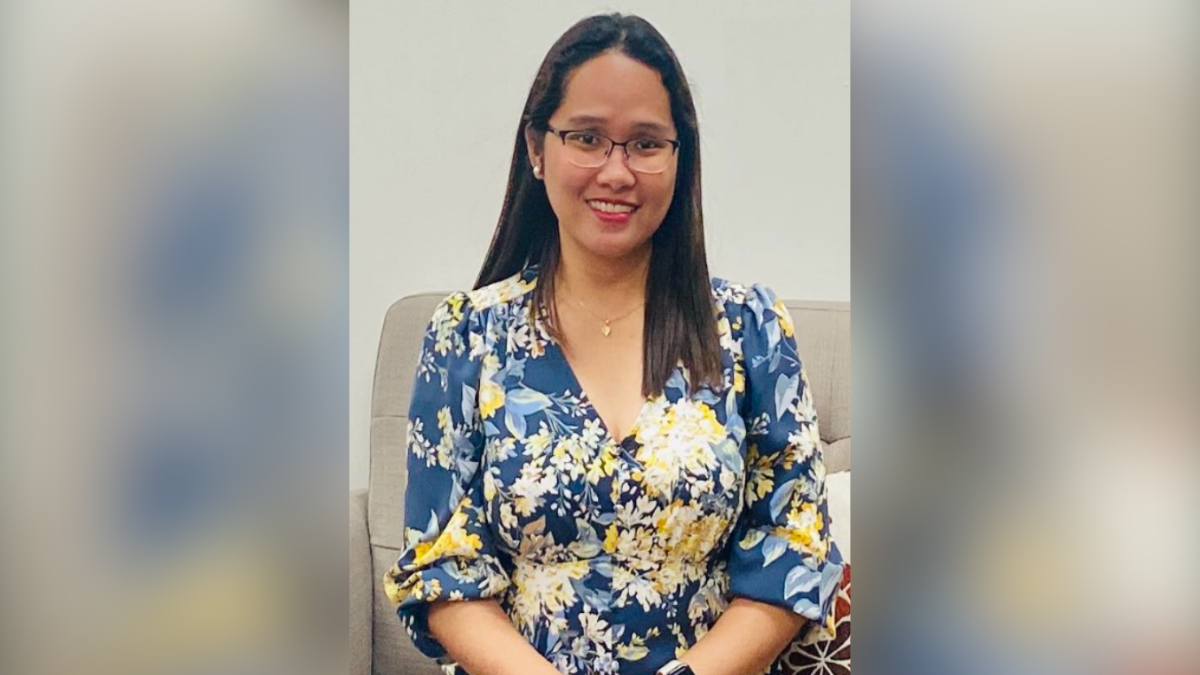

Most people spend years trying to forget where they came from. For one Filipino educator now shaping young lives in California, the place she grew up — a cemetery community in the Philippines — is precisely what drives her forward. Hapibel Duque lived among graves for the first 21 years of her life, and she will tell you without hesitation that it was the best education she ever received. Today, she manages a special education classroom in Daly City where children with autism and intellectual disabilities are learning, under her steady guidance, to raise their hands, find their voices, and eventually step into general education classrooms alongside their peers.

The distance between those two points is not just geographic.
Learning what education could do
Hapibel did not grow up with the easy certainty that school would open doors. She grew up watching doors stay firmly shut. Living among graves, she came to understand hardship not as something abstract but as the texture of daily life — and she made a decision early on that it would not define her ceiling.
“I learned early on that life’s circumstances do not define a person’s future,” she says. “Instead of allowing my environment to limit me, I used it as motivation to dream bigger and work harder.”
She put herself through school while working, a balancing act that tested her constantly. The faith community around her — specifically the Iglesia ni Cristo — provided steady encouragement during those years, and she credits that spiritual grounding as something she carried into every classroom she later entered.
“I firmly believe that God’s guidance played a huge role in every success I achieved,” she says. “If I only relied on my own strength, I would not have overcome the many struggles I faced.”
She earned her teaching license and began her career as a Grade 2 teacher under the Department of Education in Pasay. It was there, working with students who struggled to read, that her path shifted.
A pivot that changed everything
Searching for strategies to help her struggling readers, Hapibel came across research on Special Education interventions. What she found did not just give her tools — it gave her a new direction entirely. She pursued a master’s degree in Special Education, a move that would eventually reshape not just her career but the institutions she worked within.
With the support of her school principal, she helped establish a Special Education Center at her school in the Philippines — becoming its pioneer teacher. The center was built around a simple but urgent conviction: that children with special needs deserved a space where they could learn at their own pace, feel accepted, and receive the individualized instruction that general classrooms were not always equipped to provide.
“I witnessed how many children struggled because they did not receive the specialized instruction and interventions they needed,” she says. “I wanted to create a space where these children could develop their skills, build confidence, and experience meaningful progress.”
Her hope for that center endures even now that she is thousands of miles away. She wants it to remain a place where families feel supported and where the belief in a child’s potential is never in question.

The classroom as a laboratory
In California, Hapibel carries those same convictions into a moderate-to-severe special education setting. Her students — many of them living with autism or intellectual disabilities — work through challenges that most people outside the classroom never witness. Progress can be painstaking and nonlinear, and breakthroughs can look small to an outsider. To her, they are anything but.
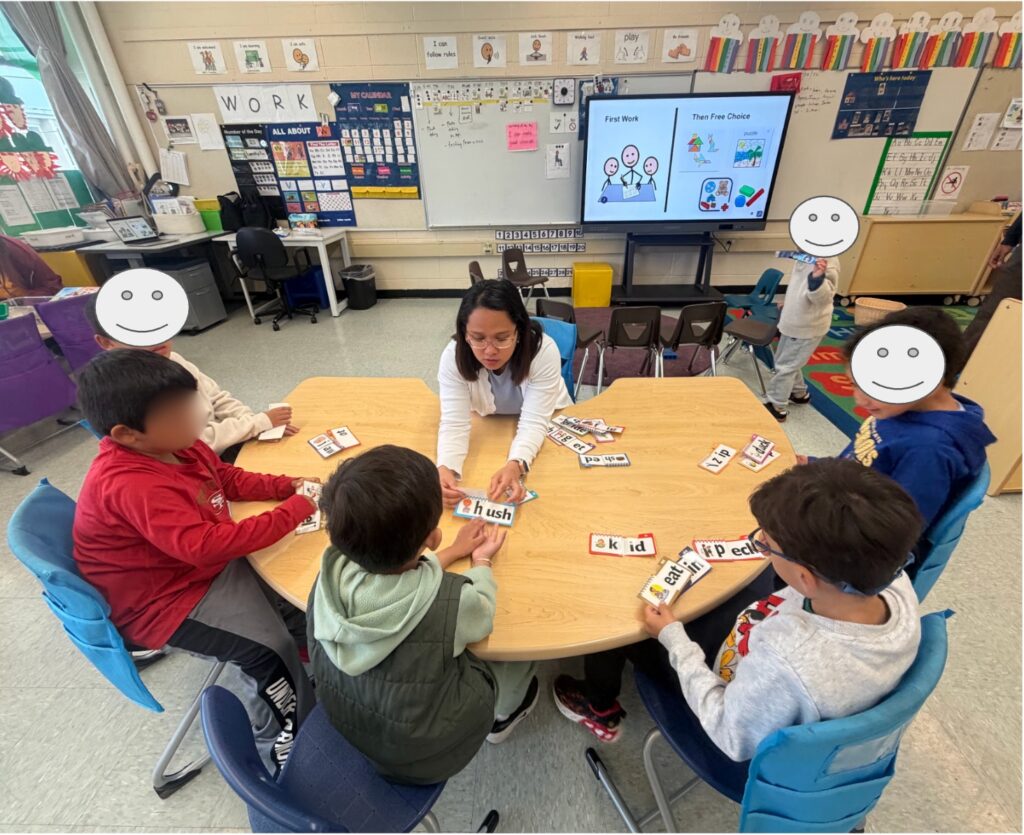
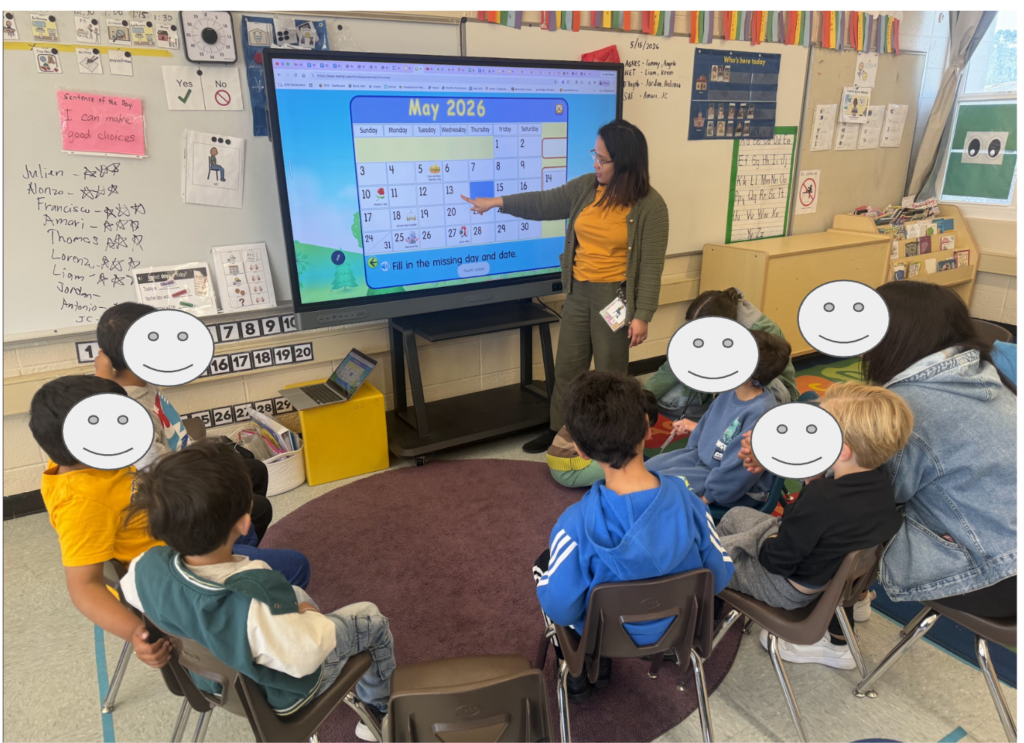
To build the kind of environment where that progress can happen, she developed and implemented several classroom strategies: circle time routines, calm corner interventions, and microphone participation activities. Each one was deliberate. Circle time gave students a structured moment for social interaction and communication. The calm corner offered a physical space where overwhelmed students could regulate their emotions without disrupting others or losing their sense of safety. The microphone activities encouraged reluctant communicators to find their voice — literally.
“These approaches created a more supportive and engaging learning environment where students felt comfortable taking small but important steps toward growth,” she says.
The results, over time, have been significant. Students who once struggled with basic classroom routines have transitioned into general education settings. Watching that happen — knowing the months of consistency and patience that preceded each milestone — is what Hapibel describes as one of the most emotionally meaningful experiences a teacher can have.
Because the strategies worked, she did not keep them to herself. She published articles through the National Association of Special Education Teachers (NASET) and created free instructional resources on Teachers Pay Teachers, making practical classroom tools accessible to educators who might otherwise not encounter them.
The research, she is clear, is not an academic exercise disconnected from practice. “Being a hands-on teacher allows me to see real classroom challenges and identify practical strategies that truly work,” she says. “Research and teaching go hand in hand because both are centered on helping students succeed.”
Her contributions have been recognized: she received the Outstanding Global Educator of the Year award in 2023, a marker of how far she has traveled — professionally and personally — from where she started.
What she wants young Filipinos to hear
Hapibel does not shy away from her story. She tells it because she believes it carries something useful for anyone who feels trapped by circumstances they did not choose.
“Your current situation does not determine your future,” she says. “I came from a place many people could not imagine living in, yet through perseverance, education, faith, and hard work, I was able to build a meaningful career and make a difference in the lives of others.”
She is not speaking abstractly. She has the career record and the classroom full of students to prove it. Every child who learns to raise a hand, follow a routine, or stand at the front of the room with a microphone is, in some way, an extension of the lesson she learned long ago in a cemetery in the Philippines — that where you start is not where you have to finish.
