



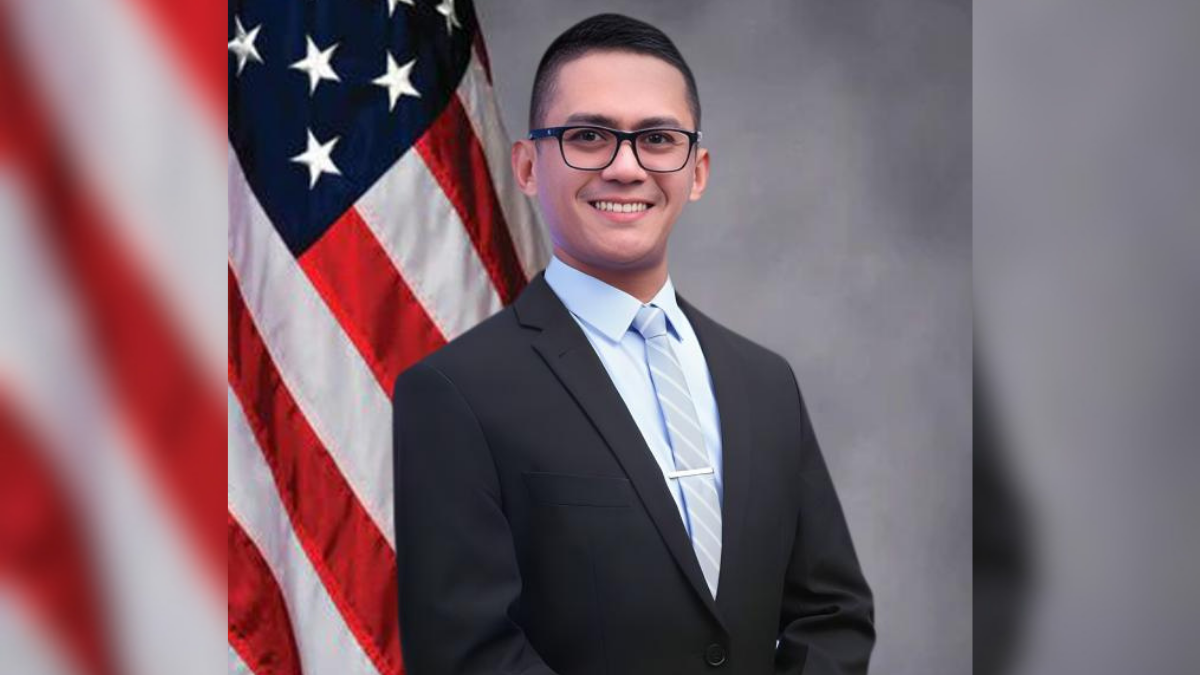

Most people who make it to a principal’s office at 25 spend the rest of their careers climbing away from the students. The ladder goes one direction — classroom, department head, administrator, district office — and every rung puts more distance between you and the room where the actual teaching happens. Dr. Michael Angelo Duca Perera climbed that ladder early, then spent the next seventeen years finding ways back down.

Today he works for the Mississippi Department of Education as a State Adolescent Literacy Coach, supporting teachers of Grades 4 through 8 across a state that has become an unlikely national story in reading instruction. It is his fourth country and, by his own count, his fifth or sixth distinct professional identity. The line connecting all of them is not ambition in the conventional sense. It is something closer to stubbornness about the work itself.
A young principal in Baguio
The early years read like a straight ascent. Michael began at St. Jude Learning Center, a small private school in the Philippines, where the fundamentals of classroom instruction were learned the way most teachers learn them — in front of thirty children, improvising. He then returned to the University of Baguio Laboratory Elementary School, his own alma mater, an institution that had shaped him through high school, a Bachelor of Elementary Education, and later a Master of Arts in Education. He graduated Cum Laude in both.


What distinguished him there was not the coursework. It was the school paper. As journalism coach and school paper adviser, he trained student writers and radio broadcasters who won championships at citywide, regional, and national Schools Press Conferences. The recognition that followed named him an Outstanding Coach and School Paper Adviser, but the phrase he uses for what actually happened is less institutional: he was “helping students discover their confidence, creativity, and communication skills.”
The principalship came at 25. He was, at the time, among the youngest school principals in the Philippines. It is the kind of detail that tends to get flattened into a résumé line, but the Filipino educator describes the lesson in terms that have almost nothing to do with authority. “Leading a school at 25 taught me that leadership is not about position or authority, but about serving people, building relationships, and creating opportunities for others to succeed.”
Five years later, he left.
Jeddah, then Muscat
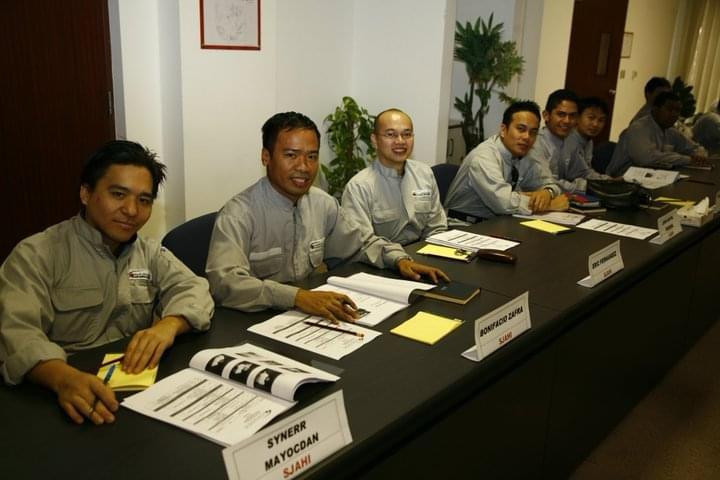
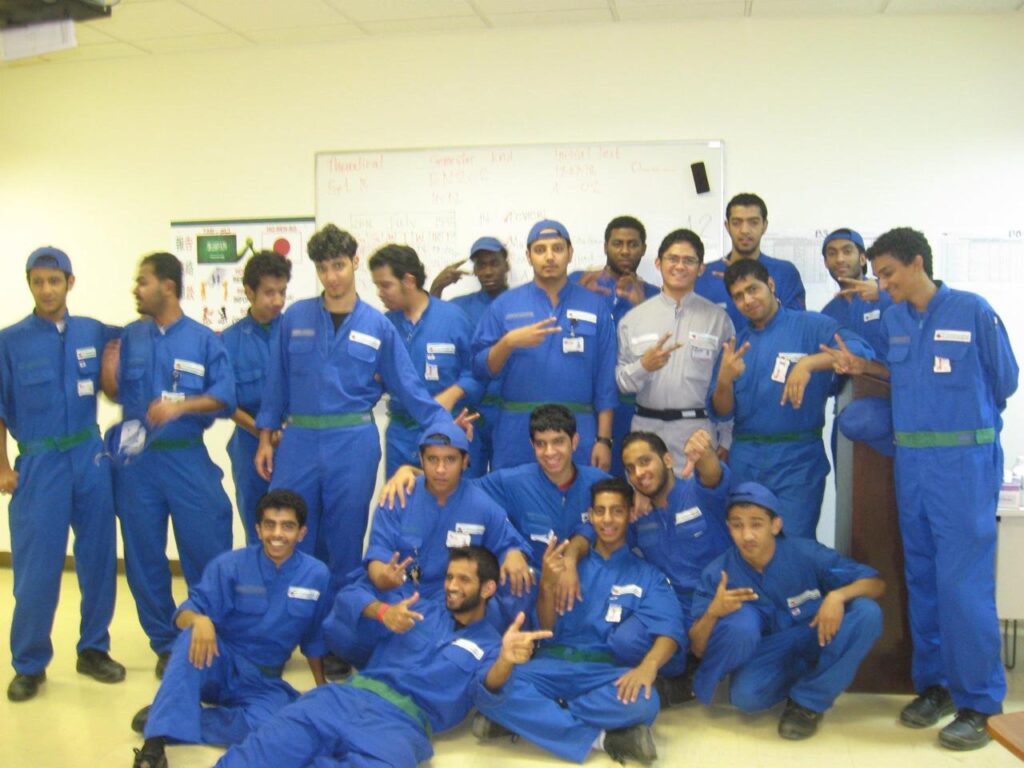
In 2010 he took a position as an English Instructor at the Saudi Japanese Automobile High Institute in Jeddah — a step that, on paper, looked lateral at best. A principal became an instructor again. But the reasoning he offers is consistent with everything that came before it. “While I was grateful for the opportunities I had in the Philippines, I believed that working internationally would allow me to develop new teaching strategies, collaborate with educators from diverse backgrounds, and gain experiences that would help me become a more effective teacher and educational leader.”
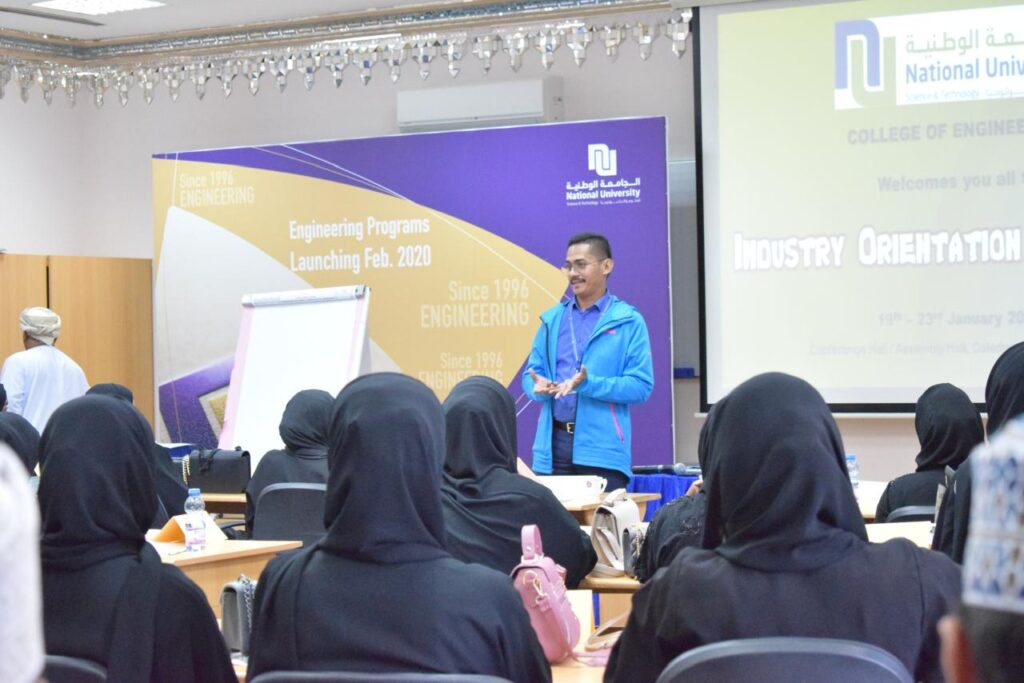
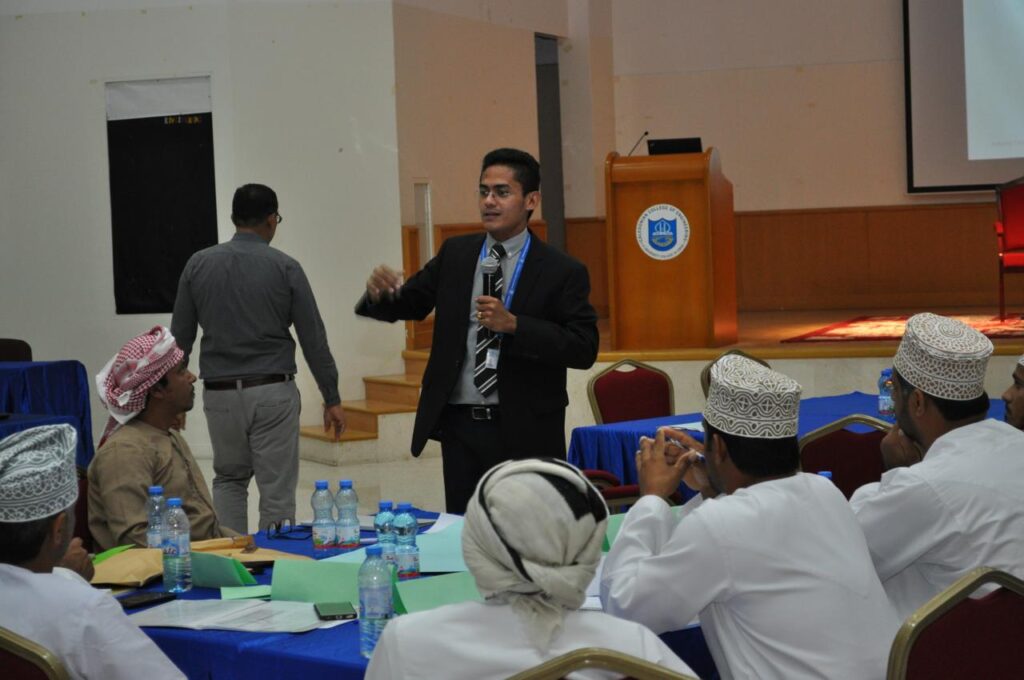
Saudi Arabia was an education in adaptation. Multicultural classrooms, unfamiliar workplace conventions, a professional culture he had to read from scratch. Three years in, he moved to Oman, joining what was then Caledonian College of Engineering and is now the National University of Science and Technology in Muscat. He stayed more than a decade.
Oman is where the range broadened. As Senior Lecturer he taught English and employability skills, but the job spread outward from there: curriculum development, educational research, student project supervision, quality assurance, institutional development work. He published research on employability skills and entrepreneurship education and presented at professional forums. He also served as Secretary of the Board of Trustees of the Philippine School Oman — an unpaid civic role that put him back inside the Filipino community he had left.
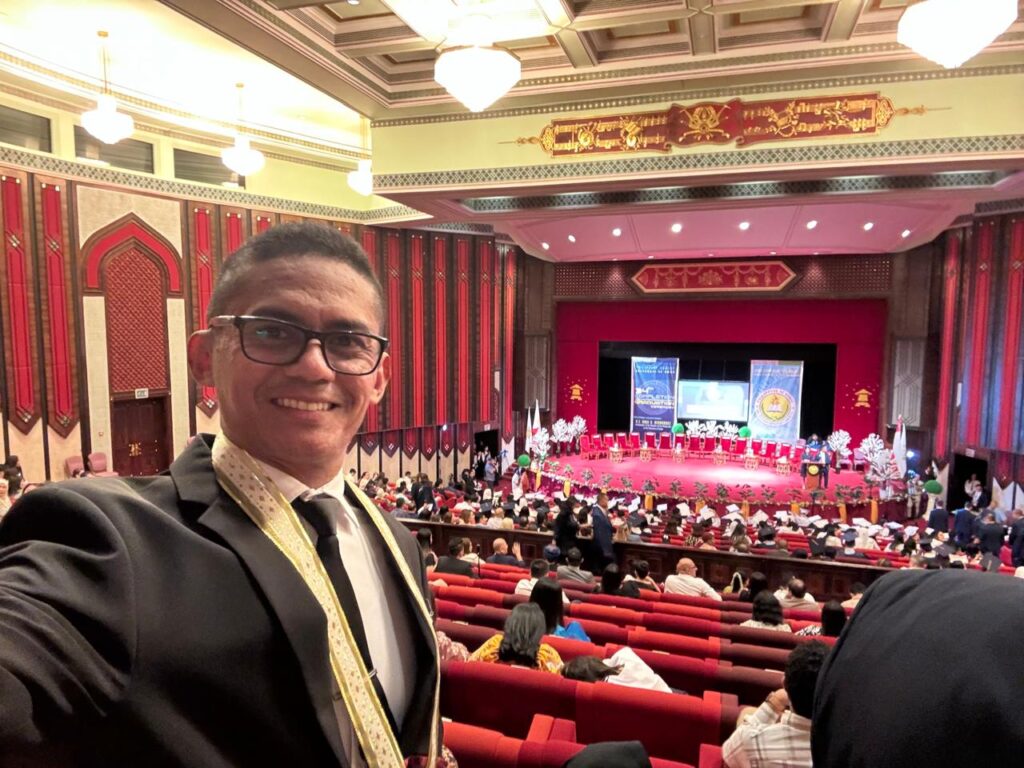
Somewhere in those years he completed his Doctor of Philosophy in Administration and Supervision. It is the credential that would, in most careers, close the door on classroom teaching permanently.
Starting over in Mississippi
Then he moved to the United States and took a job teaching English Language Arts and Mathematics to elementary students in the Jackson Public School District.
A doctorate, sixteen years abroad, a decade of university lecturing, and a principalship — and he walked into an elementary classroom in Mississippi. He does not frame this as a sacrifice or a setback. The move, as he describes it, was about the system: an opportunity “to contribute to a high-performing educational system while continuing to grow as an educator.”
The transition to the state coaching role came after. It is a job with unusual leverage — instructional coaching, professional learning facilitation, achievement data analysis, evidence-based literacy implementation, collaboration with school and district leaders. He is no longer in front of thirty students. He is in front of the teachers who are.
That arithmetic is the part he finds compelling. “Knowing that the support I provide to teachers can positively influence hundreds of students is deeply rewarding,” he says, and the sentence that follows it is the closest thing his story has to a thesis: “For me, the greatest fulfillment in education has never been about a position or title, but about the opportunity to serve, inspire, and help others succeed.”
It also explains the pattern. A career that looks scattered — principal, instructor, lecturer, teacher, coach — is legible once you stop reading it as a ladder. Each move was toward whatever position offered the most contact with the work of teaching.

What sixteen years abroad actually costs
The professional narrative is tidy. The personal one is not.
Sixteen years across three countries meant sixteen years of distance from family, familiar surroundings, and the support networks that make hard weeks survivable. The former principal is direct about the early period: “During my early years abroad, there were moments of uncertainty, adjustment, and challenges that tested my patience and perseverance.”
Each country demanded a fresh recalibration — its own culture, professional practices, and expectations. Adaptation was not a one-time cost paid on arrival but a recurring one, and he describes the balancing act as needing to “communicate effectively, respect cultural differences, and adapt my teaching and leadership approaches while maintaining my values and commitment to excellence.”
Two things carried him. The first is faith, which he does not treat as decoration. “Especially during my early years abroad, when I was adjusting to unfamiliar environments and facing the uncertainties of living away from home, my faith gave me courage, direction, and the confidence to continue moving forward.” He describes himself as a Christian educator and names God as the foundation of his life and leadership philosophy.


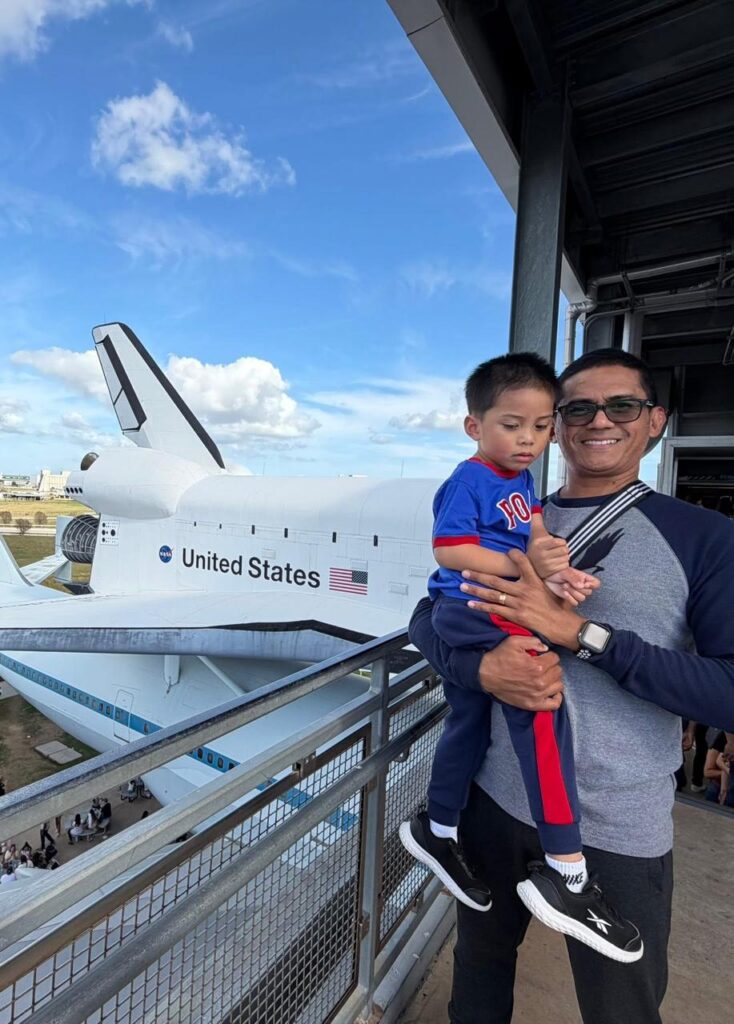
The second is his wife, herself an educator. “Her encouragement, understanding, and shared commitment to serving as educators have been invaluable throughout our journey abroad,” he says — a partnership in which the profession was not something one of them left behind for the other’s career.
He is careful to credit the colleagues, mentors, and friends who eased each landing, and the parents and educators whose humility and perseverance he still measures himself against. But the framing he returns to is purposive rather than accidental: “every opportunity I have received and every challenge I have overcome has been part of God’s greater purpose for my life and my calling as an educator.”
Advice from someone who has done it four times
Ask him what he would tell kababayans working abroad or preparing to, and he does not open with logistics. He opens with identity. “Stay humble, continue learning, and always represent our country with integrity, professionalism, and respect.”
On money, he is unsentimental. Working overseas can generate more income, he notes, but that is only half the equation: “success does not only come from earning more—it also comes from managing what you earn.” He recommends clear goals, consistent saving, avoiding unnecessary debt, and investing in long-term security — and then complicates the definition itself. “Do not measure success only by material things; true success is also found in growth, stability, and the positive impact you make on others.”
His counsel on relationships carries a note of warning. Distance from home creates exposure. “Being away from home can sometimes make us vulnerable, so it is important to build trustworthy relationships based on respect, honesty, and mutual support.” He advises choosing friends and colleagues who push you toward becoming better and who stay through difficult seasons — and keeping family ties intact, because those tend to be the ones that hold.
There is no shortcut in any of it, which he says plainly: “Success abroad is not achieved overnight; it is built through perseverance, integrity, continuous improvement, and the willingness to serve others.”
And there is the weight he thinks every overseas Filipino carries whether they asked to or not. “Remember that you carry not only your own dreams but also the hopes of your family and the pride of our nation.”
Still teaching
What comes next is less a plan than a direction. The educator hopes to take on greater leadership responsibility, to keep advocating for literacy development, quality education, and teacher empowerment. He wants to bridge educational practices across contexts — Philippine, Gulf, American — through mentoring, research, and writing. And he wants to stay connected to Filipino educators back home, “believing that learning and service can extend beyond national borders.”
The advocacy has a clear premise, drawn from four countries of evidence: strong teachers create strong learners. Everything in the coaching role follows from it.
Asked to name the highlight of a career that includes a doctorate, published research, a principalship at 25, and three international relocations, he does not choose any of them. “My greatest achievement is seeing students develop academically, gain confidence, and realize their potential.”
Which is, in the end, the same answer he would have given at 22, standing in front of his first class at a small private school in the Philippines. The job titles kept changing. The answer never did.
