



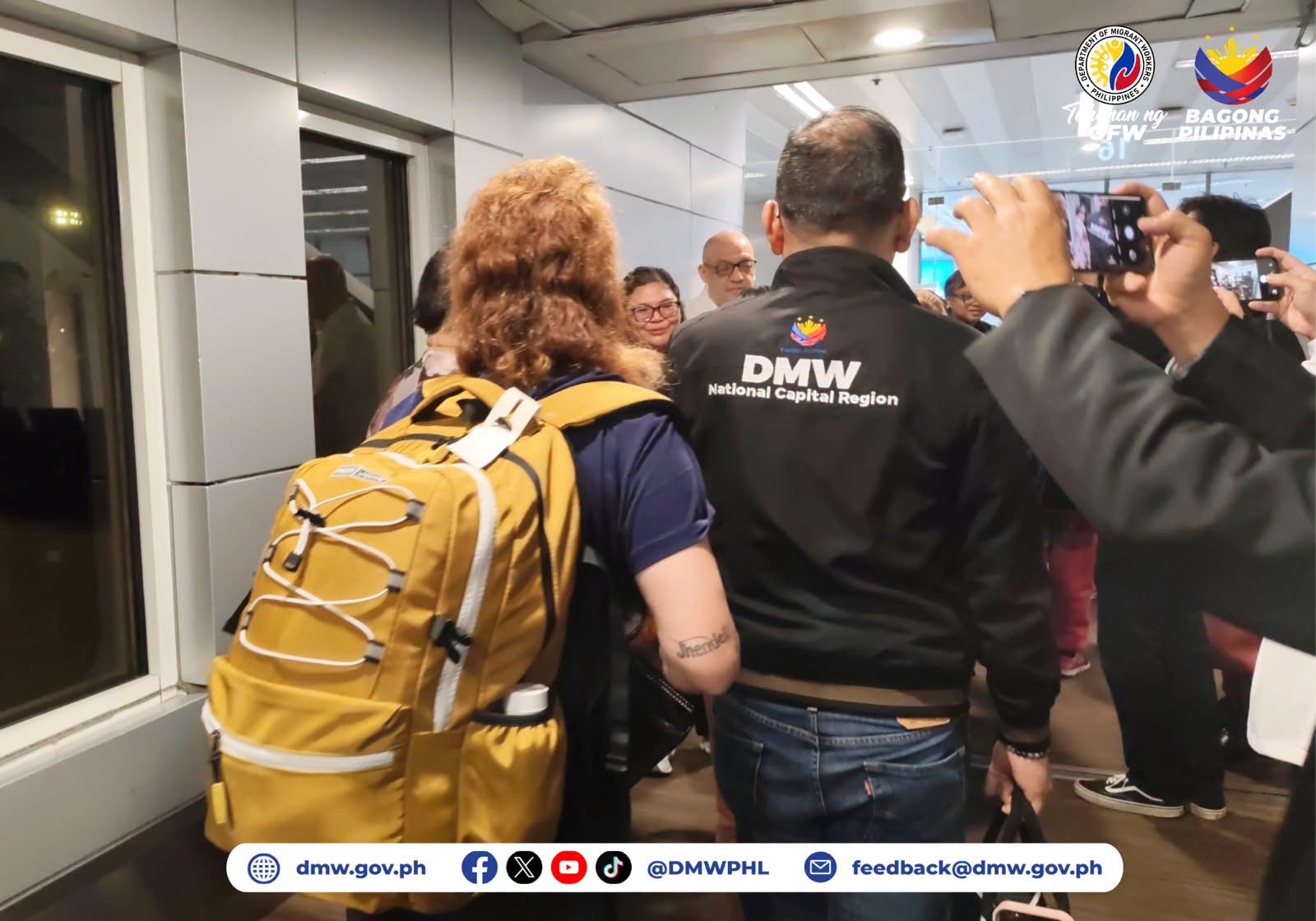

Nearly nine in ten Filipinos rescued from trafficking operations this year were forced into criminal work abroad, the Department of Migrant Workers reported, as it cautioned jobseekers about deceptive overseas offers that can open the door to illegal recruitment, trafficking, forced labor, and coerced criminal activity.

The figure comes from repatriation data covering January through July 2026, during which the agency helped bring home 1,293 trafficking victims. Undersecretary Darlene Pajarito placed 1,154 of them in the forced-criminality category and counted 126 as forced labor cases.
Pajarito identified Cambodia, Myanmar, and Malaysia as the countries where the largest concentrations of trafficked Filipinos have been found. “A lot of those cases involve trafficking for forced criminality. And most of our victims are trafficked in those countries, Cambodia, Myanmar, and Malaysia. Of course, there are other countries, but these are the countries with the highest number of Filipinos identified as victims of trafficking,” she said.
Departure screening has also intercepted travelers before they could leave. Senior Assistant State Prosecutor Jinky P. Dedumo, who leads the Department of Justice’s NAIA Task Force Against Trafficking, told attendees at the DMW’s Flag Raising Ceremony that passengers held back from boarding had been bound for destinations including the United Arab Emirates, Thailand, Malaysia, and Cambodia. Over the same seven-month stretch, the heaviest volumes of deferred passengers were tied to Russia, Cambodia, and Malaysia.

The people being recruited cluster heavily in the capital region and its surrounding provinces, with Metro Manila, Cavite, Laguna, and Rizal accounting for many of the identified victims. Ninoy Aquino International Airport served as the exit point for a large share, though investigators have traced others to unofficial departure channels.
To close off those channels, the DMW is working alongside the Inter-Agency Council Against Trafficking on tighter surveillance of irregular routes linked to Zamboanga, Tawi-Tawi, Jolo, and Palawan. Officials are also targeting schemes that funnel Filipino workers abroad by way of third countries.
That coordination extends across IACAT’s member agencies, which jointly track active cases and manage the return of those pulled from recruitment and trafficking operations.
