





The stereotype is familiar to anyone who has watched a friend or relative pack a bag for a job overseas: the Filipino leaves home to chase a bigger paycheck. It’s a story told so often it hardens into assumption. But Dr. Michael Jhun Padua Paceño, a 33-year-old music educator now teaching in the Arizona desert, keeps complicating that story — not because money didn’t matter, but because it was never the whole reason.

“People sometimes assume that Filipinos go abroad solely in search of better financial opportunities,” he shares with TGFM. “While building a more secure future for my family is certainly important to me, my journey has always been about something deeper: challenging myself and discovering how far I can grow beyond what is familiar and comfortable.”
That distinction matters, because by almost any measure Dr. Michael had already arrived before he ever left.
The career he walked away from
For nine years at Liceo de Cagayan University’s Conservatory of Music, he held the kind of titles most educators spend a lifetime pursuing. University Assistant Professor. Academic Chairman of the Undergraduate Music Program. Program Chair for two master’s tracks. University Glee Choir Director. He had trained voice students who went on to win national competitions, including The Voice of the Philippines and NAMCYA. In 2021, the Asia Pacific Luminaire Awards named him Outstanding Music Educator of the Year.
It was, by his own account, a fulfilling life. Which is exactly why leaving it felt like a risk worth taking.
“I was grateful for what I had achieved, but I also knew that I did not want to remain within my comfort zone,” the former university professor recalls. “I wanted to step outside my shell, experience a different educational system, work alongside people from diverse cultures and backgrounds, and discover new ways of teaching, leading, and inspiring students.”
There was a practical weight behind the decision too. As the breadwinner, Dr. Michael carried financial responsibility for his family, and he’s candid that the security of a life abroad factored into his choice. But framing it purely as economics misses what he was actually testing: whether the educator he had become in the Philippines could rebuild himself somewhere that knew nothing about his résumé.
Proving it all over again
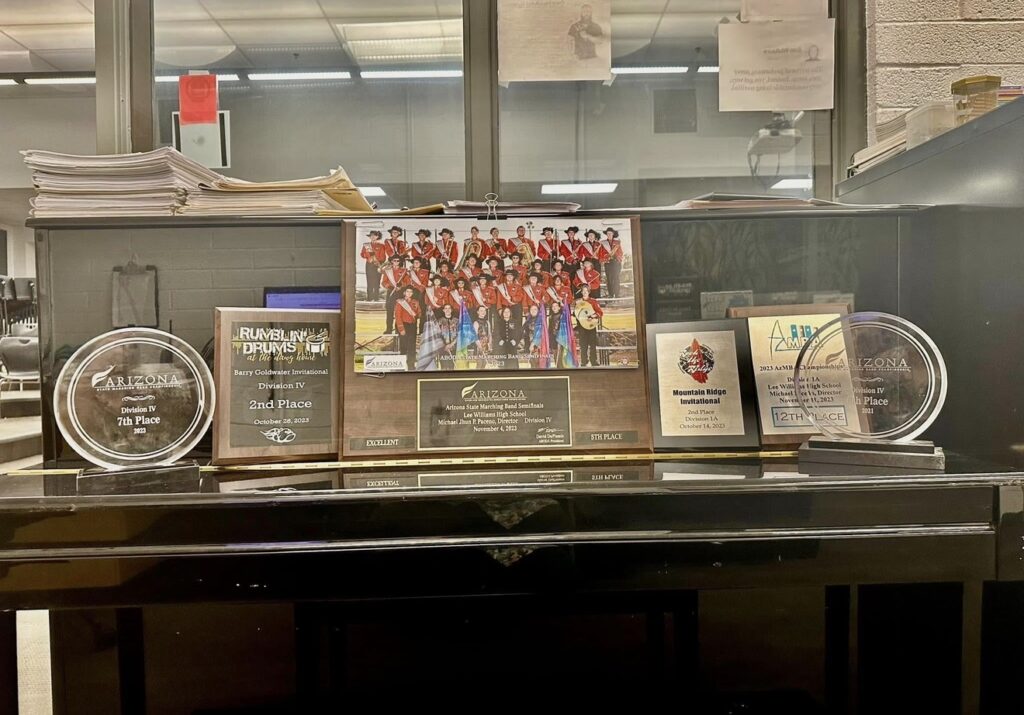
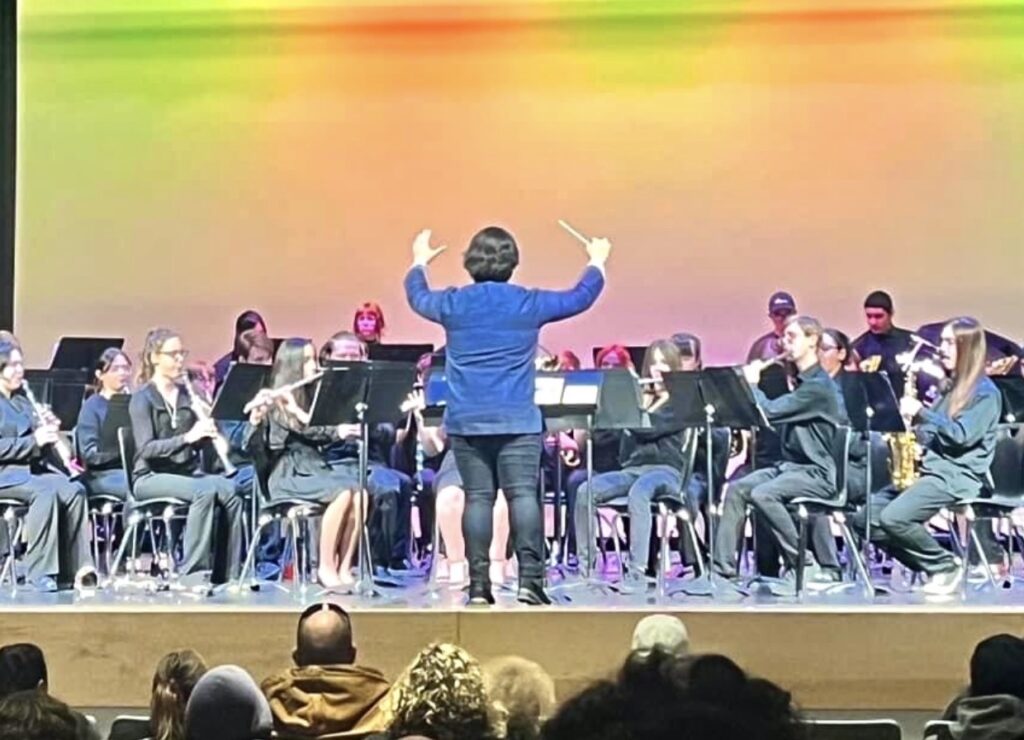
In 2023, he found out. His first American assignment was as Band and Choir Director at Lee Williams High School — a role that dropped him into the unfamiliar world of American marching band, an institution with its own culture, mechanics, and expectations. He had four months to prepare.
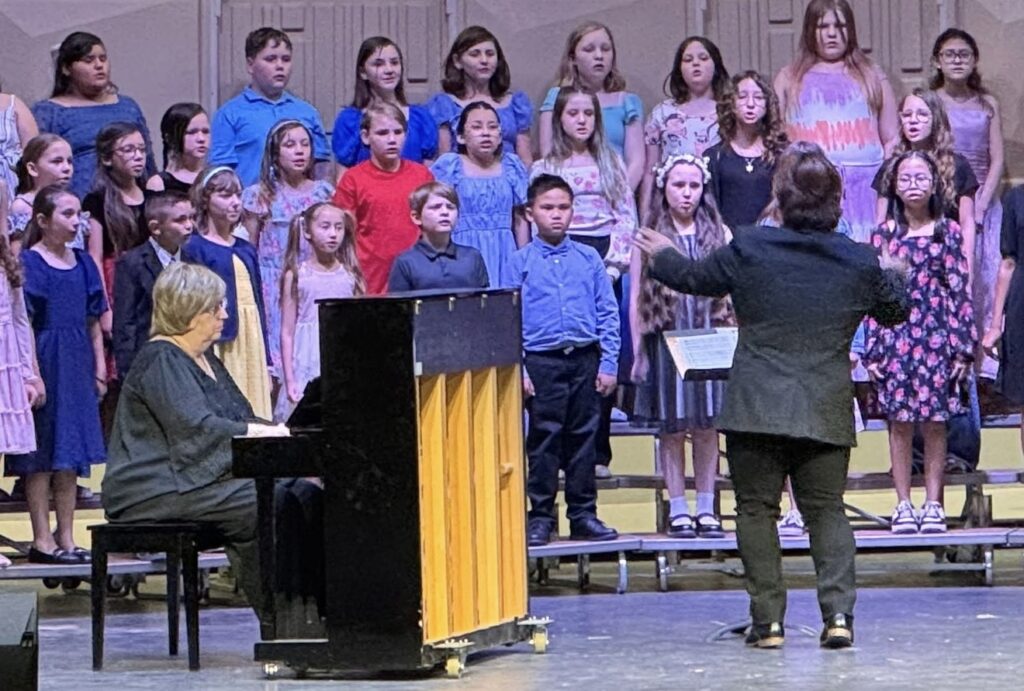
He led the school’s marching band to the Arizona State Finals, where it earned several awards. He also prepared high school and middle school choir students who qualified for Regional Choir performances. For a conductor whose training had centered on choral and vocal work in a different country, it was a crash course in adaptability.
That resilience didn’t come without cost. The homesickness was real, and so was the uncertainty of building a life away from the people he loved.

“Leaving my home country was one of the biggest challenges of my life,” he says. “Adjusting to a new culture, educational system, and life away from my family was not always easy. There were moments of homesickness and uncertainty, but those experiences strengthened my resilience and reminded me that growth often comes through challenges.”
His faith, he adds, along with the support of family, mentors, colleagues, and students, carried him through the hardest stretches.

A stage in New York, a classroom in the desert
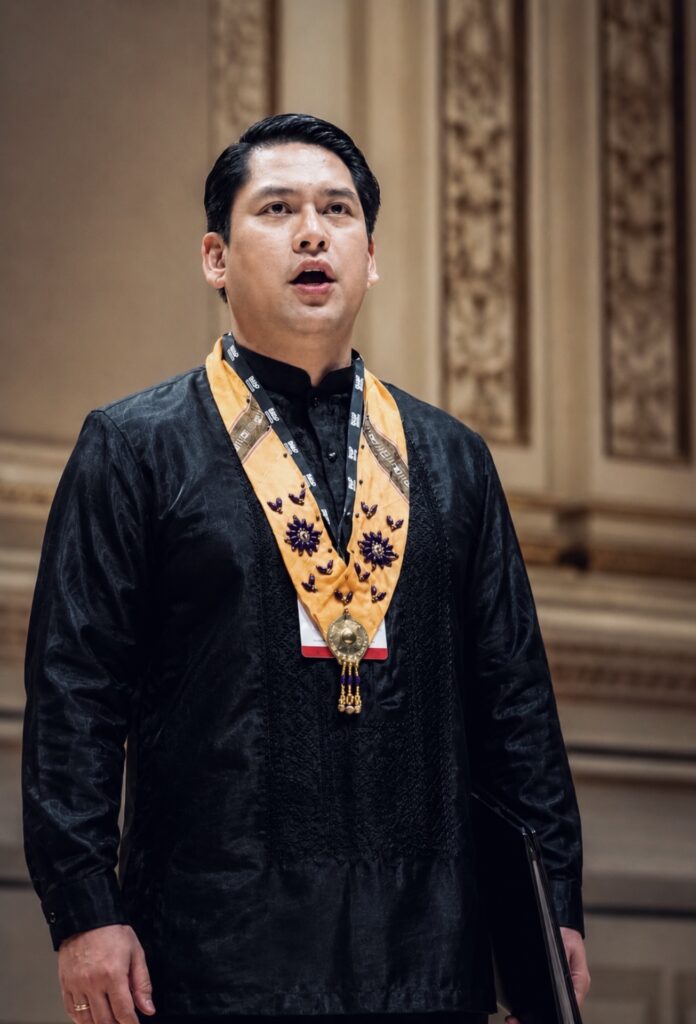
If there is a single image that captures how far the gamble carried him, it happened on June 14, 2026, on one of the most storied stages in the world. As part of an international choral program, the Filipino baritone performed at Carnegie Hall in the East Coast premiere of W. Aaron Rice’s Train, Stopping, under the direction of Dr. Sinamar Pascua Respicio and Dr. Aaron Price. He shared the stage with colleagues from the Philippines and singers drawn from across the United States.
For Dr. Michael, the performance carried meaning beyond the personal achievement. It was a chance to represent Filipino musicians and educators on an international platform — to show, on a stage that certifies careers, that Filipino artistry belonged there.
“This special collaboration showcased the power of choral music to tell stories, build friendships, and connect communities through a shared love of music,” he says.
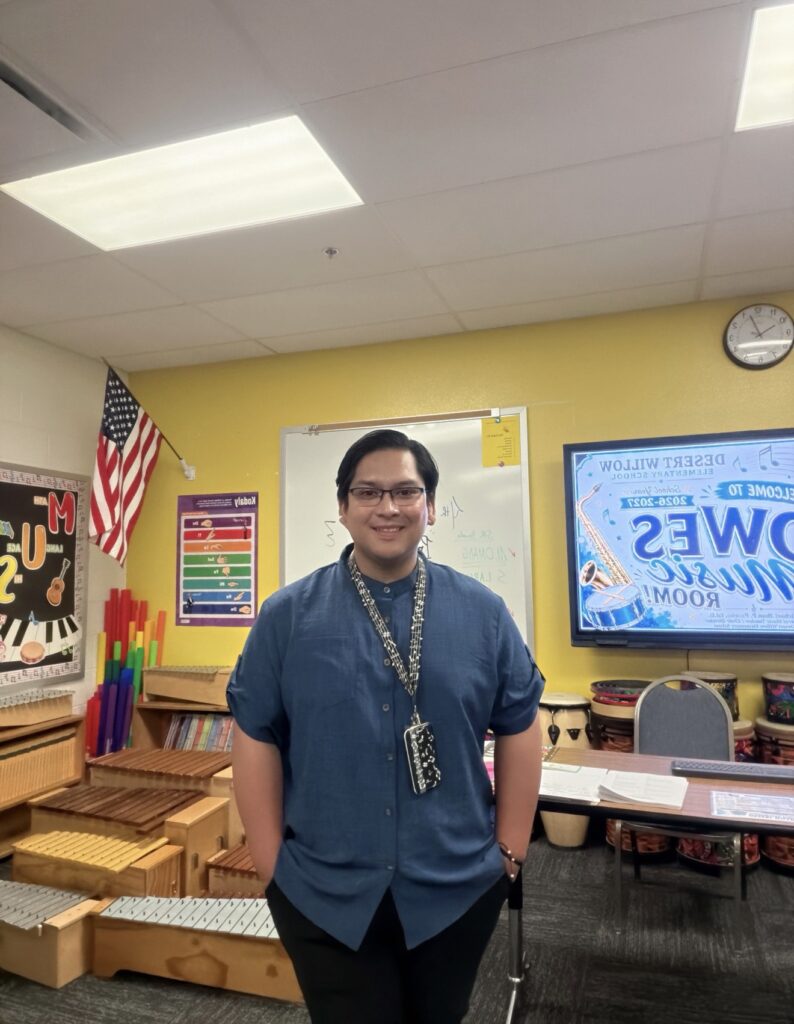
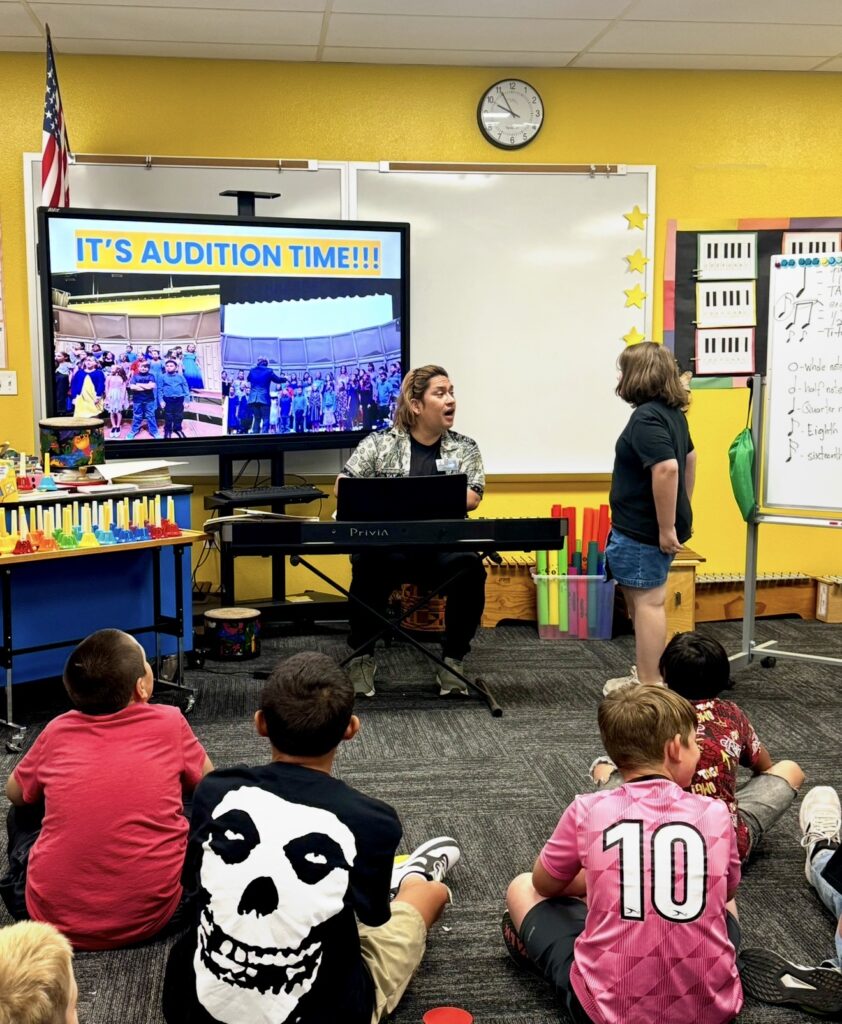
Then he flew back to Kingman, Arizona, and returned to a very different room: a general music classroom full of elementary schoolers. The contrast is not lost on him, and it’s a contrast he seems to relish. The same educator who premiered a work at Carnegie Hall spends his days teaching young children the fundamentals — and building something that hadn’t existed before.
After securing a Kingman Route 66 Rotary Club Micro-Grant, he founded the Desert Willow Elementary Music Keyboard Program, the first and only elementary music keyboard program in Kingman Unified School District. The district named him Rookie of the Year in 2025. The pioneer of keyboard instruction in his district is also, on paper, its newest teacher.
Why the small room matters most
Ask him what he’s proudest of, and it isn’t the Carnegie premiere or the awards. It’s the transformation he watches happen in ordinary classrooms.
“There is nothing more fulfilling than seeing students who once doubted themselves become confident performers, discover their musical abilities, and realize that they are capable of achieving great things,” he says. Music education, in his telling, teaches far more than notes and rhythms — it builds confidence, discipline, teamwork, perseverance, and self-expression.
That philosophy shapes the advice he offers other Filipinos working abroad, advice that sounds less like a success manual and more like a code of conduct. Stay humble. Keep learning. Manage your finances wisely. Build genuine relationships. Never compromise your integrity.
“Most importantly, remember that wherever you go, you carry the Filipino name with you,” he says. “Let your work ethic, character, and excellence become your greatest contribution to our country.”
He isn’t finished. He plans to pursue a second doctorate specializing in Music Education, continue mentoring future educators, publish research, and build more programs for young musicians in the Philippines and abroad. For someone who has already collected the titles most educators only dream of, the ambition is telling — the point was never the titles.
“Looking back, I never imagined that my journey would take me from a university classroom in the Philippines to teaching students in Arizona and performing at Carnegie Hall in New York City,” he reflects. “Success is not defined only by titles or awards but by the lives we inspire, the opportunities we create for others, and the impact we leave wherever we are called to serve.”
It’s a conviction he distills into the line he repeats to himself and his students, the one that turned a comfortable career into a leap across an ocean: “Nothing is impossible if you work hard. Hundreds of possibilities are waiting for us.”
