



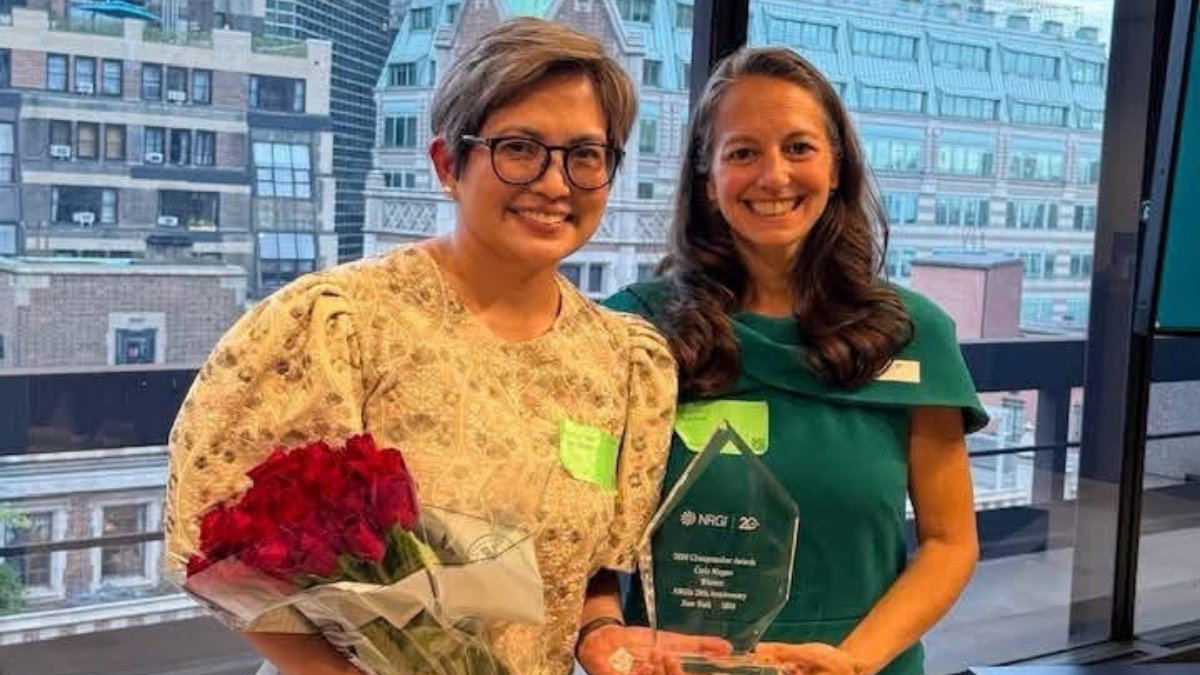

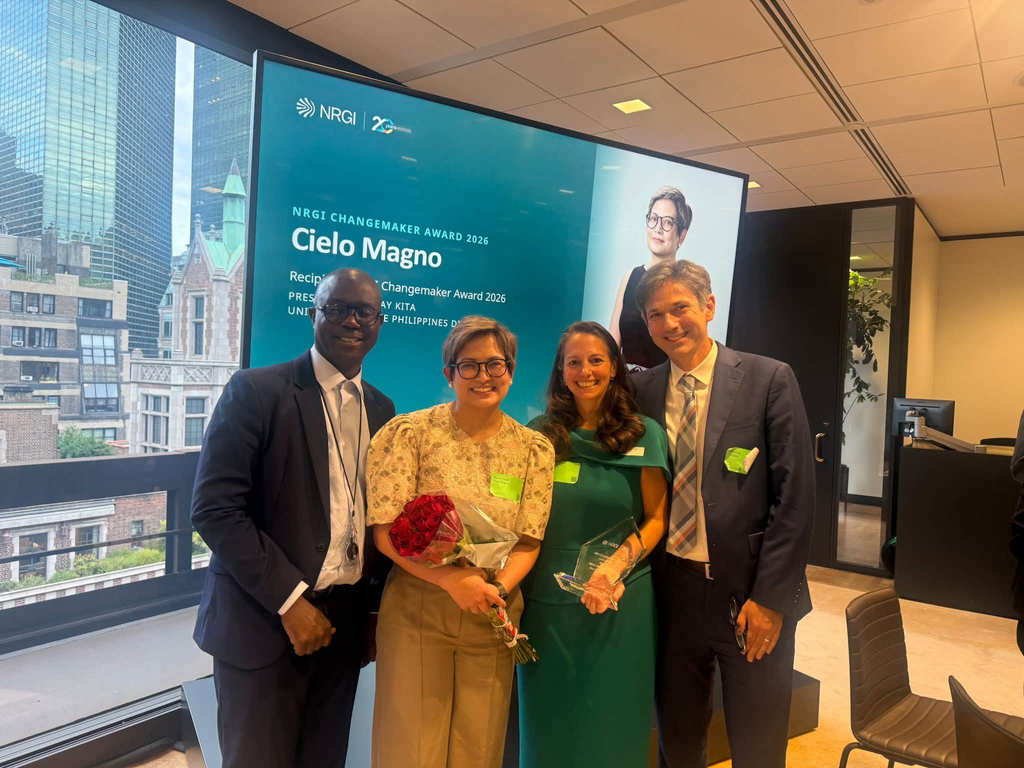
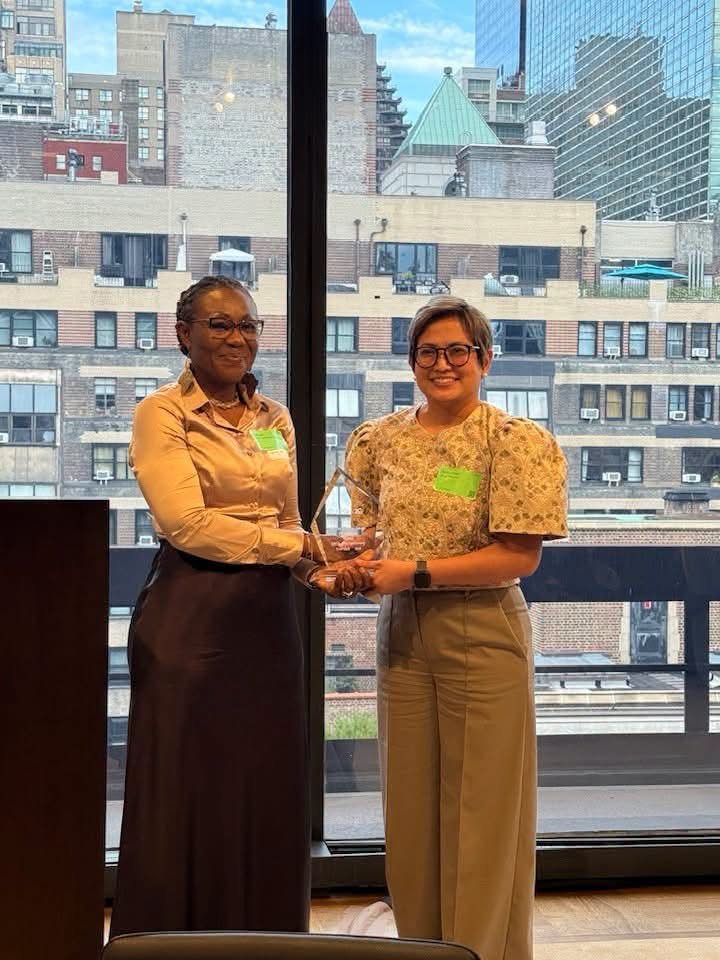
Filipino economist and University of the Philippines professor Cielo Magno has been named the inaugural recipient of the Natural Resource Governance Institute (NRGI) Changemaker Award, recognizing more than two decades of work advancing transparency and accountability in natural resource governance.

Magno received the international recognition in New York as NRGI marked its 20th anniversary, according to the organization. In a LinkedIn post, NRGI said Magno has worked across civil society, academia, and government to advance reforms in natural resource governance, highlighting her “courage, leadership and persistence behind meaningful reform.”
The Changemaker Award was established as part of NRGI’s 20th-anniversary initiatives to recognize individuals who have delivered concrete improvements in how natural resources are governed, including through policy and institutional reforms and better outcomes for communities. The award considers impact, courage, and innovation in natural resource governance across the mining, oil, and gas sectors.
In accepting the award, Magno placed the recognition within the broader two-decade effort to make natural resource governance more transparent.
“Twenty years ago, if you asked a community living beside a mine whether they knew what their government was earning from the minerals under their feet, the honest answer almost anywhere was: no idea,” she said. “That is no longer true in most of the world, and this room built that change.”
Magno pointed to the development of global transparency mechanisms as a major achievement of the natural resource governance movement. She noted that the Extractive Industries Transparency Initiative (EITI) has become a global standard, while beneficial ownership disclosure and open contracting have become increasingly established practices.
“We built the infrastructure of transparency, and we should be proud of that,” she said. “But we are now entering a moment of real consequence, and it demands something more from us.”
From transparency to accountability
Magno argued that the next phase of natural resource governance should focus not simply on making information available, but on ensuring that transparency produces tangible changes in how governments, regulators, companies, and communities interact.
“Disclosure without power is just data,” she said.
She identified three major challenges that she said need greater attention: governance and implementation, industrial policy, and the influence of politically powerful and connected interests over resource extraction.
On governance, Magno cited the Philippines as an example of a country with formal transparency mechanisms but where questions remain about how effectively protections and rules work on the ground.
“Even in countries that are, on paper, governance success stories like the Philippines — EITI implementing countries, with open budget data, with civil society sitting at the table — the same basic questions often remain unresolved where extraction is happening,” she said.
She specifically raised questions about whether affected communities are genuinely protected, whether the rule of law is applied consistently, and whether regulators have sufficient independence and capacity to challenge powerful companies.
Magno also emphasized the importance of industrial policy in ensuring resource-rich countries capture more value from their natural resources. She argued that simply exporting raw minerals can leave countries with a limited share of the economic value eventually generated through products such as batteries, solar panels, and electric motors.
“A real development dividend requires resource-rich countries to do their part: building the policy that links extraction to value-addition, technology transfer, and downstream manufacturing,” she said. “Natural capital is an advantage only if it is deliberately converted into industrial capacity.”
Her third concern was the concentration of control over extraction among politically influential networks.
“When the same networks that control political power also control access to concessions, licenses, and contracts,” Magno said, “it creates the single greatest opportunity for corruption in the entire resource value chain.”

A career spanning academe, government and civil society
Magno’s recognition builds on a career spanning academic research, government service, and civil-society advocacy.
She is a professor at the University of the Philippines Diliman School of Economics, where her research interests include public economics, microeconomics, environmental economics, development economics, institutional economics, and human-resource economics.
Her work in natural resource governance includes serving as an international board member of the Extractive Industries Transparency Initiative from 2016 to 2023. She was also a founding member of the Multistakeholder Group of the Philippine Extractive Industries Transparency Initiative from 2013 to 2016.
Her research has included work on natural resource management and federalism in the Philippines, as well as downstream integration and the viability of copper-related industrial development.
Magno also served as Undersecretary for Fiscal Policy and Monitoring at the Philippine Department of Finance from August 2022 to September 4, 2023, before returning to the academe.
In 2025, the University of the Philippines also recognized her among its alumni who received the The Outstanding Women in the Nation’s Service (TOWNS) Awards, citing her work on fiscal transparency and evidence-based policymaking.
Looking beyond disclosure
For Magno, the award is not simply a recognition of work already completed. Her acceptance speech framed it as a reminder of the reforms that remain unfinished.
She argued that the global push for transparency must now be matched by stronger institutions, greater community power, and policies that allow resource-rich countries to translate mineral wealth into broader economic development.
“These three are not new problems,” she said. “That is exactly why I believe they are the unfinished agenda for the next twenty years of this field — not a rejection of what we have built, but an honest recognition that global standards are necessary but not sufficient.”
She called on the natural resource governance community to shift how it measures progress.
“Stop measuring our success by what gets disclosed, and start measuring it by what changes because of it,” Magno said.
She cited concrete examples of what accountability could look like: regulators standing up to powerful companies, communities receiving what they are owed, and resource-rich economies developing industries around their own minerals instead of simply exporting them.
“Transparency was never the destination. Accountability is,” she said.
NRGI’s 20th-anniversary program is focused on examining the lessons of the past two decades and the future of natural resource governance as demand for minerals grows amid the global energy transition. The organization has noted that decisions surrounding oil, gas, and mining continue to affect development, democracy, and climate outcomes.
For Magno, that changing landscape makes the next phase of governance particularly consequential.
“If the energy transition is going to be different from the extraction booms that came before it,” she said in her acceptance speech, “it will not be because we disclosed more data. It will be because we finally secured accountability.”
