



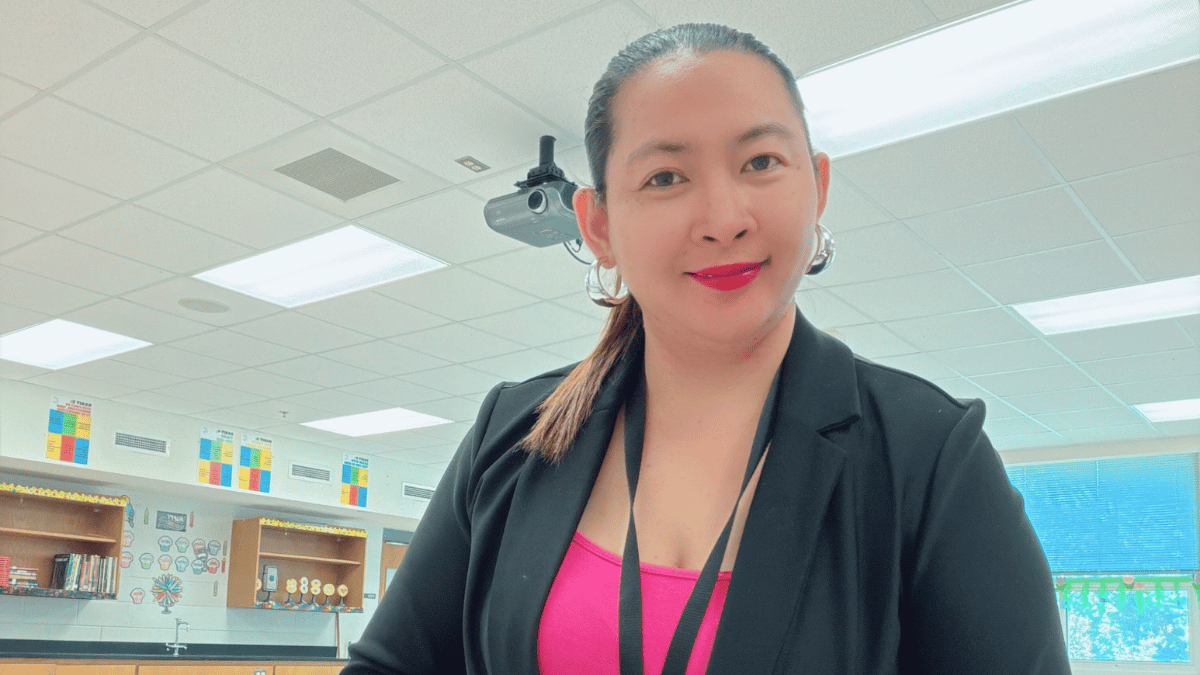

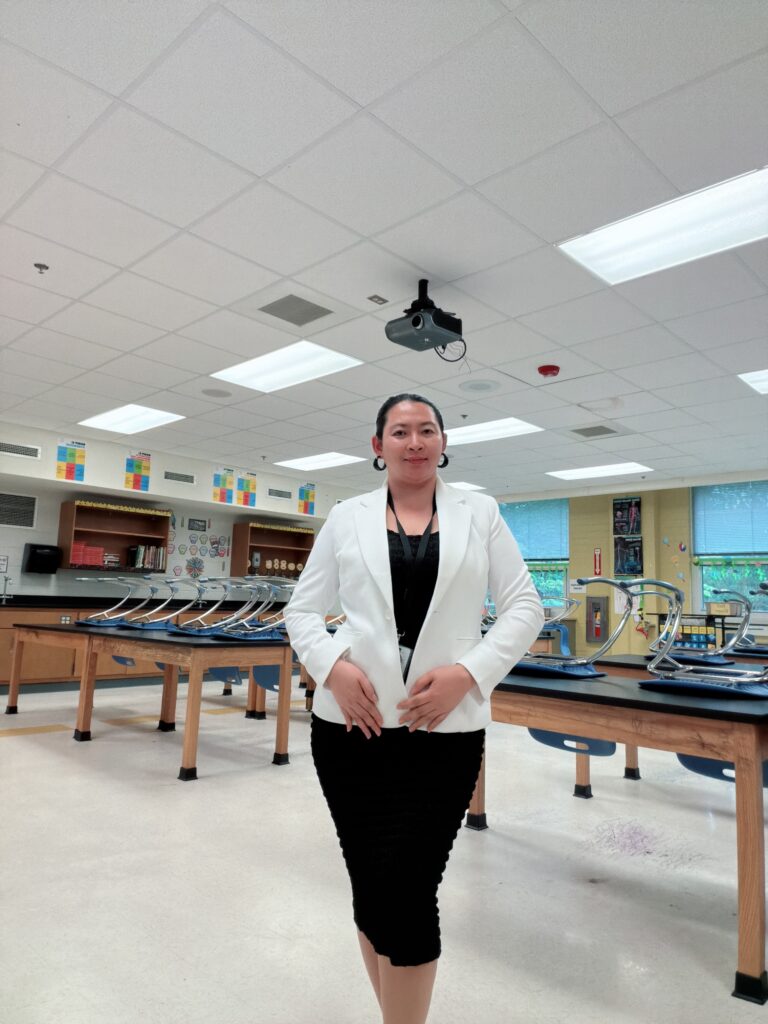
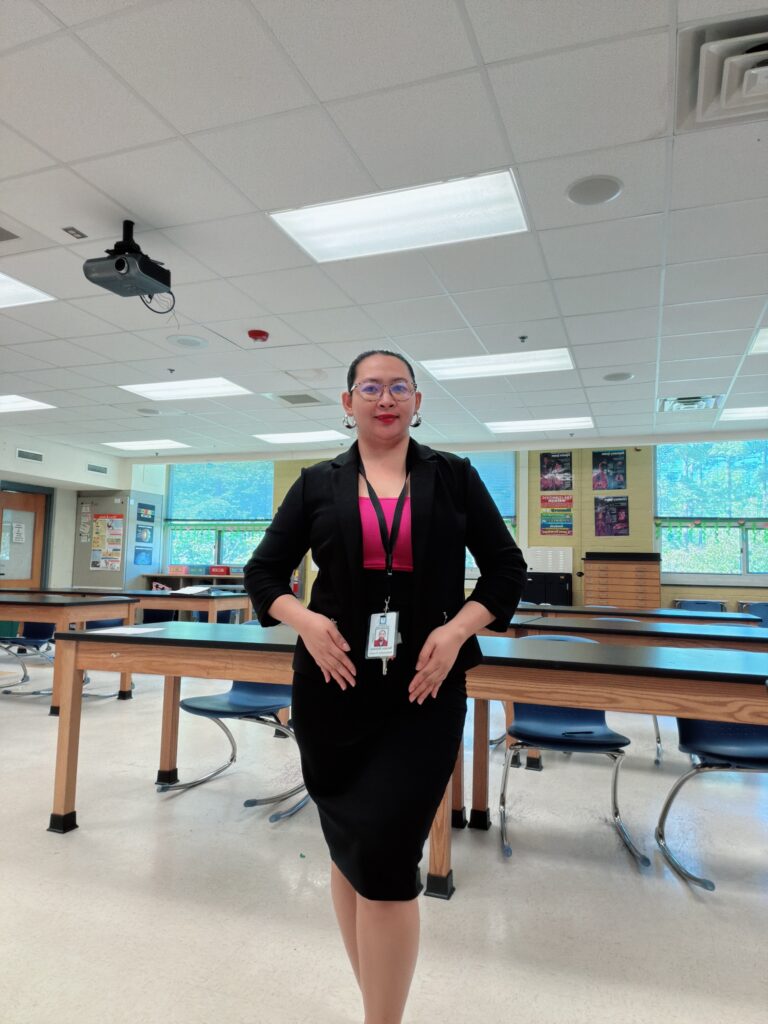
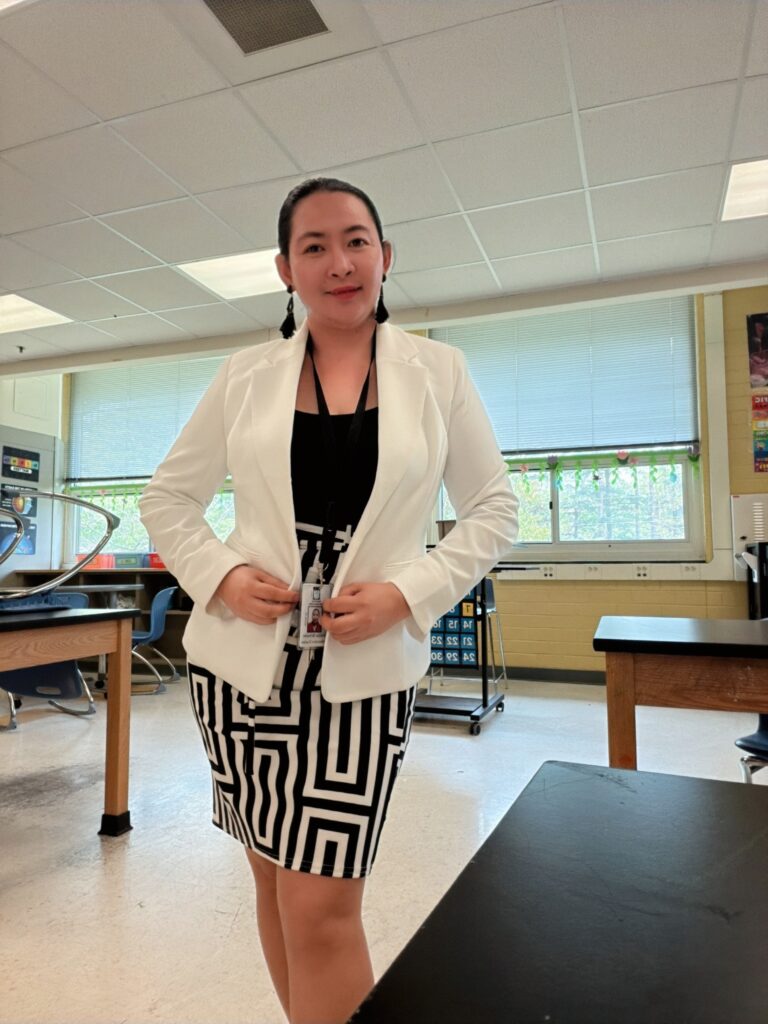
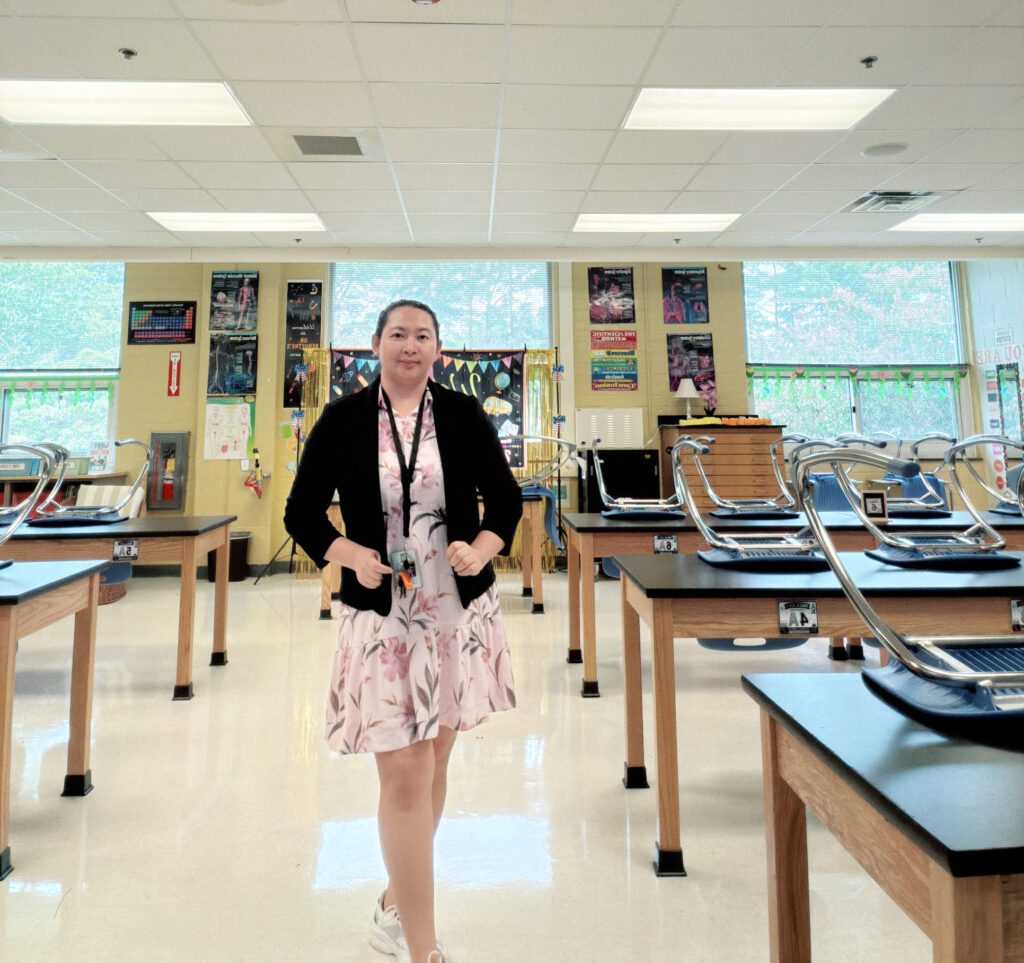
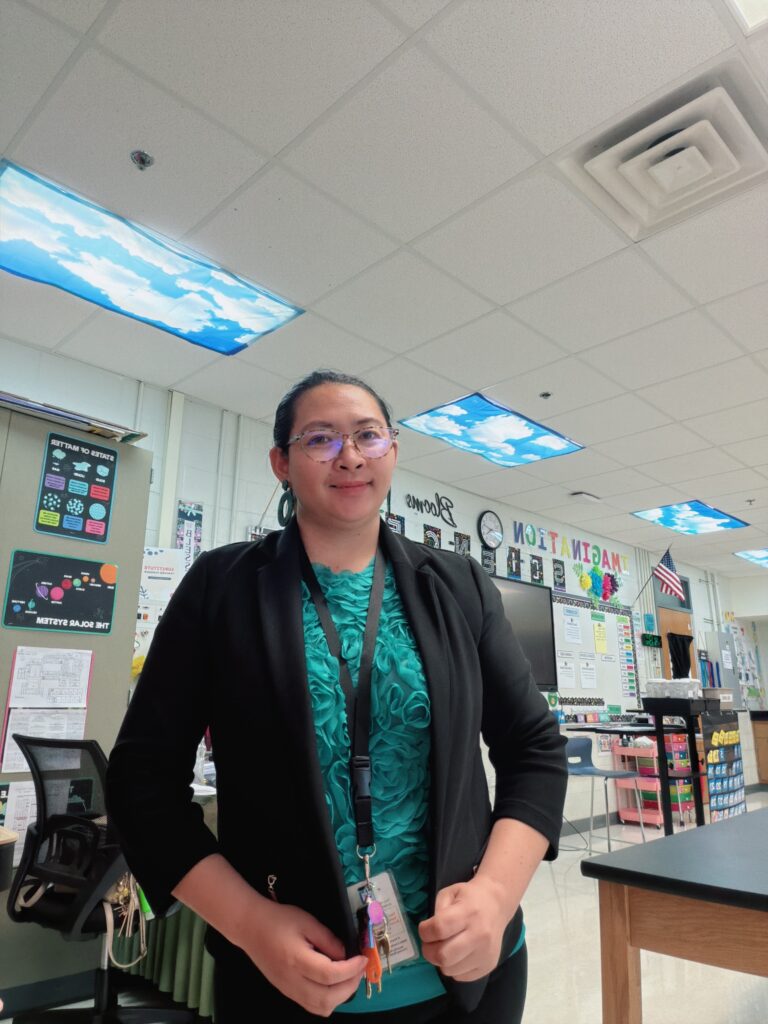
On paper, the science teacher who joined a Raleigh, North Carolina middle school in late August 2025 was more than ready for the job. Dr. Kristine Perieto Rebustre arrived with a doctorate in educational management, 13 years in Philippine public schools, and a run of division and regional honors behind her. What she did not have was any idea how to use the wireless printer.

Or how to book an Uber. Or open a bank account. On some days, even getting through certain doors at school felt like a puzzle.
“Despite my years of experience, I felt like a beginner again,” says Dr. Kristine, now a 7th grade science teacher at Carroll Magnet Middle School.
Relearning the basics
She landed after classes had already started, with no permanent home waiting for her. She stayed in an Airbnb and depended on Uber for a commute of more than 30 minutes, waking around 4:00 a.m. because she was afraid of being late. After dismissal, she often stayed behind to prepare lessons and learn school systems that her colleagues seemed to navigate without thinking. Even grocery shopping felt foreign.
For a former head teacher who had led programs, conducted research, and supervised others, the smallness of the struggle was its own kind of weight.
“There were moments when I felt embarrassed and incapable,” Dr. Kristine shares with TGFM. “How could someone with years of teaching and leadership experience suddenly struggle with such basic things? I knew I was not incapable, but honestly, there were days when I felt that way.”
The hardest moments came quietly, usually on the ride home. “After a long school day, I would sit inside the Uber, look out the window, and let my tears fall,” the Filipina educator recalls. Exhausted and homesick, with her family on the other side of the world, she kept circling back to the same questions: “What am I doing here? Can I really do this? Will I survive?”
The answers arrived one small task at a time. Dr. Kristine learned to book the ride. She opened the bank account. She figured out the technology, the stores, and the rhythms of an American school. The errands that once made her feel helpless slowly became proof of how far she had come.
“Being a beginner does not make you less capable,” she says. “Sometimes it simply means you are brave enough to enter a world you have never known before.”
She did not do it alone. Despite the time difference, calls home kept her anchored. Colleagues, school leaders, friends, and a faith community in North Carolina helped her find her footing. And when that was not enough, Dr. Kristine turned to prayer. “There were moments when my own strength felt insufficient, and all I could do was pray and trust God with the things I could not control,” she says.
Building something better
The decision to leave was, first, a mother’s decision. Dr. Kristine wanted to give her children the security and opportunities she once only dreamed of, to steady the family’s finances, and to work toward being debt-free.
But money was only part of the calculation. After more than a decade in Philippine classrooms, the science teacher wanted to test herself in an unfamiliar system, pick up new teaching strategies, and work with students from backgrounds unlike any she had taught before.
“I chose to work abroad not because I wanted to leave my life behind,” Dr. Kristine explains, “but because I wanted to build something better from everything I had already worked for—for my children, my family, my profession, and myself.”
To understand what “everything” means in that sentence, you have to go back much further than 2025.
A teacher before the title
Dr. Kristine grew up the fifth of 13 children. Her father farmed; her mother sold goods to keep food on the table. As one of the older siblings, she became what she calls a “little teacher” to the younger ones, explaining lessons and finding an early, unexpected joy in watching them learn.
Food was not guaranteed. Some mornings she walked to school without breakfast, looking for guavas or sugarcane along the road to quiet her hunger. Sometimes she brought guavas to class and traded them for paper to write on.
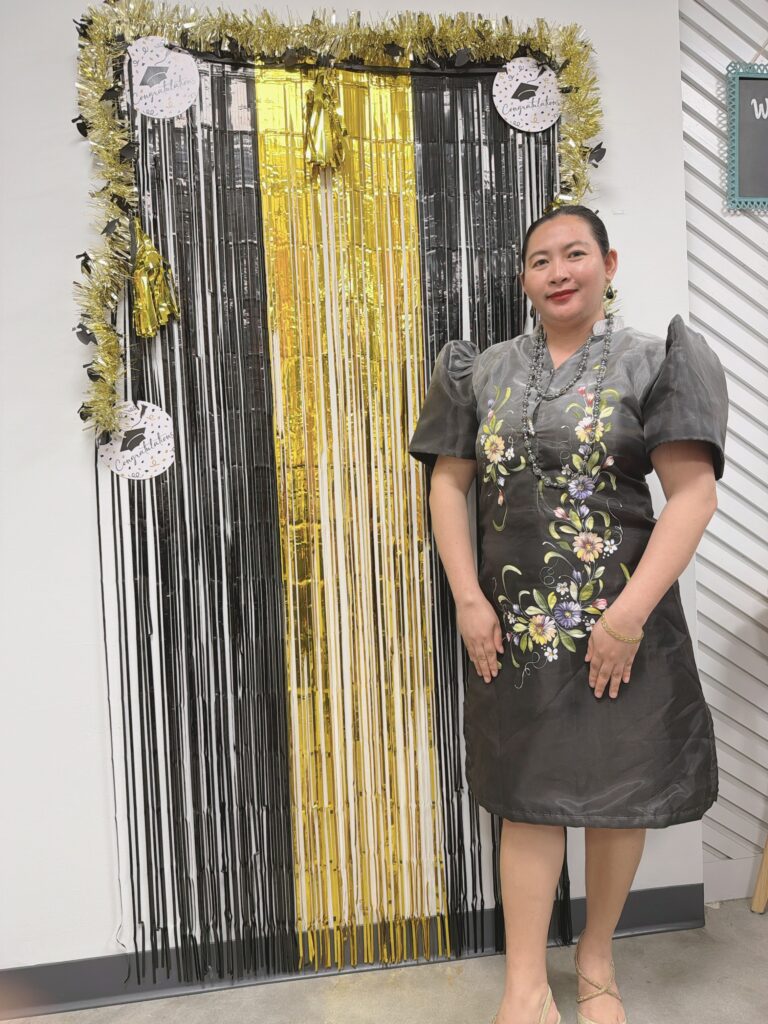
None of it kept her out of competitions. She joined anyway, occasionally in shoes and clothes borrowed from neighbors. “I may not have owned what I was wearing,” she says, “but the dreams I carried were always mine.”
Work arrived early and never really left. As a child, Dr. Kristine sold ice candy and banana cue at school. Her high school summers went to cleaning a building, running errands as a messenger, and washing clothes for teachers attending summer trainings. She also sold the one skill she knew was hers: writing declamation pieces and poems for other students in exchange for a little money.
Evenings brought more selling. She and her mother peddled candies and chips during school night events, often taking goods on credit, returning what went unsold, and keeping the thin margin. At fiestas, they traveled to neighboring barangays and sometimes stayed up all night guarding their stock. Looking back, the Filipina educator sees those trips as her mother’s quiet curriculum in hard work, sacrifice, resourcefulness, and dignity.
College added a new irony. As a student assistant, Dr. Kristine handled clerical and computer work in an office, even though her family had neither a computer nor electricity at home. So she improvised. At night, she carried a small table and her notebooks outside and set up beneath a streetlight, covering her head with a cloth when the air turned cold.
“There was no comfortable study room. No desk lamp. No computer waiting for me at home,” she says. “There was a streetlight, a small table, my notebooks—and a dream.”
She also had a scholarship to protect. Between washing dishes at school events and peeling cassava late at night for the puto her family would sell the next morning, Dr. Kristine kept her grades high enough to stay in the College of Education. She finished as class valedictorian in both elementary and high school, graduated cum laude in college, and was named Active SSG Officer of the Year. Years later came a master’s degree in general science, then a PhD in educational management.

Thirteen years, and ideas that traveled
Those 13 years in public education took Dr. Kristine far beyond her own classroom. She served as science coordinator and environmental coordinator, and during her time handling the environmental program, her school earned Platinum, Gold, and Bronze awards in environmental management. She credits the whole school community for those.
Individual recognition followed. The science teacher was named Most Outstanding Secondary School Teacher in her division, became a District Innovation Champion and a Regional Home Gardening Champion, and qualified at the regional level for the Basic Education Research Fund. Her last post before leaving was Head Teacher I at Hinapunan Integrated School, a role she held for about nine months.
Her most far-reaching work was Project SAVE, short for Strategize Agriculture to Vitalize Economy, a research initiative linking education, agriculture, and community development. Dr. Kristine presented it internationally, where it drew commendations from local and foreign participants alike.
“It strengthened my belief that ideas developed in small and underserved communities can have relevance far beyond where they begin,” she says.
The former head teacher is careful about how she frames the trophies. To her, they belong to the students, colleagues, and communities behind them, and to the problems they turned into opportunities together.
From survivor to “Ultimate Hype Person”
By the end of her first school year in North Carolina, the woman who had cried in the back of rideshares received an award she never saw coming. Her school named her its “Ultimate Hype Person,” a recognition of the energy and positivity she brought to campus.
“To go from wondering whether I would survive to being recognized for the energy and positivity I brought to my school community reminded me of how much I had grown,” Dr. Kristine says.
Her days in Raleigh are full: designing lessons, running lab activities, assessing progress, managing diverse classrooms, and building relationships with students and their families. What she treasures most is the moment a hard concept finally clicks and science stops feeling distant from a 12-year-old’s everyday life.
She teaches more than the syllabus, too. When it fits the lesson, the Filipina educator shares pieces of her own story, the hunger and the streetlight included, to show students that where they stand today does not decide where they end up. She also brings bits of Filipino culture and values into the room.
After one such lesson, a student approached her. “Dr. R, you should write a book about your story because it will not only inspire students, but adults too,” the 7th grader told her.
Dr. Kristine has not forgotten it. “Sometimes, we become so accustomed to our own struggles that we do not realize our journey may already be giving someone else hope,” she says.
That, more than any title, is what keeps her in the profession. “For me, teaching has never been just about what my students will remember from my lessons,” she says. “It is also about what they may remember about themselves because, at some point in their journey, a teacher believed in them.”
Her year abroad also reshaped her definition of strength. “Courage is not always looking strong,” Dr. Kristine says. “Sometimes courage is crying in the back of an Uber, wiping your tears before anyone sees them, waking up the next morning, and choosing to show up again.”
What she plans to carry home
One of her unexpected lessons in America came from a financial literacy course built on Dave Ramsey’s Financial Peace University curriculum. For someone raised on so little, it clarified that earning more is only half the equation; budgeting, managing debt, saving, and planning matter just as much.
That lesson now runs through her long-term plans. When her overseas chapter closes, the 37-year-old hopes to support work in quality education, teacher development, environmental sustainability, research and innovation, financial literacy, and livelihood programs, particularly for families in communities like the mountainous, underserved one where she spent years teaching. She also wants to mentor young teachers.
And she has not ruled out taking her student’s advice. “If my journey—from growing up with very little to teaching and learning on the other side of the world—can encourage someone to keep dreaming despite difficult circumstances, then sharing my story would be another way of giving back,” she says.
For fellow Filipinos working abroad, Dr. Kristine’s advice starts where her own year did. “Give yourself permission to be a beginner again,” she says. “You may have been successful, experienced, or independent back home, but moving to another country can make you feel like you know nothing.”
She urges kababayans to hold on to their reasons for leaving without losing themselves in the act of providing, and to be honest with money. “Do not let the desire to look successful become more important than actually building a secure future,” the science teacher warns. She also counsels choosing friends carefully, staying close to loved ones across the distance, and keeping faith. “Never compare your chapter with someone else’s highlight,” she adds.
Her personal mantra sums up the arc from the barangay road to the Raleigh classroom: “I came from little, but I carried dreams bigger than my circumstances.”
These days, Dr. Kristine thinks often about that streetlight. Back then, it was simply enough light to finish an assignment. Now it means something larger.
“We do not always need to have everything before we can begin,” she says. “Sometimes we simply use whatever light we have, keep working through the darkness, and trust that one day it will lead us somewhere brighter.”
