




On a night shift in Abu Dhabi, the monitors in the ICU hummed with the soft insistence of machines that keep people alive. Infusion pumps clicked. Ventilators breathed in mechanical rhythm. Behind the glass doors, families waited—some praying silently, others watching the clock.

Inside, a Filipino nurse adjusted drips, recalibrated settings, and leaned close enough to a patient to whisper reassurance. Thousands of miles away, her own daughter was fighting for her life.
“There was a season in my life as a nurse in the UAE when my faith was tested in ways I never imagined,” recalled Chiprybelle Geraldez, now a Charge Nurse in the ICU. “I was working in the ICU, caring for the most critically ill patients, when my own daughter—thousands of miles away became critically ill.”
In that moment, the geography of global health collapsed into a single human dilemma: stay and serve, or go home and hold your child.
“As a mother, every instinct told me to go home,” she said. “But reality weighed heavily on me.”
Her ICU was short-staffed. Complex cases required experienced hands. “And so, with a heavy heart, I stayed.”
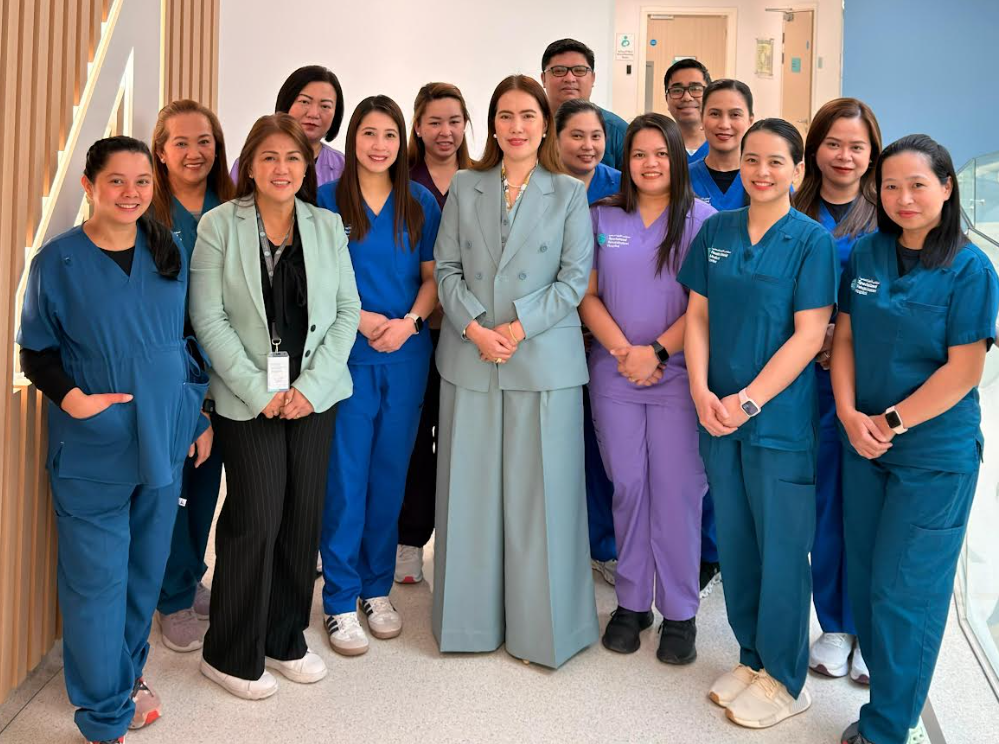
Across the United Arab Emirates, Filipino nurses make decisions like this every day—decisions that bind personal sacrifice to professional excellence. In Abu Dhabi alone, they make up roughly 40 percent of the nursing workforce. They are clinicians, supervisors, infection control strategists, educators, wound care specialists, and leaders. They are also daughters, sons, mothers, fathers—living between homelands.
This is their story.
The Pillars of a System
Jannet Tenebro, Director of Nursing at Capital Health, has watched the transformation up close. A Magna Cum Laude graduate of Abra Valley Colleges in the Philippines, she later earned an MBA from Torrens University Australia and is now pursuing a doctorate. Her career spans healthcare management and education, and she speaks with both pride and responsibility.
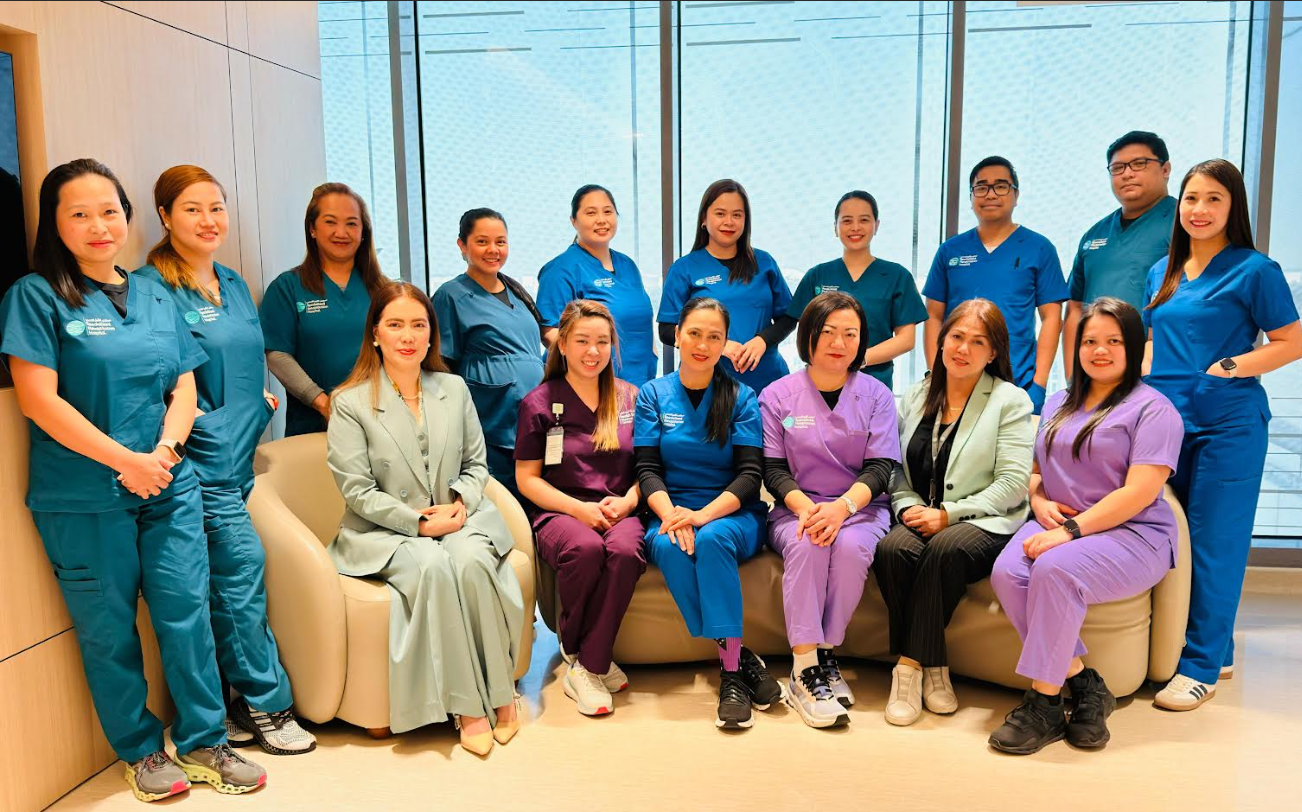
“Filipino nurses have truly made their mark on healthcare in the UAE,” she said. “Every day, I see their dedication, compassion, and the genuine heart they bring into their work.”
For Tenebro, the distinction lies not only in competence but in character. “It’s not just about strong clinical skills, but the warmth, resilience, and adaptability they consistently show that really make a difference in patient care.”
In a nation as culturally diverse as the UAE, that sensitivity matters. “Their cultural sensitivity helps patients feel safe and understood,” she noted.
But she is equally clear that their impact extends beyond bedside care. “What’s even more inspiring is how many of them are stepping confidently into leadership roles, education, and specialized nursing fields. Their contributions go far beyond bedside care—they’re shaping policy, strengthening teams, and raising the bar for healthcare delivery across the country.”
Tenebro calls it an honor to mentor fellow Filipinos. “Filipino nurses continue to stand as one of the great pillars of care in the UAE and globally. And being part of that journey, supporting and uplifting our community, is one of the greatest honors of my career.”
Her words echo a broader truth: in a global nursing shortage measured in millions, diaspora nurses are not peripheral—they are foundational.
Heritage as Clinical Compass
For Christine Cruz, a Charge Nurse in a long-term ventilated unit with licenses in the Philippines, UAE, and United States, heritage is not ornamental. It is operational.
“I grew up in a below-poverty family in Metro Manila, Philippines—an experience that taught me the importance of valuing my Filipino roots,” she said. “Witnessing firsthand the hardships of those who cannot afford basic care, I became determined to break the cycle by being the change and bridging gaps in healthcare.”
Her language is infused with Filipino concepts that resist translation but animate practice: malasakit, bayanihan, pakikipagkapwa.
“Malasakit drives me to care with heart, going beyond duty to ensure patients feel dignity and comfort,” she explained. “Bayanihan inspires teamwork—supporting colleagues, sharing responsibility, and lifting one another in high-pressure moments.”
Adaptability, she argues, is not merely a survival skill but a cultural inheritance. It is grounded in diskarte—practical intelligence—and pakikiramdam, an intuitive sensitivity to unspoken needs. “Supported by Tibay ng Loob and Pagtitiyaga, this adaptability enables Filipino nurses to remain steady under pressure, resilient through change, and compassionate wherever we serve in the world.”
If Cruz speaks in a vocabulary of values, Christine Maris Payos articulates something similar through the lens of leadership. A Team Leader with 13 years of experience, she grounds her approach in pakikipagkapwa.
“My Filipino heritage is an essential part of who I am and continues to shape my professional values through compassion and ‘pakikipagkapwa’—the practice of treating others with dignity and equality,” she said. “I lead with humility and prioritize respect in every aspect.”
In pediatric care, that ethos becomes tangible. Jeze Joy Lipata, a DAISY Award–winning Pediatric Charge Nurse specializing in oncology and bone marrow transplant, brings what she calls “warmth, patience, and genuine concern” to families in crisis.
“I bring this into practice by treating children and their families as if they were my own,” she said.
Geraldine Bernardino, a wound care nurse with degrees in Nursing and Biology, frames her leadership around humility and bayanihan. “Through malasakit, I provide compassionate, holistic, and dignified care,” she said. “Together, these Filipino values allow me to deliver holistic, dignified, and compassionate wound care, while also fostering teamwork and leadership anchored in empathy and respect.”
What unites them is a shared understanding: service is relational. It is not only what you do, but how you do it.
The Call and the Calculation
Not all journeys began as callings.
“Before I entered college, there was a high demand of nurses in the Philippines and abroad. I’ve made a choice to enter Nursing with the purpose of having a well-paying job,” admitted Glorietta Sandra Briones, a Post-Acute Rehabilitation Team Leader with over 14 years of experience across four countries.
“But whenever they said that ‘nursing is a calling’, it didn’t sink in to me. However, as I practice nursing, I’ve realized that this is what I’ve called for – to show up for people at their most vulnerable moments and to offer comfort and dignity.”
That evolution—from economic strategy to existential purpose—is common in migration narratives.
John Darryl Rivera, a rehabilitation Charge Nurse with master’s training in Nursing Administration, describes nursing as “a calling rooted in compassion, resilience, and service.” He was drawn to restoring “not only their health, but their dignity and hope.”
He moved to the UAE seeking professional growth in “a healthcare system known for its high standards, innovation, and commitment to excellence.” Practicing there has allowed him to refine “culturally sensitive, patient-centered care to a diverse population.”
For Merry Fe Garlejo, a wound care nurse who began as an ER nurse in the Philippines, inspiration was born from scarcity. “Growing up in the Philippines, I was inspired to pursue nursing by witnessing the dedication, compassion, and resilience of healthcare workers who cared for others despite limited resources,” she said. “Nursing became more than a profession; it was a calling rooted in faith.”
Patty Noreen Pavon’s motivation was deeply personal. “My inspiration to pursue nursing comes from a profound desire to provide comfort, empathy, and skilled care during difficult times,” she said. Watching her grandfather fall ill exposed “the limitations of my clinical knowledge,” fueling her commitment to become “a nurse he could be proud of.”
For each, the decision to practice in the UAE represented both opportunity and responsibility: professional advancement intertwined with the promise of supporting family back home.
Barriers and Breaking Them
Migration opens doors—but not always equally.
Candice Tomas, a Clinical Resource Nurse and Nurse Practitioner with nearly three decades of experience and a MAN degree from UPOU, speaks candidly about structural bias.
“One of the most significant challenges I faced throughout my three decades in nursing was racial discrimination in career advancement,” she said. “For higher level posts, Western Educated Nurse Leaders are widely preferred than Asian Ethnicity.”
It was a sobering contradiction in a profession built on equity. “These obstacles were not based on merit or qualifications but on biases related to race and ethnicity.”

Rather than retreat, Tomas doubled down on growth and advocacy. “Overcoming this required resilience, continuous professional development, and advocacy—not only for myself but for others who faced similar barriers.”
Her response reshaped her leadership. “My leadership approach emphasizes fairness, mentorship, and advocacy for equal opportunities.”
Rachell Lantayona, a Senior Infection Control Practitioner certified in Infection Control (CIC), encountered a different stereotype.
“One of the biggest challenges I faced as a Filipino nurse in the UAE was earning professional credibility beyond the stereotype of being ‘just a bedside nurse,’” she said.
She responded not with confrontation but with competence. “I immersed myself in complex, high-impact work, supporting JCI and CARF accreditations, JAWDA Tasneef, and DOH ranking audits, leading outbreak investigations.”
“Results spoke louder than titles, trust followed, and leadership naturally came,” she reflected. “This journey reminded me that Filipino nurses in the UAE don’t just belong at the bedside.. we belong at the table, shaping systems, influencing policy, and leading with quiet strength.”
Elizabeth Angeles, a Team Leader with an MBA in Hospital Administration, describes the challenge of navigating multicultural teams. “Differences in language, hierarchy, and workplace norms sometimes led to misunderstandings or underappreciation of our contributions,” she said.
“Over time, I learned to navigate these situations with patience, respect, and empathy—listening actively, clarifying thoughtfully, and building trust through consistent action.”
Jeanette Ollano, a Case Manager with over 25 years in the UAE, faced linguistic barriers head-on. “One challenge I faced as a Filipino nurse in the UAE was working in a predominantly Arabic-speaking environment,” she said.
She strengthened her communication skills and cultural understanding until she became “the only non-Arabic and Filipino staff member in the department trusted to handle patient and family communication and care coordination.”
These stories complicate the narrative of seamless diaspora success. They reveal friction—and the disciplined effort required to transcend it.
The Emotional Cost
Behind professional titles lies emotional labor rarely visible in hospital annual reports.
Kenneth A. Rodulfo, an ICU Team Leader with over 13 years of experience, speaks to the long arc of perseverance. “Working overseas is a roadmap, some are fortunate to take a straight path, but most will encounter detours, delays, and unexpected turns,” he said. “Every challenge, from sacrifices and exams to rejections and homesickness, strengthens your resolve.”
Methyle Ann Isulat, a long-term care Team Leader with master’s training in Adult Nursing, urges younger nurses to temper ambition with patience. “Dream boldly but prepare patiently. It may be slow, but you will get here soon. It is never easy.”
“Along the way, you will be tested, not only in your skills, but in your courage, patience, and faith in yourself,” she said. “One day, you’ll look back and say, ‘I survived. I learned. I made it. All because I believed in myself.’”
Annaliza Lopez, a Nursing Supervisor in Home Health Care and recipient of the Nightingale Award, echoes that steady resolve. “Believe in yourself and your abilities—your skills, dedication, and compassion are your greatest assets,” she said. “The journey may be challenging… but every challenge is an opportunity to grow stronger and wiser.”
Katrina Rilloma, a DAISY Awardee and Charge Nurse at Health Shield Medical Center, frames overseas work as both aspiration and endurance. “Working overseas comes with challenges: adapting to new cultures, being far from family, and meeting high professional standards. But each challenge is also an opportunity to grow, learn, and prove your resilience.”
Hazel Jane Saguidic, with experience spanning the Philippines, Saudi Arabia, and the UAE, emphasizes versatility. Filipino nurses, she said, are “able to work effectively in multiple settings,” bringing “a compassionate, positive, and patient-centered approach” to diverse environments.
Kathleen Joy De Leon underscores their essential role. “We are not just nurses alone but we serve with our hearts to serve our patients,” she said. “We have this mark that makes us different from other nationalities.”
That mark, if there is one, may be the fusion of technical rigor and relational warmth—a pairing that patients remember long after discharge.
Faith, Purpose, and the Bridge Home
For many, faith is not abstract but sustaining.
Chiprybelle Geraldez returned to her ICU story with quiet conviction. “My faith in God became my anchor,” she said. “It steadied my hands, calmed my thoughts, and gave meaning to my suffering.”
In those months, she carried “two lives in my thoughts—the patients fighting for survival in front of me, and my daughter fighting her own battle far away.”
“Being a Filipino nurse abroad is not just about clinical skill; it is about heart,” she reflected. “It is about choosing service even when it hurts.”
Her words illuminate a broader diaspora ethic: sacrifice is not romanticized, but it is dignified. It is tethered to something larger than individual advancement.
Kimberly Rose Virola, a wound care nurse and graduate of the University of Toronto’s wound care program, speaks of heritage as honor. “With every interaction, we remain conscious that our conduct reflects not only our individual professionalism, but also the integrity of our people and the honor of the nursing profession,” she said.
“Wherever we serve in the world, we carry our heritage with pride, our compassion with purpose, and our profession with honor.”
That sense of representation—of standing for something beyond oneself—threads through each narrative. It is what allows Filipino nurses to act as bridges between the Philippines and the UAE: exporting not only labor, but leadership; not only competence, but culture.
The Future They Imagine
In global health policy circles, conversations often center on shortages, migration flows, and workforce sustainability. But in hospital corridors in Abu Dhabi, the future is imagined more personally.
Kenneth Rodulfo urges young nurses to “build a solid nursing foundation, master the basics, develop sound clinical judgement.” Bring “malasakit,” he said. Let resilience and respect guide you.
Methyle Ann Isulat believes success ripples outward. “Because when one Filipino nurse succeeds, the dream continues, passed on through stories of courage, hope, and perseverance.”
Annaliza Lopez reminds them that “the world values the excellence and warmth that Filipino nurses bring.”
And Jannet Tenebro, looking at the next generation, sees continuity. Filipino nurses are already shaping policy, strengthening teams, raising standards.
The monitors will continue to hum. The shifts will remain long. The distance from home will not always feel shorter.
But somewhere in an ICU, a rehabilitation ward, a pediatric oncology unit, or a home health visit, a Filipino nurse will lean close to a patient and offer something both clinical and deeply human: presence.
Between alarms and handovers, between airports and remittances, between vulnerability and recovery, they are building an architecture of care that spans oceans.
Their hands move with practiced precision. Their hearts remain tethered to a homeland that taught them malasakit and bayanihan.
And in that quiet strength between worlds, they are not only sustaining a healthcare system—they are redefining what it means to serve.
Disclaimer: This article is part of a special series leading up to the celebration of Filipino Nursing Diaspora Day on 7 May 2026, highlighting the global contributions, experiences, and impact of Filipino nurses worldwide.
