



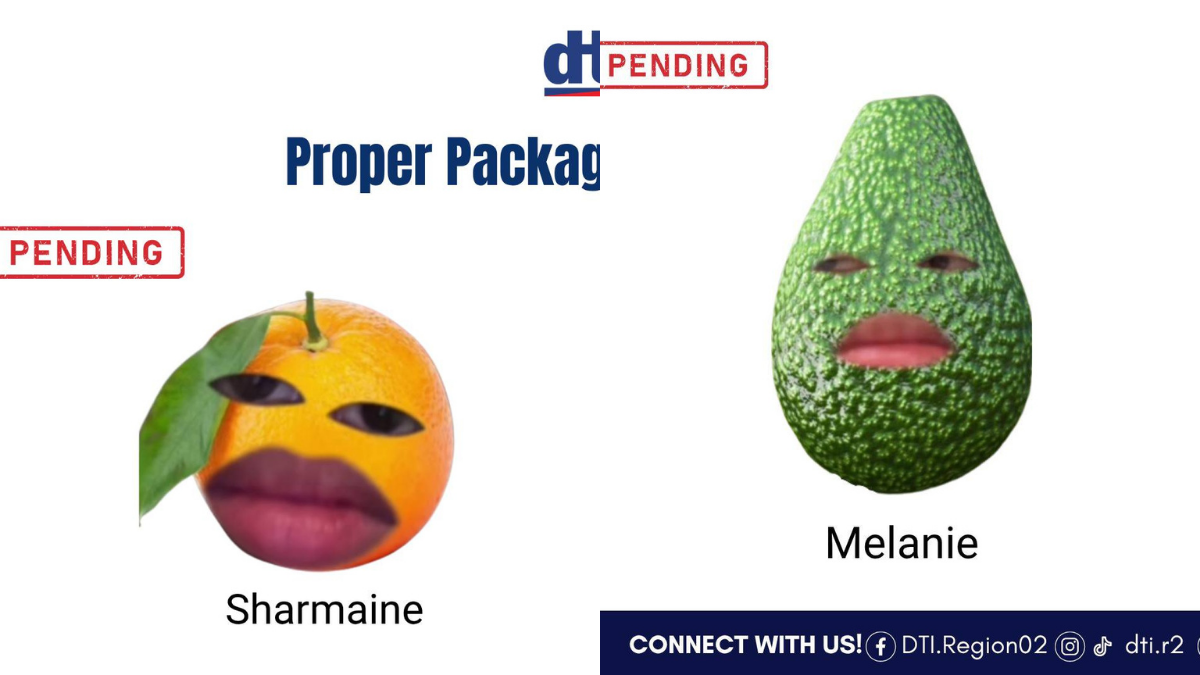

The Department of Trade and Industry (DTI) Region 2 has used the viral “Sharmaine” trend to deliver a serious reminder to consumers and sellers: product names, labels, and packaging are governed by standards and cannot simply be changed because something is trendy.

In a Facebook post, the agency cautioned that while renaming an orange “Sharmaine” makes for a good joke online, the same logic does not apply to real products on store shelves. “Pero teka lang, hindi porket may trend, at may pa-‘Sharmaine moment’ na, eh pwede na basta-basta magbago ng ‘name,'” it wrote, adding that in consumer protection, such matters are no laughing matter.
The post laid out the agency’s core message: products must follow proper labeling and packaging, undergo correct testing, and carry the appropriate safety mark. A label cannot be assigned based on personal preference — “hindi lang sa ‘feeling ko mas bagay ng produktong ito ang label na ito,'” the agency said — but must pass an established process with defined standards.

Playing on the trend’s running gag about getting names “notarized,” DTI Region 2 stressed that compliance goes further than that: “Hindi lang basta notarized. Dapat ‘certified’!” Products, it added, cannot misrepresent themselves, and their labels must be accurate, clear, and aligned with standards.
To drive the point home, the agency adapted the meme’s “pending” and “approved” stamps into a compliance framework, capping it with “Jung Cook” — a rice cooker marked “for approval,” a reference to the requirement that electrical products carry a Philippine Standard (PS) mark or Import Commodity Clearance (ICC) before being sold.
The “Sharmaine” trend originated from a comedic skit by content creator BAET, in which an orange complains it was lazily named after its color and decides it would rather be called “Sharmaine.” The bit went viral and spawned companion characters, including a fly named “Vanessa” and an avocado named “Melanie,” with brands and businesses across the country joining the craze.
