



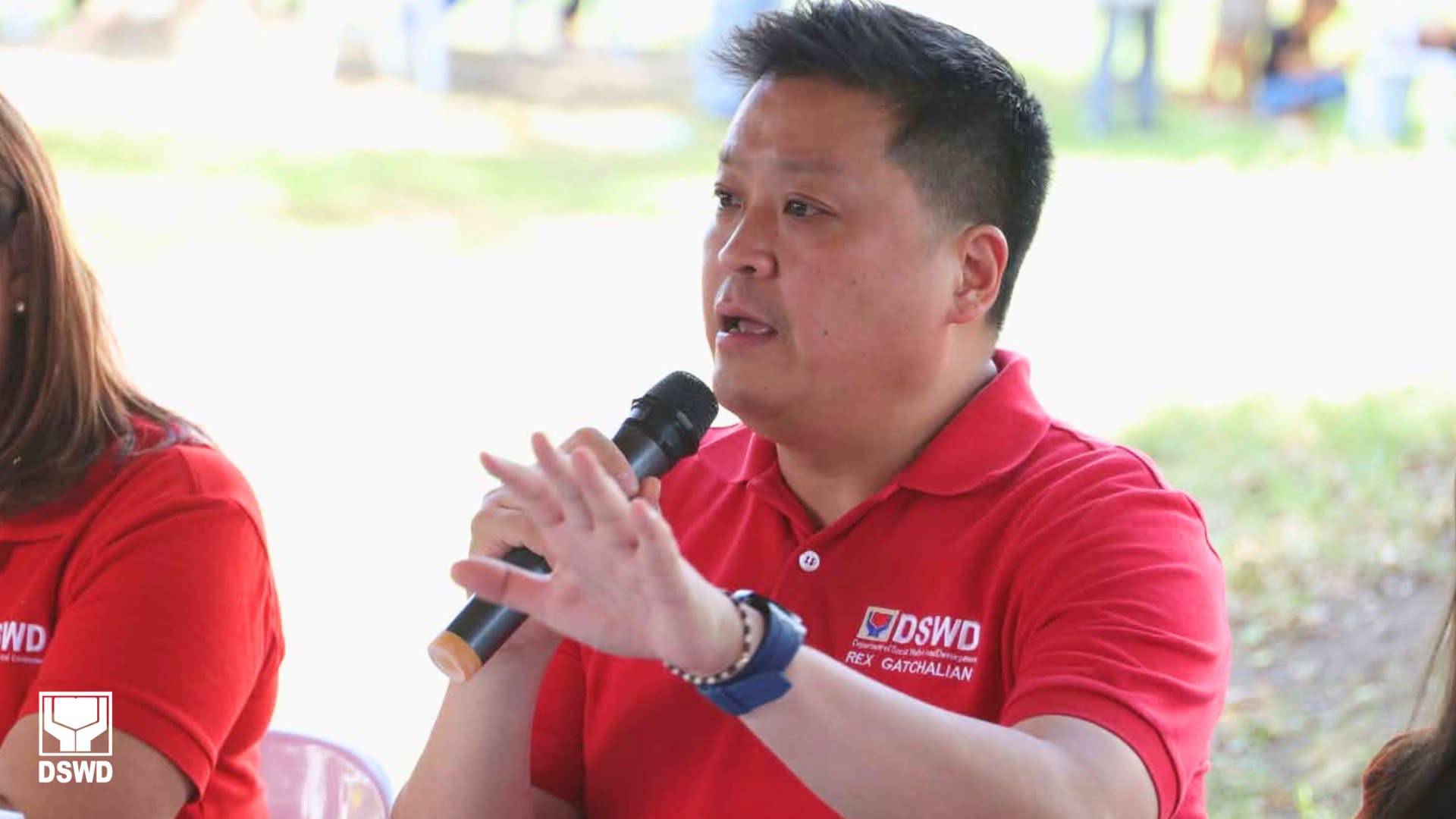

The Department of Social Welfare and Development is willing to take part in legislative discussions on whether the minimum age of criminal responsibility for minors should be reduced, Social Welfare Secretary Rex Gatchalian said Wednesday.

The agency’s stance mirrors that of President Ferdinand Marcos Jr., who has signaled an openness to revisiting the matter in the wake of this week’s deadly school shooting in Tacloban City.
“In light of recent events, the department shares the same openness of President Ferdinand R. Marcos Jr. in discussing the issue,” Gatchalian said in a statement.
“We look forward to listening and participating in the upcoming hearings in aid of legislation. Suffice to say, whatever the outcome of these hearings will be, the department will follow,” he added.
Gatchalian said the Juvenile Justice and Welfare Council and the Council for the Welfare of Children, both attached to the DSWD, would join the committee hearings to keep the welfare of children at the center of the deliberations.
The push to lower the threshold gained renewed traction after Monday’s shooting at a Tacloban City school left three students dead and 20 others wounded. Police said the two suspects, aged 14 and 15, had talked through the provisions of RA 9344 before the attack, apparently convinced their ages would keep them out of jail.
Under the Juvenile Justice and Welfare Act, children 15 and younger are generally exempt from criminal liability, while those above 15 but below 18 may be held accountable if proven to have acted with discernment.

While open to the debate, Gatchalian underscored that the department’s immediate priority is the strict enforcement of the existing law and the delivery of assistance to the families of the victims. He pushed back on claims circulating that young offenders would simply escape accountability.
The two minors are currently in DSWD custody at the agency’s rehabilitation facility for the youth, where they are receiving interventions provided for under the law. Gatchalian said the 14-year-old is already undergoing immediate intervention, while social workers draft a longer-term plan.
“The social workers, based on the intake, will come up with an intervention plan. At ‘yung intervention plan na yan, hindi yan ‘yung mabilisan ha, matagalan yan. Sisiguraduhin natin na ma-rehabilitate, bago natin pagpasyahan anong gagawin sa kanya. But it will take years,” he said.
The 15-year-old, meanwhile, will face legal proceedings to assess whether he acted with discernment.
“Pag napatunayan na may discernment siya, then sasampahan siya ng criminal liability. May kaso ‘yan, kasong kriminal. At ‘yung judge ang magde-determine niyan,” Gatchalian said.
The DSWD also cited figures it said run counter to the perception that youth crime is rising. Drawing on the Philippine National Police’s Crime Information Reporting and Analysis System, the agency noted that reported cases peaked at 26,850 in 2017 before falling steadily to 5,698 in the first half of 2025. Most of those involved were males aged 15 to below 18, a trend the department linked to socialization, peer influence, exposure to public spaces, and gaps in law enforcement visibility.
Economic instability and the need to survive accounted for most cases, the report said, with theft, physical injuries, robbery, rape, and drug-related offenses among the most frequent.
