



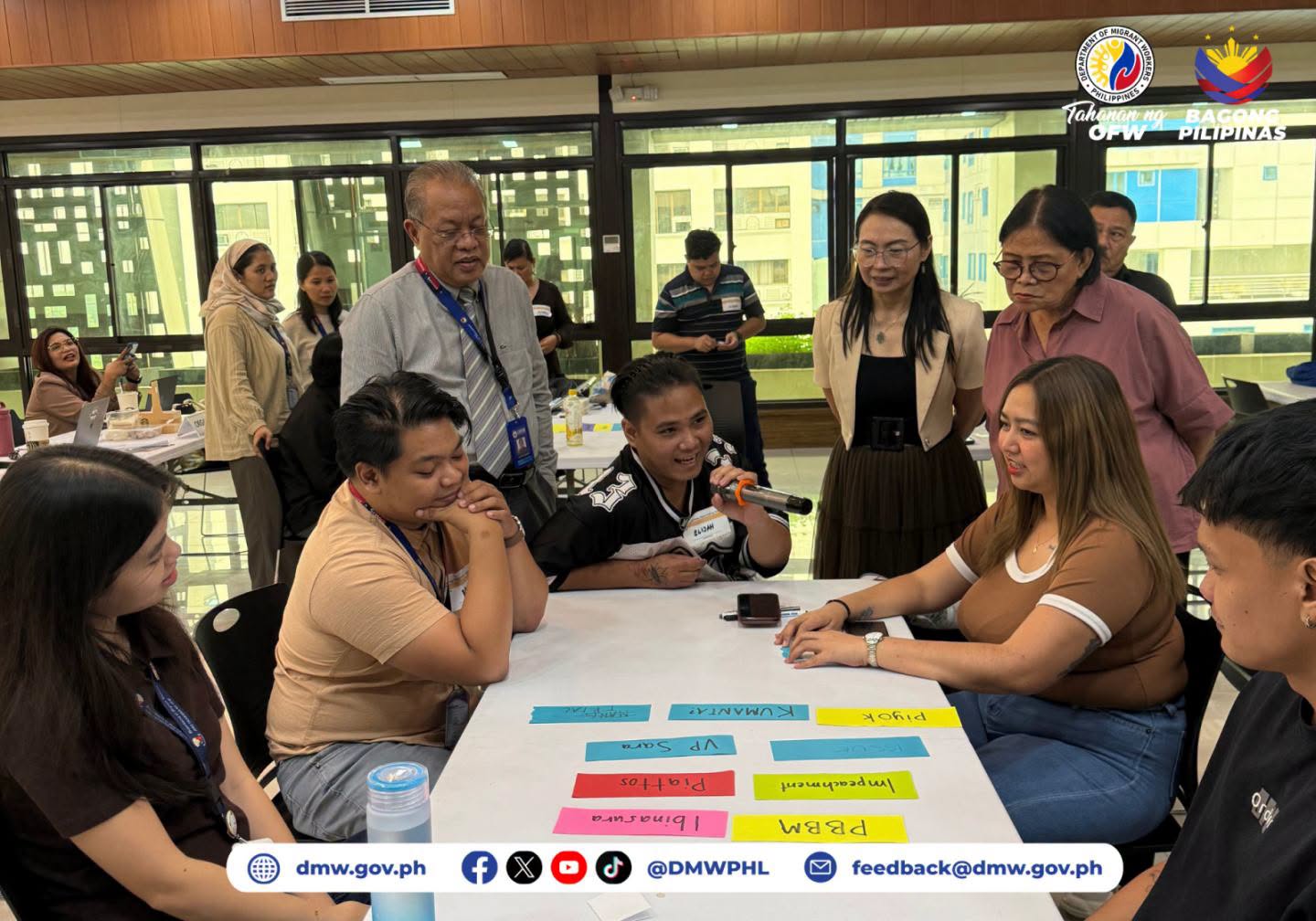

Fake recruitment accounts, impersonators and bogus job offers aimed at Filipinos hoping to work abroad took center stage at a one-day workshop the Department of Migrant Workers (DMW) organized with VERA Files at the agency’s office.

Titled “Huwag Magpaloko, Siguraduhing Totoo,” the training zeroed in on the digital hazards confronting overseas Filipino workers (OFWs), many of whom rely on social media and other online platforms to stay in touch with family, keep up with news and look for jobs overseas.
Attendees worked hands-on with verification tools such as reverse image search, Google Advanced Search and lateral reading, a method of checking what other sources say about a claim or website before trusting it. They were also shown the warning signs that an online source may be unreliable, including content that has been manipulated or generated by artificial intelligence.
Jocel de Guzman of Scam Watch Pilipinas presented the group’s Quad Model, which rests on four pillars: behavioral change, community advocacy, coordination across sectors and technology-assisted reporting. Under its “Kontra-Scam Attitude,” OFWs faced with a questionable call, message or online offer are urged to remember: “Magdamot, Magduda, Mang-isnab, at Magsumbong sa 1326.”
DMW Undersecretary Darlene R. Pajarito asked participants to make checking a habit before accepting or reposting anything they come across online.

“Kapag may nakita tayong post, hindi natin kailangang agad maniwala. At hindi rin naman natin kailangang agad ituring na mali. We can simply ask: ‘Totoo ba ito? Saan nanggaling? Paano natin mave-verify or masisiyasat?’ That simple habit can make a real difference. Because every time we verify before we share, we help protect not only ourselves, but also our families and our fellow Filipinos,” Pajarito said.
Atty. Kristina Marie Joy B. Andal-Escosia of the DMW Migrant Workers Protection Bureau walked the group through the schemes commonly used to deceive job seekers, from fraudulent offers and impersonation to fake recruitment accounts. Participants then put the verification techniques to the test in a series of interactive exercises.
VERA Files President Ellen Tordesillas described the state of disinformation facing Filipinos abroad and stressed the need to help OFWs tell credible information apart from false or misleading material.
“The main source of information for OFWs about what is happening at home is through social media, which, sadly, has become toxic with the proliferation of lies and false news. VERA Files is helping OFWs not to be victimized by empowering them with skills and knowledge to distinguish false from real news,” Tordesillas said.
