



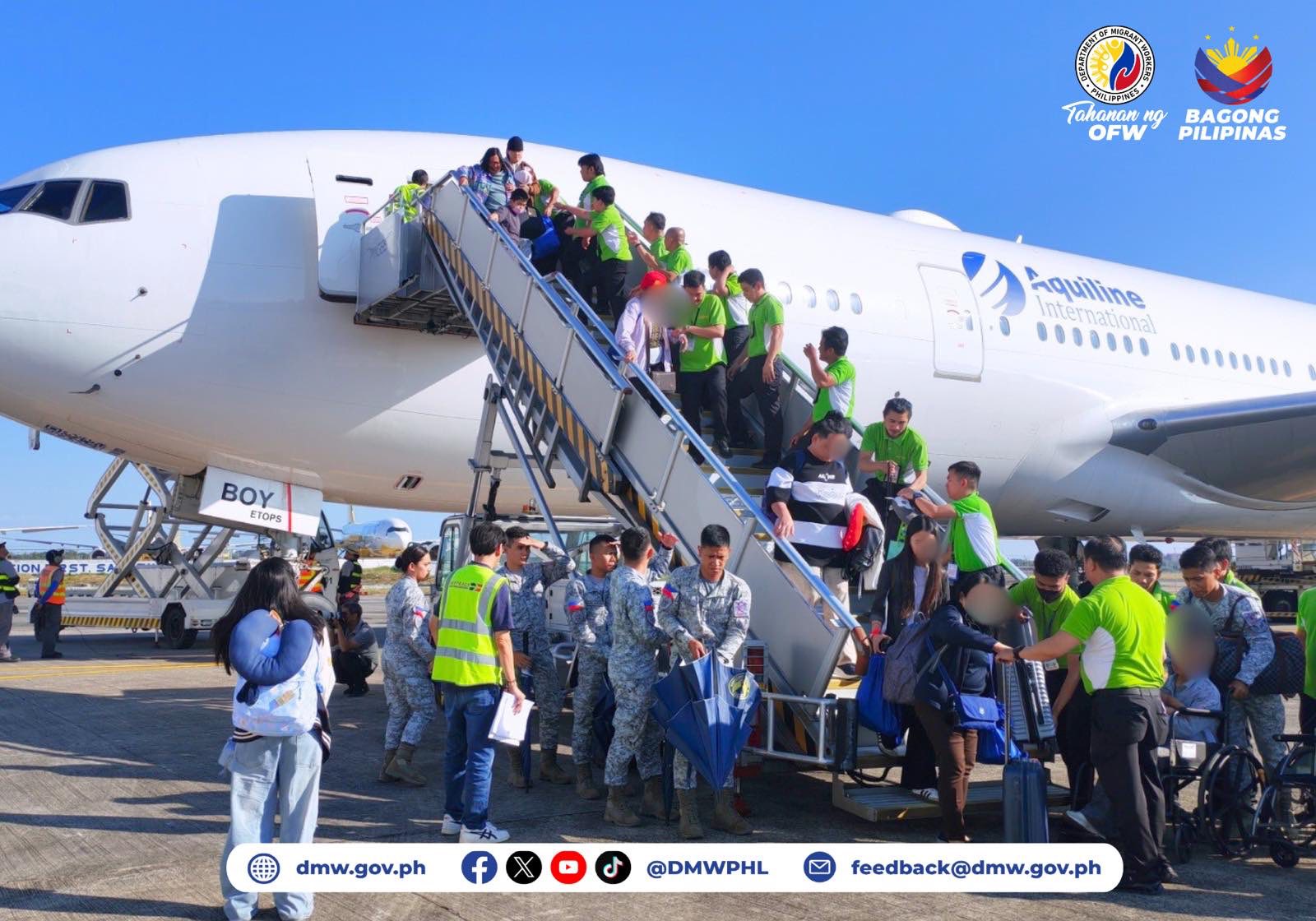

The vast majority of Filipino workers who have come home from the Middle East have not given up on working abroad, according to the country’s top labor migration official.

Department of Migrant Workers Secretary Hans Leo Cacdac revealed that pre-arrival surveys conducted among repatriates show a strong intent to return to overseas employment. “Batay doon sa entry survey… 84% of them are still hoping for overseas employment. Of that figure, mayroon around 50%, 50-50, ‘yung puwede pang bumalik sa pinanggalingan,” Cacdac said in an interview on Super Radyo dzBB Thursday.
Those able to return to their previous posts will be given logistical support for the process. “Sila ay bibigyan ng puwang na… pagkakataon na makabalik through facilitated ‘yung clearances nila pabalik dahil kasi may valid employment visas pa sila pabalik ng bansa,” he added.

For workers who cannot or choose not to return to the Middle East, the DMW has already lined up alternatives. Cacdac said 200,000 job orders have been secured across Asia, Africa, Europe, and the Americas — matched against the specific skill sets documented through the same entry surveys. “Nakaabang ‘yan. Alam natin ‘yung skills nila kasi may survey form nga… ng skill sets ng mga nanunumbalik so naghanap tayo ng job orders na katumbas ng skill sets nila,” he said. Job fairs are also being considered as a venue for displaced workers to explore these options.
Cacdac noted that OFW deployment figures have dipped as workers held back from taking up new postings due to the ongoing regional conflict. A national reintegration network has been made available for those who opt to stay in the Philippines.
As of April 3, the DMW tallied 4,241 individuals repatriated from the Middle East — a count that includes not only workers but also Filipinos who were on tourist visas when the conflict escalated following the outbreak of fighting on February 28. Over 2.4 million Filipinos remain in the region, the largest concentrations being in the United Arab Emirates and Saudi Arabia, with approximately 975,000 and 813,000, respectively.
