



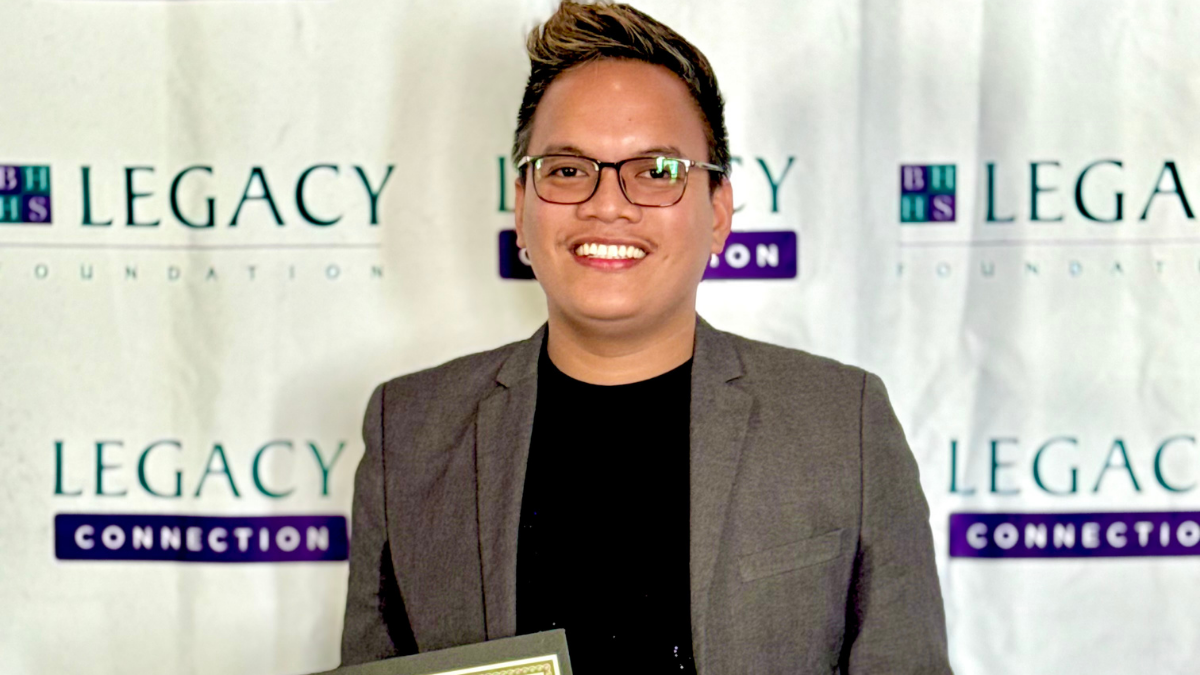

The rejection letter doesn’t come as a letter. It comes as a look across a counter, a returned passport, and the quiet understanding that the answer is no. For thousands of Filipinos who apply to work in the United States, that moment inside the embassy is where the dream either dies or hardens into something more stubborn. David Mana-ay Trinidad walked out of that building twice before he ever walked into an American classroom.

Today, the 35-year-old stands in front of students at River Valley High School in Arizona, teaching Grade 9 English, AP Seminar, and AP Research under the J-1 Cultural Exchange Program. He is in his third year abroad, and last school year his principal named him Teacher of the Year. The distance between those two versions of him — the applicant turned away at the window and the honored educator at the front of the room — is the real story here, and David tells it without varnish.
The two noes before the yes
Most success stories skip the part where the protagonist doubts himself. David refuses to.

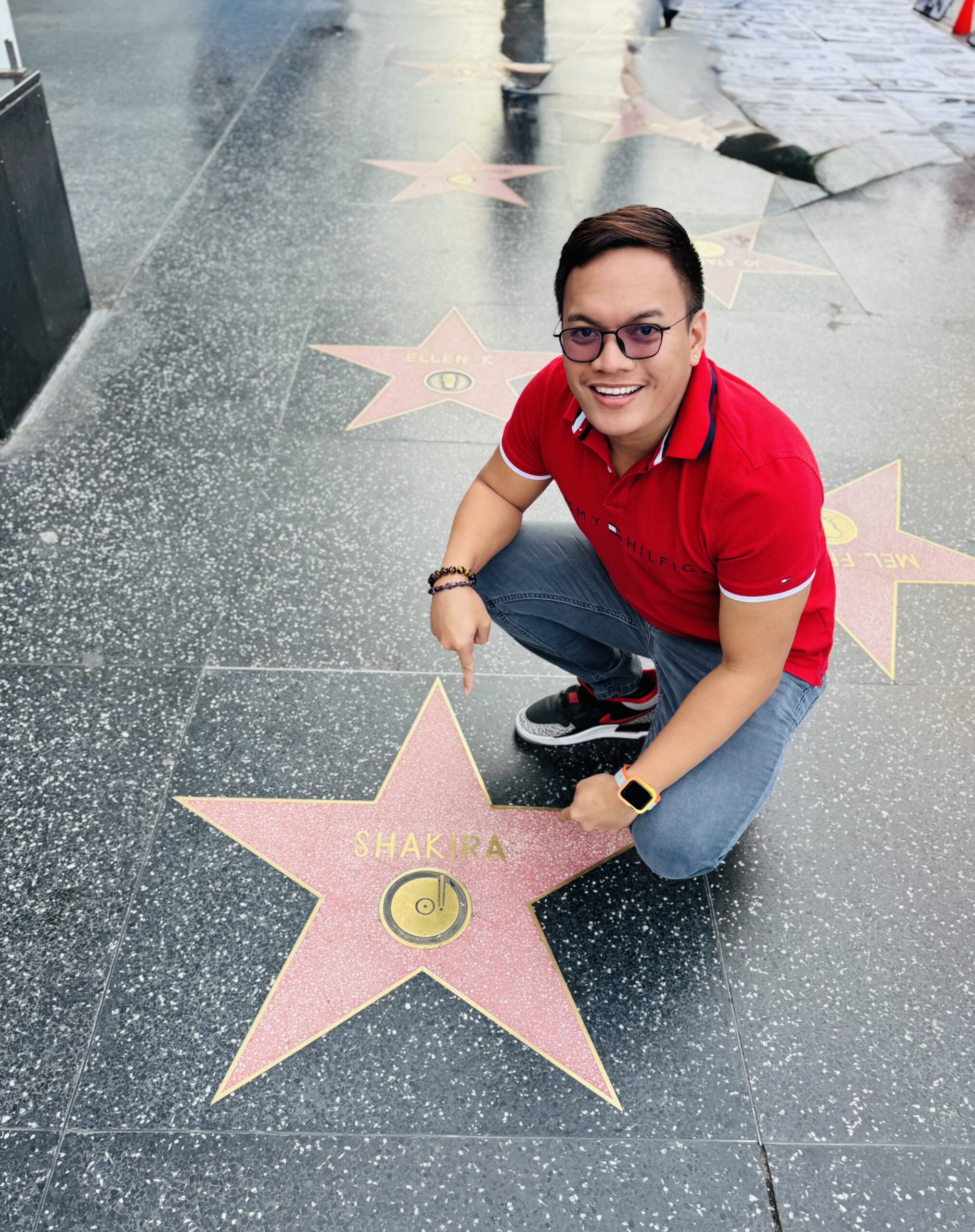
“Before I was given the opportunity to teach abroad, I was denied a U.S. visa twice,” he says. “Those moments were heartbreaking. I remember leaving the embassy feeling as though the doors of opportunity had closed on me.”
What followed wasn’t a clean, motivational rebound. It was doubt, the corrosive kind that makes a person question the very thing they’ve built a career on. “I questioned my abilities and wondered if I was truly qualified or intellectually capable enough for the role,” he recalls. “I began to think that perhaps working abroad was simply not meant for me.”
He had every reason to believe it. By the time he faced that second denial, he had already spent years earning his place in Philippine classrooms — five years as a public high school teacher under the Department of Education and two more in a private school, seven years total of lesson planning, student leadership, and curriculum work. He was not an unproven applicant hoping for a lucky break. He was an experienced educator being told, without explanation, to go home.
The former DepEd teacher chose not to treat the denials as verdicts. “There were days when disappointment made me lose confidence in myself, but I refused to let rejection define my future,” he says. Instead of retreating, he kept teaching, kept sharpening his craft, and kept preparing for a third attempt he had no guarantee would land any differently than the first two.
When the chance came around again, he took it — carrying, as he puts it, “not only my documents but also the lessons I had learned from every rejection.” This time the answer was yes. “That third attempt changed the course of my life,” he says. The saying he leaned on was almost too neat to be true: third time’s the charm. For him it happened to be.
Learning to teach in a country that wasn’t his
Getting the visa was the beginning of the hard part, not the end of it.
Arriving in the United States in 2023, David stepped into an educational system built on different assumptions than the one he’d mastered back home. There was the homesickness that every overseas Filipino worker knows, the slow work of cultural adjustment, and the specific professional challenge of adapting his teaching to an unfamiliar classroom culture. “There were moments when I questioned myself,” he admits, “but I reminded myself why I started this journey.”
His response was methodical rather than dramatic. He kept a positive mindset, stayed in close contact with family and friends in the Philippines, and deliberately built friendships with fellow Filipino educators who understood exactly what he was navigating. He treated his American colleagues as teachers in their own right, learning from them rather than measuring himself against them.
The adjustment paid off in ways that eventually became official. Beyond the Teacher of the Year recognition, David has earned educational grants supporting innovative classroom projects and been trusted with advanced coursework — the AP Seminar and AP Research classes that ask students to think, research, and argue at a college level. “These opportunities have challenged me to become a better educator,” he says, “while making a meaningful impact on my students’ academic success.”
For a man who once wondered whether he was “intellectually capable enough” for the job, being handed the school’s most demanding courses reads like a quiet answer to an old doubt. He doesn’t frame it that way himself. But the contrast is hard to miss.
The parts of the job that don’t fit on a résumé

Ask David what he actually loves about the work, and the awards fall away.
“Teaching has always been more than just a profession for me,” he says. “It is my calling.” What holds his attention isn’t recognition but the slower, less measurable business of watching a student change. “Seeing students gain confidence, achieve academic success, and realize their potential is one of the most rewarding parts of being an educator.”
That instinct to develop people beyond a single subject shows up everywhere in his history. Back in the Philippines, he coached students in vocal solo and duet competitions, mentored contestants in school pageants on public speaking and stage presence, and sang in his hometown’s teachers’ chorale group at civic and cultural celebrations. Music, he says, has always been “one of my greatest passions” — a way to reach students that a lesson plan can’t always manage.
In Arizona, that same coaching impulse found a new outlet on the volleyball court, where he serves as an assistant coach for the school’s indoor team. “Coaching has given me another opportunity to mentor students beyond the classroom,” he explains, “by helping them develop teamwork, discipline, leadership, and perseverance.” The Filipino educator seems constitutionally unable to limit himself to the syllabus. Whether the venue is a stage, a court, or a classroom, the aim is the same: build the person, not just the grade.
He is clear-eyed about what he considers the real payoff. “The greatest reward of being a teacher is seeing my students become successful in their chosen endeavors, whether in college, their careers, or life in general,” he says. “Knowing that I played a small role in helping them achieve their dreams is incredibly fulfilling.”


Carrying the flag without saying so
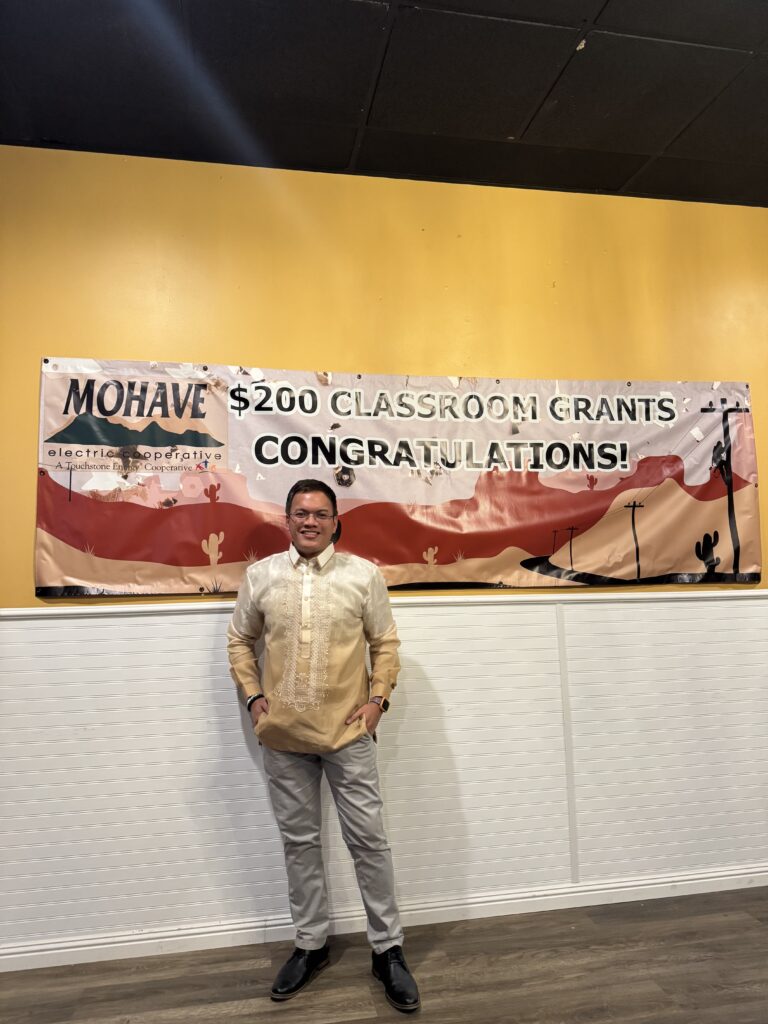
There’s a role David never formally applied for but takes seriously all the same: representing the Philippines to a school community that may know little about it.
He describes serving as a cultural ambassador as “one of the most rewarding aspects of my journey,” a chance to share Filipino traditions with students and colleagues while absorbing the diversity of the community around him. It’s a two-way exchange, and he treats it as one. The pride is evident, but so is the humility — he frames himself as a learner as often as a teacher.
That posture carries into the advice he offers other Filipinos working far from home, advice shaped directly by his own detours. “Do not let setbacks define your future,” he says, before pointing to the visa denials as proof he’s speaking from experience rather than platitude. “I was denied a U.S. visa twice, but I refused to give up. Looking back, I realized that every delay prepared me for something greater.”
He is practical, too, in a way that reflects the financial reality behind most overseas work. Save consistently, he urges, avoid unnecessary debt, and resist the pull to spend just to keep pace with others. Choose your circle deliberately, he adds, surrounding yourself with people who genuinely want to see you succeed while staying anchored to family back home. “Never forget your values and where you came from,” he says. “Let your character speak louder than your achievements.”
What comes after the exchange
David’s time in Arizona has an expiration date built into it — the J-1 program is an exchange, not an immigration path — and he already knows what he wants to do with what he’s learned.
He plans to bring the knowledge and methods he’s gathered abroad back to Philippine education, ideally as “an educational leader who promotes innovative teaching strategies and research-based instruction.” His stated advocacies are unglamorous and specific: quality education, teacher professional development, and opportunities that help Filipino learners compete globally without losing their footing in Filipino values.
It’s a fitting ambition for someone whose own story turned on refusing to accept a closed door. When he reflects on the full arc — the applicant who doubted himself, the teacher who got the award — he keeps returning to the same idea. “Rejection does not determine our future,” he says, “and perseverance, hard work, and faith can open doors that once seemed permanently closed.”
His mantra, the one he repeats to students and kababayans alike, is the compressed version of everything the two embassy visits taught him. “What is meant for me will never miss me,” David says. “Just trust God’s timing and keep moving forward.”
For a man who was told no twice before he heard yes, it isn’t a slogan. It’s a record of what happened.
