



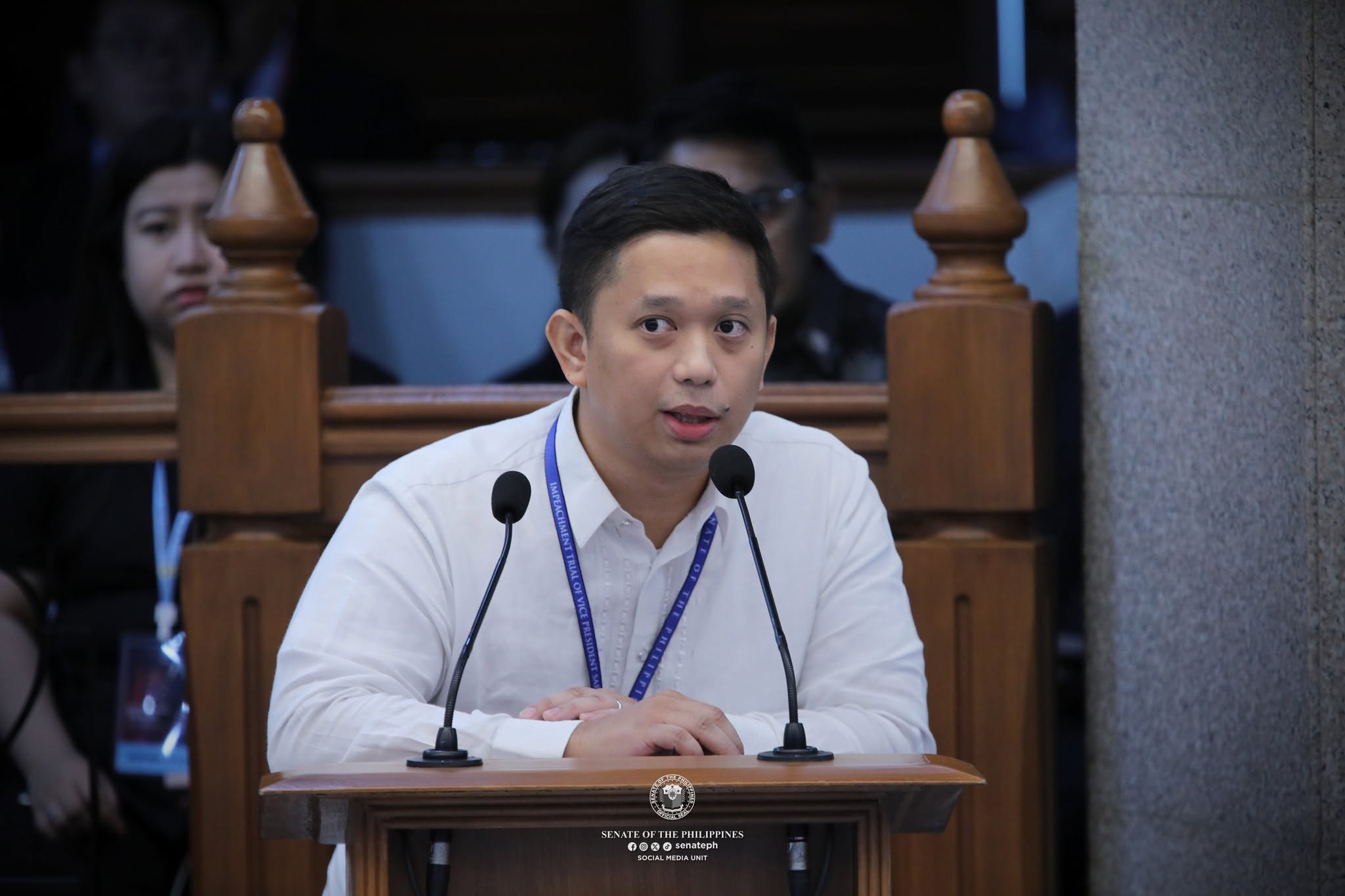

Grave threats and inciting to sedition are ordinary crimes tried in the country’s lowest courts, not the “other high crimes” the Constitution reserves for impeachment, Vice President Sara Duterte’s defense panel told the Senate on Wednesday, July 8, 2026, as the third day of her trial closed.

Defense counsel Mark Vinluan built that jurisdictional argument on the Revised Penal Code, where both offenses carry penalties of prisión correccional. Charges of that weight, he said, belong before metropolitan and first-level courts. Article XI, Section 2 of the 1987 Constitution enumerates the grounds for removing a sitting official: treason, bribery, graft and corruption, culpable violation of the Constitution, betrayal of public trust, and other high crimes.
The panel spent much of its closing remarks pressing a separate point — that nothing in the prosecution’s case establishes Duterte ever hired anyone. Vinluan drew on an exchange from the previous day’s session, in which Senator-Judge Risa Hontiveros observed that the statements presented did not demonstrate the Vice President had contracted an assassin. House prosecutor Amando Ligutan, according to Vinluan’s account of the exchange, conceded the video might not fully prove the point.
Where the word “assassin” came from at all is disputed. The defense argues it was introduced by parties who stripped Duterte’s remarks of their surrounding circumstances.
Those circumstances, Vinluan told the court, were months of harassment, surveillance, and intelligence work directed at Duterte after her break with the administration. He said operatives profiled her residences in Davao City and Metro Manila, stripped away security personnel she trusted, and leaked her official schedule.
“The truth of the matter is this: She and her family were threatened… What triggered her response was a question about Operation Romanov, which is the plot to eliminate VP Sara and her entire family,” Vinluan said.

No authority has verified that any such plot existed, and nothing establishing it has been entered into the impeachment record, the Manila Times and Daily Tribune both noted in their coverage.
The witness on the stand for both days was National Bureau of Investigation Senior Agent John Mark Calilung, who authenticated footage of the November 23, 2024 online briefing. Under questioning from Senator-Judge Bam Aquino, Calilung said his assignment covered the videos alone — he had not looked into whether the hitman Duterte referred to exists. He also had no firsthand knowledge of the briefing itself, having reviewed only the livestream through recording software.
Defense counsel Carlo Narvasa produced a Department of Justice certification during cross-examination stating that the NBI’s initial referral came up short on evidence and warranted further case build-up. Calilung confirmed under Narvasa’s questioning that the bureau stood as the sole complainant, and that Marcos, First Lady Liza Araneta-Marcos, and Romualdez submitted no affidavits and filed no criminal complaints of their own.
Article IV of the impeachment complaint is the one now before the court, covering the alleged assassination plot, grave threats, and inciting to sedition.
Prosecutors have told the court they intend to call a witness on the supposed hitman. Presiding Officer Senator-Judge Francis Escudero ordered a subpoena issued to Zuleika Lopez, Duterte’s chief of staff, who is expected to appear when hearings resume next week.
On the sedition allegation, Vinluan rejected the premise outright, arguing that Duterte gave voice to sentiments Filipinos already held and that she upheld public trust rather than betrayed it. Prosecutors take the opposite view: that her declaration reflected intent, and that a vice president who publicly announces she has ordered killings of the country’s highest officials has failed the constitutional standard of her office regardless of whether any plot was ever set in motion.
