



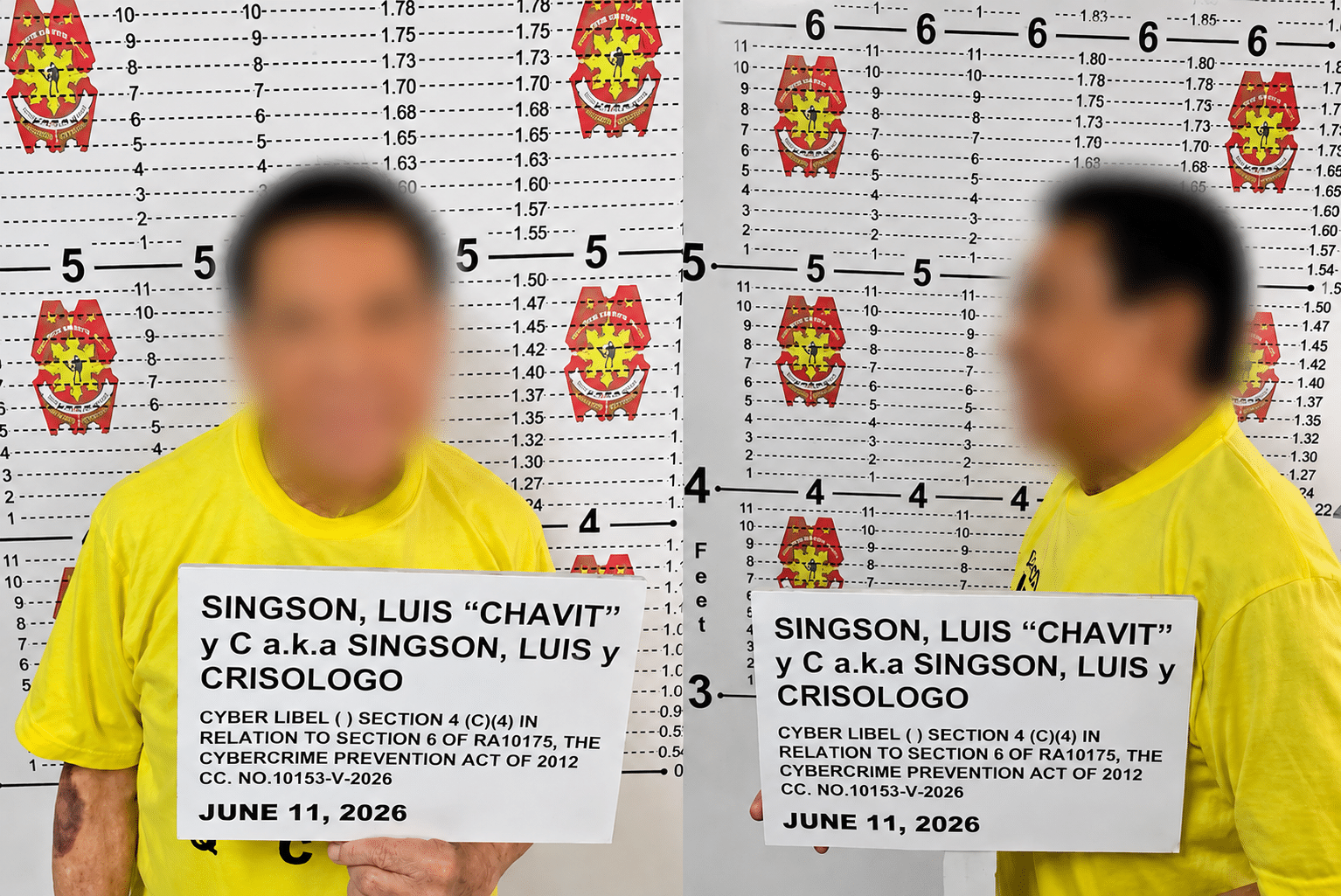

Luis “Chavit” Singson is refusing to back down from his demands for an inquiry into missing flood control money, framing the cyber libel charge against him as proof that his questions have struck a nerve.

“If asking where the people’s money went and who benefited from it is enough to earn a cyber libel case, then it only proves that these questions are hitting where they hurt most,” the former Ilocos Sur governor said in a statement obtained Friday by The Manila Times.
The 84-year-old businessman cast the charge as something to be worn openly rather than hidden. “I wear this arrest as a badge of honor,” he said. He maintained that the real question is not the libel complaint at all, but who pocketed funds meant to shield Filipino communities from flooding and who ought to answer for it.
A central dispute concerns how the arrest actually unfolded. Singson insists he was never taken into custody at home and instead presented himself at the police station to post bail. “It is not true that I was arrested at my residence. What should have been a routine legal proceeding was an attempt to publicly humiliate me through the unauthorized circulation of my booking photograph,” he said. That account is contradicted by police. According to the Quezon City Police District spot report cited by Philstar.com and GMA News, operatives of Police Station 12 served the warrant on Singson at his home in Barangay Ugong Norte at about 1:18 p.m. Thursday. The Philippine Daily Inquirer, which obtained a copy of the police report, likewise placed the arrest at his residence, though it noted a relative said Singson had surrendered voluntarily at the precinct.

The warrant was issued by Branch 21 of the Regional Trial Court in Vigan City for alleged violation of the Cybercrime Prevention Act of 2012, with bail set at PHP 60,000, which Singson paid for his release the same day. Neither police nor the Inquirer’s sources disclosed what the complaint was about or who filed it.
Singson questioned the handling of the case beyond the booking photo, pointing to a judge assigned from outside his home province and what he described as the unusual speed of the proceedings. He argued that the timing followed his sharpened push for a full accounting of the flood control controversy.
He also drew a broader line about who is facing legal action. “Is it not noticeable that while the details of corruption are coming out, the ones speaking about it are the ones being silenced and being charged with cases?” he said.
