



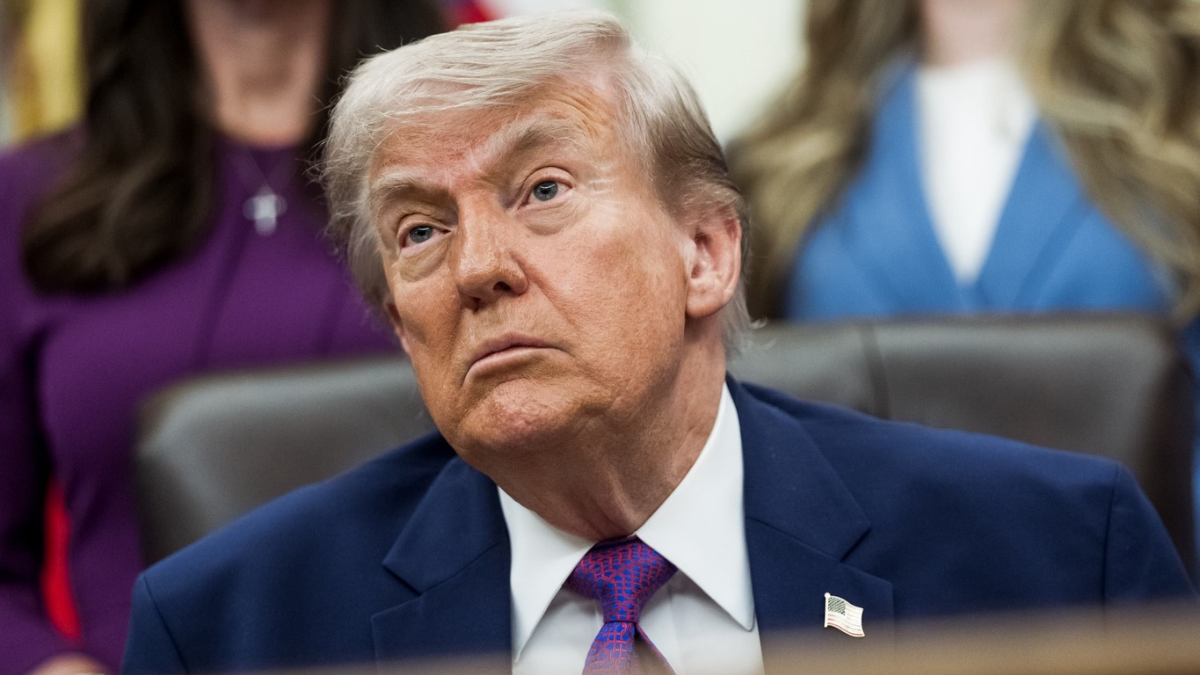

President Donald Trump declared Monday that the ceasefire halting the Gulf conflict was barely alive, hours after Iran’s military signaled it was prepared to respond to any hostile move — a sharp exchange that sent oil prices surging and dimmed prospects for a negotiated settlement.

“The ceasefire is on massive life support, where the doctor walks in and says, ‘Sir, your loved one has approximately a one percent chance of living,'” Trump told reporters.
His remarks followed Tehran’s rejection of a US diplomatic proposal and the submission of a counteroffer that Trump dismissed as “TOTALLY UNACCEPTABLE,” insisting the United States would achieve “complete victory” over Iran.
Iranian parliamentary speaker Mohammad Bagher Ghalibaf, who had served as chief negotiator in earlier talks with Washington, warned shortly after Trump’s comments that his country was prepared “for any eventuality.” Writing on X, he stated that Iran’s armed forces were “ready to respond and to teach a lesson for any aggression,” adding: “A bad strategy and bad decisions always lead to bad results — the world already understands this.”
The spokesman for the Iranian parliament’s national security commission, Ebrahim Rezaei, had already set the tone a day earlier, declaring on Sunday that Tehran’s restraint was “over as of today” and that any attack on Iranian vessels would trigger “a strong and decisive Iranian response against American ships and bases.”
Iran’s foreign ministry said its counterproposal had called for an end to the US naval blockade on its ports, a halt to hostilities across the region — a condition that would implicate Israeli strikes on Hezbollah in Lebanon — and the unfreezing of Iranian state assets held in foreign banks. Ministry spokesman Esmaeil Baqaei rejected the characterization that Tehran was seeking concessions.
“We did not demand any concessions. The only thing we demanded was Iran’s legitimate rights,” Baqaei said.

The Wall Street Journal, citing people familiar with the matter, reported that Iran’s counterproposal had also included the possibility of diluting some of its highly enriched uranium, with the remainder transferred to a third country.
The breakdown rattled global energy markets already upended by overlapping blockades in the Strait of Hormuz. Aramco president and CEO Amin Nasser warned investors that the supply shock beginning in the first quarter was “the largest the world has ever experienced,” adding that even an immediate reopening of the strait would not stabilize markets for months — and that further delays could push normalization into 2027.
Trump told Fox News he was considering reviving a short-lived naval escort operation for commercial ships transiting the waterway but had not made a final decision. Saudi Arabia had previously blocked that operation, with Saudi sources telling AFP that Riyadh feared it “would just escalate the situation and would not work.”
The prolonged closure has also disrupted fertilizer shipments from Gulf ports, raising alarms about food security. Jorge Moreira da Silva, executive director of the United Nations Office for Project Services, told AFP there were only weeks left to prevent what he called a potentially “massive humanitarian crisis.”
“We may witness a crisis that will force 45 million more people into hunger and starvation,” he said.
Israeli Prime Minister Benjamin Netanyahu has maintained that the conflict cannot conclude until Iran’s nuclear facilities are destroyed — a position that complicates any diplomatic pathway, particularly given Iran’s demand that international sanctions be lifted entirely as part of any agreement.
