




Operatives from the Criminal Investigation and Detection Group entered the Senate on the afternoon of Monday, June 1, carrying a Sandiganbayan order for the arrest of Sen. Jinggoy Estrada — and they met resistance from the chamber’s top official before the warrant was served, according to a ranking government official.

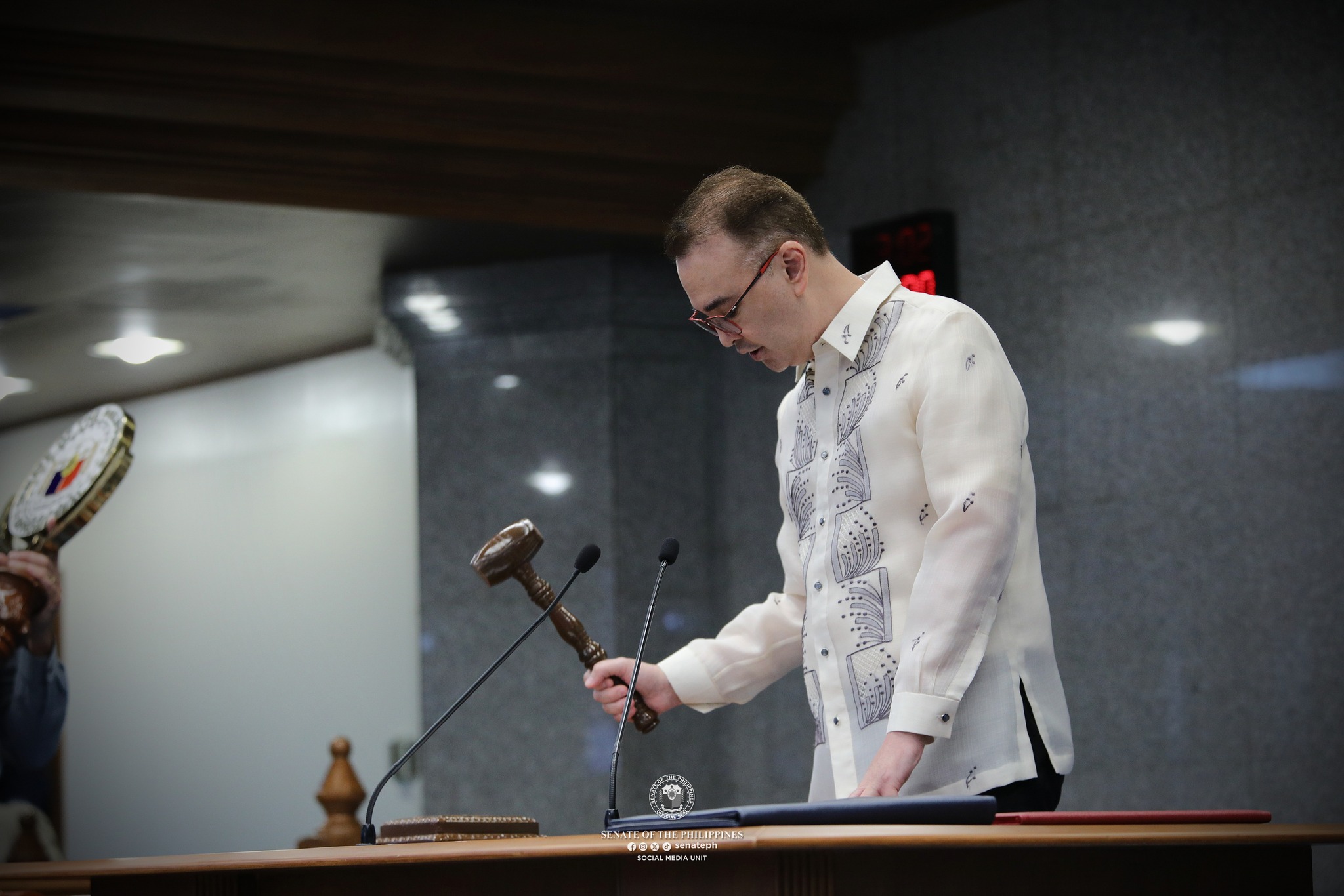
Interior and Local Government Secretary Jonvic Remulla, who reached the Senate around 3:30 p.m. to supervise the operation, recounted that Senate President Alan Peter Cayetano pressed him not to proceed. The argument turned on parliamentary courtesy: Cayetano maintained that senators have long been shielded from arrest within Senate grounds, a tradition he traced back to the leadership of Jovito Salonga, on the reasoning that the legislature stands as a co-equal branch alongside the courts and the executive.
Remulla said he refused to entertain the point once the exchange grew heated. He told reporters at Camp Crame in Quezon City that Cayetano had pointed to history to make his case. “He said that even in the time of (Jovito) Salonga, he protected (Juan Ponce) Enrile),” Remulla told reporters. The secretary said he cut the claim off directly: “I told him that Sir, I’m sorry. You lost that privilege when Bato escaped.”

That reference pointed back to May 11, when Sen. Ronald “Bato” Dela Rosa came to the Senate for the move to remove then-Senate President Vicente “Tito” Sotto III. The National Bureau of Investigation attempted to take Dela Rosa into custody that day, but Cayetano — by then already Senate President — intervened, blocked the move, and placed the senator under Senate protective custody. Dela Rosa later walked out of the building, reportedly aided by Sen. Robin Padilla.
The plunder case against Estrada is being heard by the Sandiganbayan’s 5th Division. Remulla was firm that what happened to Estrada was an arrest, not the voluntary act his allies have described. The senator was told of the arrest inside the Senate and read his Miranda rights there before being taken to CIDG headquarters at Camp Crame for booking — a process covering mugshots, fingerprinting, and medical checks meant to confirm the identity of those listed in the warrant and to document each accused person’s physical state.
Of the five individuals named in the warrant, Remulla said all were in sound physical condition apart from former Public Works Secretary Manuel Bonoan. Bonoan had turned himself in to the CIDG together with another respondent, but his blood pressure climbed to 192/100 during the medical examination, leading police to bring him to a hospital. Remulla said Bonoan would remain under medical care until his condition stabilizes. “He will be kept there (hospital) for an undetermined amount of time before he stabilizes and his doctors say that he is fit to stand trial,” the secretary said, adding that the former official would be held under “full security, he will not be allowed to go out, and there is a restrictive access to him.”
