



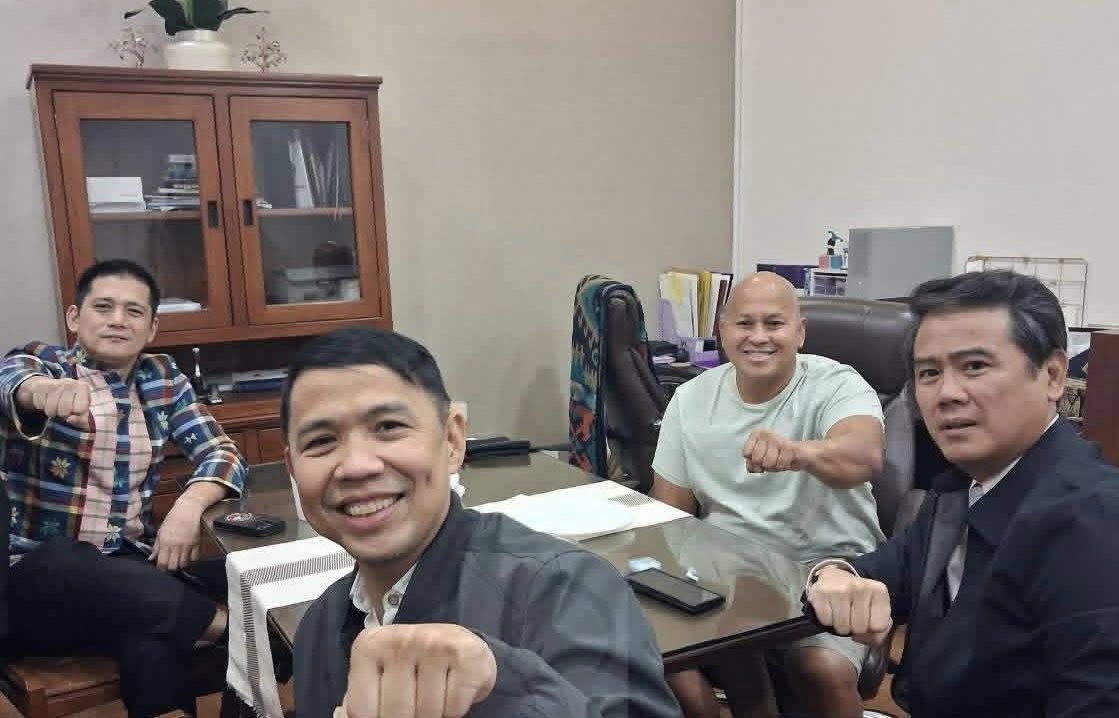

Counsel for Senator Ronald “Bato” Dela Rosa is preparing a return to the Supreme Court as early as Thursday, pointing to the gunfire that erupted at the Senate building as new legal grounds for emergency relief.

Atty. Jimmy Bondoc said the violence, which he described as turning the premises into a combat-like scene, constitutes a supervening event — a development significant enough to warrant renewed judicial intervention even without an existing Temporary Restraining Order in place.
“Nadun po kami, nagpuputukan, nagtatakbuhan po kami doon. Para po talagang war zone yung aming nadanasan,” Bondoc recounted.
He confirmed that Dela Rosa is unharmed and remains in his Senate office. “We believe that… what happened now is clear, unmistakable proof of the threat against the life and the liberty and security of our kind, Senator Bato,” Bondoc said.

The legal team has also drawn up a Writ of Amparo — a judicial remedy invoked when there is a credible threat to a person’s life, liberty, or security. Bondoc framed it around the possibility of the senator disappearing from legal protection entirely. “We have prepared a writ of amparo because we feel that this is a threat of enforced disappearance… pwedeng-pwedeng kasi siyang mawala na lang outside the protection of our laws,” he explained.
Bondoc stopped short of directly accusing the National Bureau of Investigation, even as he acknowledged that armed men wearing NBI vests were present during the incident — a detail he said created a reasonable basis for fear. “We’re not accusing them, but we’re saying that right now, on its face, the way it looks, parang NBI agent… based on our right to preserve ourselves, siyempre we have to assume what it looks like,” he said.
Interior Secretary Jonvic Remulla and the NBI have both denied authorizing any arrest operation that night, and Remulla has since provided what Bondoc described as “adequate protection” at the Senate.
On the question of surrendering Dela Rosa to the International Criminal Court, his counsel argued there is a legal void that bars any unilateral action. “There are no rules on surrender. Meaning, they cannot, on their own, just make up rules on surrender,” Bondoc said, invoking the principle of in dubio pro reo — when in doubt, rule in favor of the accused. “Where’s the warrant? We haven’t seen the warrant.”
