



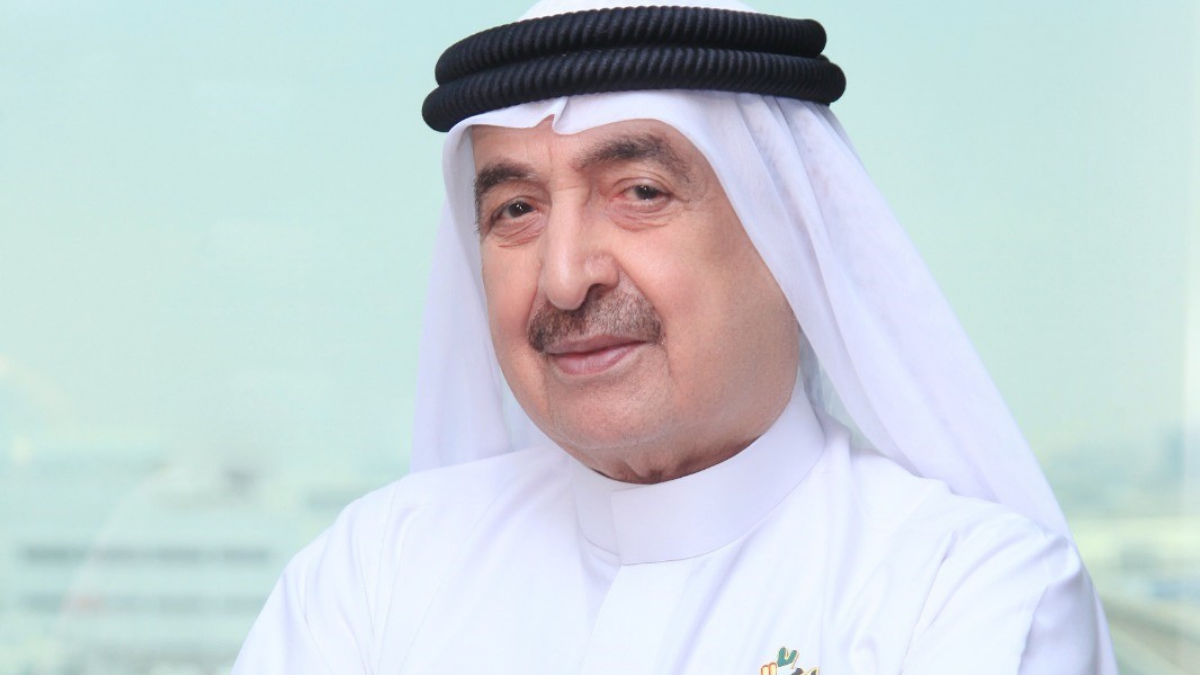

Abdulrazagh Mohammadi, the Emirati businessman who built one of the Gulf’s most beloved Filipino institutions and earned the title Ninong ng Bayan — Godfather of the Nation — from the community he devoted his life to serving, has died. He was 81.

His passing was confirmed by Expat Media, citing a source close to the family. No official cause of death has been disclosed.
Known across the UAE’s Filipino diaspora simply as Abu Nader, Mohammadi was the founder and chief executive of Emirates International Holdings Group LLC and the driving force behind the Philippine Supermarket, the UAE’s largest and most recognized retail chain dedicated to Filipino products. He is survived by a legacy that stretches across four decades and more than 300,000 Filipinos whose lives he touched.
“Throughout my business career in Dubai, which spanned over 30 years, I studied different nationalities and found that Filipinos have something to offer that I appreciate more than other nationalities,” he once said. “When it comes to work, responsibility, and business, Filipinos are the most trustworthy, and they will not betray you as long as you support them.”
His connection to the Filipino community began long before the supermarket. Starting from a trading company in Dubai in 1985, he later opened Al Wasl Travels, a travel agency through which he helped hundreds of thousands of Filipinos secure visas and airline tickets to the UAE — often at reduced rates, and sometimes at no cost at all to those who could not afford them. “Sometimes when somebody didn’t have money, I told them they can pay me when they find work,” he recalled in a previous interview.
The Philippine Supermarket opened its first branch in Al Satwa in 2005, born from a simple but deeply felt desire to help Filipinos experience a taste of home. Mohammadi personally made multiple trips to the Philippines to forge partnerships with local manufacturers and bring authentic Filipino brands to UAE shelves. The Satwa branch was eventually succeeded by a Muraqqabat location in 2009, and later a Karama branch — both of which became community anchors, not merely grocery stops.
Beyond commerce, Abu Nader was a quiet force in the lives of distressed OFWs. He provided free groceries twice a month to a pregnant Filipina whose visa had lapsed. He sponsored the rental of a hotel ballroom so Dubai-based Filipinos could cast their votes during the 2016 Philippine elections. He gave free airline tickets and legal assistance to workers in need. Long-serving members of his household staff, he said, were family — recalling one housemaid who stayed with him until she died, having already built a home in her hometown in Laguna and sent her children through college with his support.

“I grew up like this,” he said. “This is my nature. I will never say no to somebody who needs help.”
His humanitarian work drew recognition from the highest levels of Philippine officialdom. Then-President Gloria Macapagal Arroyo visited him in Dubai. In 2023, a contingent of Philippine businessmen and diplomats, including then-Ambassador Alfonso Ver and Special Envoy Norman Vincent Wee, presented him with a Plaque of Appreciation inscribed: “In heartfelt appreciation for your unwavering commitment, tireless effort, and boundless love and support towards the Filipino community in the United Arab Emirates. Your dedication has made a lasting impact, fostered unity, and strengthened bonds. Maraming salamat po!”
That same year, the Philippine Supermarket won the Supermarket of the Year Award at the Dubai Vibes Eminent Awards — an honor Mohammadi received personally.
He had also announced ambitious plans to build the UAE’s first Filipino complex, a multi-billion-dirham development envisioned to include an apartment building, a hypermarket, a restaurant cluster, a retail section, and sports and entertainment venues. “Filipinos can come here for decent accommodation, authentic food and products from the Philippines, and they can use it as a place to socialize in events, or to play sports like basketball,” he had said.
Whether that dream will be carried forward now falls to those he leaves behind.
Abu Nader is remembered not as a businessman who helped Filipinos, but as a Filipino at heart who happened to be Emirati. To the hundreds of thousands of OFWs who passed through his doors, bought his groceries, flew on his tickets, or simply felt seen by him in a foreign land — he was Ninong. He was home.
The Global Filipino Magazine extends its condolences to the Mohammadi family and to the Filipino community in the UAE.
