



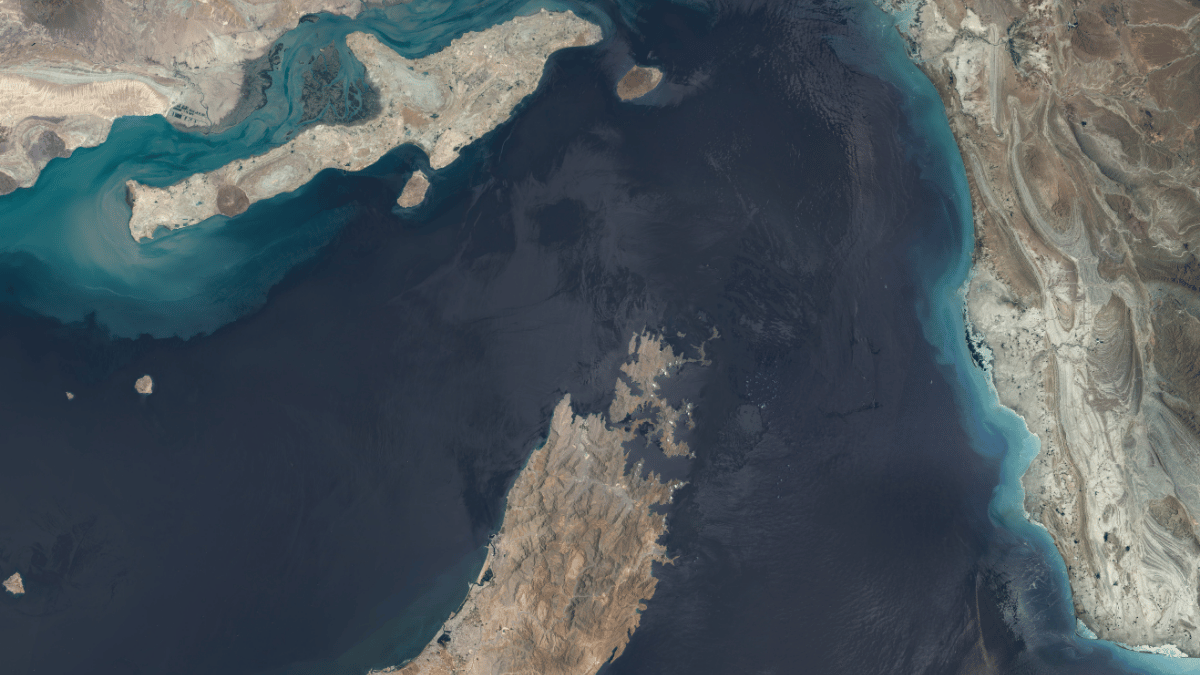

Iranian President Masoud Pezeshkian received Qatar’s prime minister early Friday while mediators relayed to Washington a new offer from Tehran: a reopened Strait of Hormuz and a return to nuclear negotiations within seven days.

The offer comes with three conditions. The United States would have to end its naval blockade of Iranian ports, grant waivers allowing Iran to sell oil despite sanctions, and honor a ceasefire whose terms extend to Lebanon.
Doha has served as a central go-between, including during several hours of indirect exchanges between Iranian and American officials at the United Nations this week.
The proposal closely tracks the Memorandum of Understanding struck in June, with the main difference being speed. That earlier arrangement set out a 60-day interim window and unraveled soon after Iran renewed its attacks on vessels in the strait.
Foreign Minister Abbas Araghchi laid out the new terms at a closed-door gathering held alongside the UN General Assembly in New York, according to someone who was present. Trita Parsi, executive vice president of the Quincy Institute, said Araghchi argued that a quick agreement would work in President Donald Trump’s favor before the November midterm elections.
Tehran has its own reasons to move fast. A deal would ease the heavy strain on Iran’s economy as Washington continues to layer on new sanctions.
“If Trump calculates this arrangement is worthwhile and can bring political benefit before the midterms and reduce gas prices, perhaps we’ll see flexibility not seen in previous weeks,” Parsi said.
He also cited “deep suspicion,” particularly over whether Iran simply wants to stall while it moves more of its oil to market and relieves its financial distress.

Iran’s hold over traffic in the waterway has become its strongest bargaining chip. Before the war, roughly 20% of the world’s traded oil and gas passed through the strait, and the fallout from its disruption has spread well beyond the region.
A senior military figure in Tehran took a harder line. Maj. Gen. Yahya Rahim Safavi, who advises Iran’s new supreme leader on military affairs, said on state television that the Americans “face a new problem called the Bab Al Mandeb Strait.”
“I think the process that is unfolding is in our favor, and the Americans will be forced to accept Iran’s conditions,” he said.
Trump has signaled he is not in a hurry to settle, even with elevated oil prices driving up inflation. Secretary of State Marco Rubio said Wednesday that “if there’s an opportunity to exchange ideas and messages, we will.”
Pezeshkian closed his address to world leaders at the UN that same day by declaring that Iran was still open to diplomacy. How much longer he and Araghchi will remain in the United States has not been made clear.
Iran’s UN mission and other officials did not immediately comment on the proposal.
Doubts also run inside Iran, where it remains uncertain whether the country’s security forces would go along with concessions backed by moderates such as Pezeshkian.
Saudi Arabia views the renewed push for a deal with skepticism, a person familiar with the matter told The Associated Press.
