



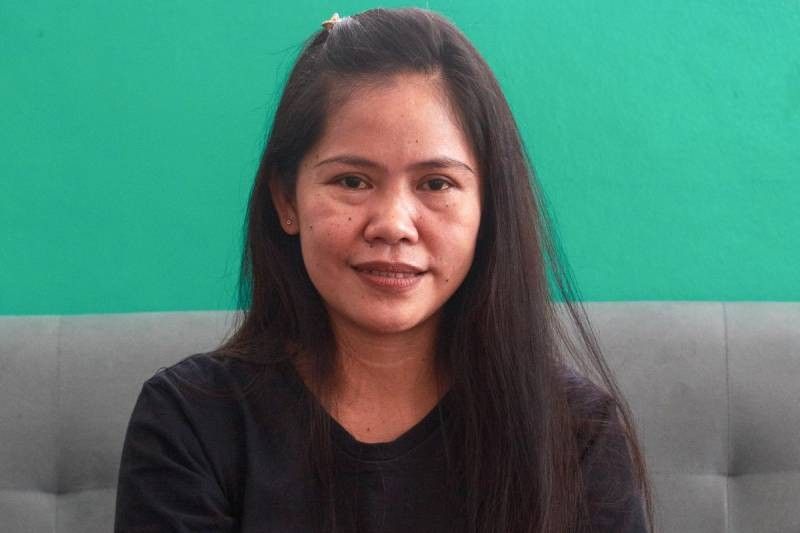

Enterprise capital, a livelihood starter kit and counseling sessions are being lined up for Mary Jane Veloso in Nueva Ecija, where the Department of Migrant Workers (DMW) sent a team after President Ferdinand Marcos Jr. pardoned the former overseas Filipino worker who once faced execution in Indonesia.

Veloso left the Correctional Institution for Women (CIW) in Mandaluyong City on Friday, September 25, after receiving the absolute pardon. The Manila Times reported that she stepped out of the facility at around 9 p.m. and was greeted outside by her parents, Celia and Cesar, and her two grown sons, Mark Daniel and Mark Darren. Bureau of Corrections (BuCor) Director General Gregorio Pio Catapang Jr. gave her a copy of the pardon along with her release order, finalizing the paperwork for her discharge.
Migrant Workers Secretary Hans Leo Cacdac directed the DMW team to meet with Veloso’s family in the province as soon as the pardon was announced.
“Our team heading to Nueva Ecija will work directly with the family and local stakeholders to develop a tailored reintegration program,” Cacdac said.
The assistance will be delivered jointly with the Overseas Workers Welfare Administration (OWWA). Apart from psychosocial counseling, the package covers skills training, starter kits for a livelihood and capital for a small business. The agencies also intend to connect whatever enterprise Veloso starts with cooperatives and economic programs run by local governments in Nueva Ecija, with the aim of keeping her financially independent over the long term.
“Reintegration is not merely about coming home—it is about restoring dignity, ensuring financial self-sufficiency, and enabling Mary Jane to contribute to her local community and economy,” Cacdac said.
A separate track is also underway through the prison system. BuCor said it would endorse Veloso to the local government of her home in Nueva Ecija, through which she may tap livelihood aid, social welfare support, counseling and skills programs.
“This only proves that there are really second chances, and we are happy that Veloso can now enjoy her newfound freedom with her family,” Catapang said.

The DMW, which welcomed the President’s decision, said its role extends to Veloso’s children and parents.
“Our instructions are clear: the DMW must stand shoulder-to-shoulder with Mary Jane, her children, and her parents as they rebuild their lives,” Cacdac said.
Marcos disclosed the pardon on Friday while in Guiuan, Eastern Samar. “Pinirmahan ko na ‘yung pardon niya kahapon,” he told reporters, meaning he had signed the document the day before. Palace Press Officer Claire Castro had earlier said the President was “seriously considering” the grant, which Bataan 2nd District Representative Abet Garcia said was being weighed on humanitarian grounds.
Indonesian authorities arrested Veloso on April 25, 2010, at Adisutjipto International Airport in Yogyakarta over heroin found in her possession, reported to weigh 2.6 kilograms. She has long insisted she was innocent and was unknowingly used as a drug courier. Then-President Benigno Aquino III appealed to Jakarta after her recruiter in the Philippines surrendered, and she was spared only hours before her scheduled execution by firing squad on April 29, 2015. She was brought home on December 18, 2024, and held at the CIW.
For the DMW, Veloso’s case shows how the non-punishment principle can apply even after a conviction. The principle holds that a person identified as a trafficking victim should not keep suffering penalties for acts committed as a result of being trafficked. The department noted that her circumstances had already been recognized when her execution was halted and she was allowed to complete her sentence at home, and said protection for victims must continue past rescue and identification into the post-conviction stage.
Migrante International welcomed her freedom but called it overdue. The group said the government had also wronged Veloso by keeping her in a Philippine prison for one year and nine months even though no case had been filed against her in local courts.
Being absolute, the pardon carries no conditions. It extinguished Veloso’s criminal liability, clearing away the remaining legal consequences of her conviction.
