



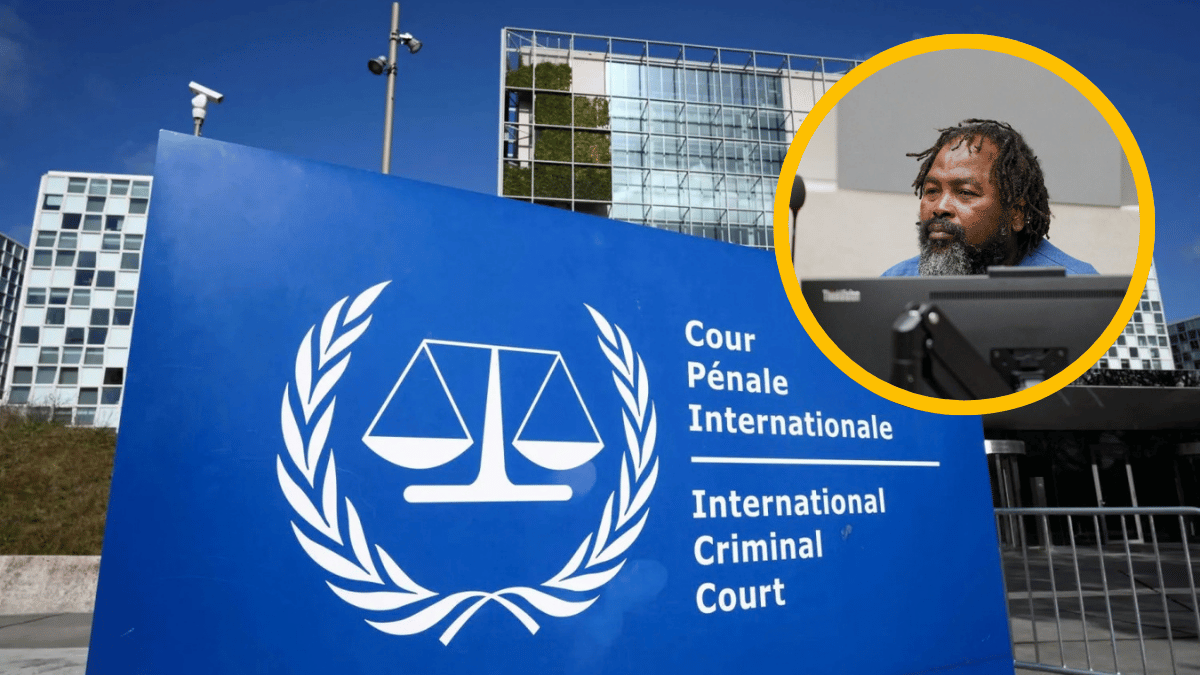

Prisoners held beneath the office of Mahamat Said Abdel Kani in the Central African Republic’s capital were packed into an unlit underground cell with no toilet, judges at the International Criminal Court said Wednesday as they convicted the former rebel commander of crimes against humanity.

“Detainees had to urinate and defecate inside the underground cell. The underground cell was dark, cramped, dirty, and insufficiently ventilated,” presiding judge Miatta Maria Samba said. “The floor was covered in waste and it smelled of faeces and urine.”
The court found Said, 56, guilty on four counts, among them torture and unlawful imprisonment, over abuses committed in 2013 at the detention center of the Central Office for the Repression of Banditry (OCRB) in Bangui, which he headed as the country slid into civil war. Three war crimes counts against him did not stand, and his sentence will be handed down at a future hearing.
Dressed in jeans and a blue sweatshirt, Said repeatedly shook his head as Samba read out the findings.
According to the judge, guards at the facility regularly used a method called “arbatachar,” tying a prisoner’s hands, elbows and feet tightly together behind the back. Detainees were also whipped, struck with ropes and drenched with water.
Victims who testified described harm that followed them and their families for years. Samba quoted one survivor who said he had been “completely unbalanced and that his life had been completely destroyed by the mistreatment he suffered.”
Said was a senior figure in the Seleka, a predominantly Muslim armed coalition whose overthrow of president Francois Bozize tipped the impoverished nation of roughly five million into sectarian bloodshed. Thousands of civilians were killed, and both sides have been accused of war crimes. Bozize responded by organizing militias drawn largely from Christian and animist communities, known as “anti-Balakas,” in a bid to retake power.

From 2014, French forces operating under a UN mandate helped authorities regain control of the major cities. A peace deal signed in Khartoum in 2019 has since brought relative stability, and President Faustin-Archange Touadera, who has been elected three times, points to his record of calming a country scarred by decades of fighting.
The ICC, established in 2002 as the only independent court able to try suspects accused of the gravest international crimes, turned to the other side of the conflict last year. It convicted former sports minister Patrice-Edouard Ngaissona, a senior anti-Balaka leader, and ex-lawmaker Alfred Yekatom, who led the militia’s fighters on the ground. Yekatom was jailed for 15 years for 20 counts of war crimes and crimes against humanity, including murder and torture, while Ngaissona received 12 years on 28 counts.
Civil society figure Fernand Mande Njapou said the ruling gave victims reason to be proud. “But I know there are other big fish out there. We ask the ICC to get their hands on those big fish,” he told AFPTV.
In Bangui, some victims’ groups were less satisfied, objecting to the dropped war crimes charges.
“Our reaction… is one of dismay. Why? Because the court rejected several of the charges. So will the sentence be less?” said Landry Makokpala of the association of victims from crises in Central Africa. “It’s not what we expected as victims.”
Judges ruled that Said himself took part in questioning and abusing detainees, and that he was present while they were being tortured.
