



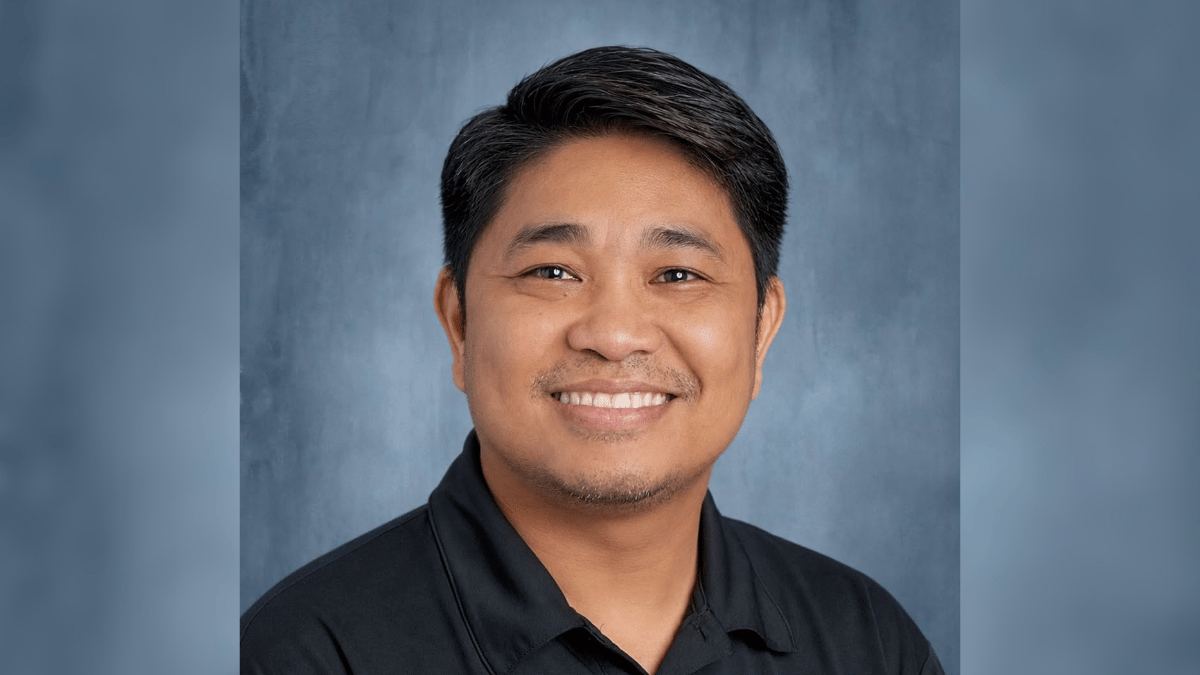

On paper, the first assignment looked like a step backward. A teacher who had spent 17 years in Philippine schools, 11 of them as a sports coordinator, arrived in California in 2024 and was put in front of a third-grade class to teach mathematics and science. Vicente M. Rabang Jr. saw it differently.

“Instead of viewing this as a limitation, I treated it as an opportunity to expand my capabilities as an educator,” the Filipino teacher shares with TGFM.
Now in his third year in the United States, Vicente is back where he always wanted to be. The 41-year-old teaches physical education and yoga to elementary students at Hazel Mahone College Prep, one of the public charter schools under the Fortune School of Education. The first year, with its unfamiliar subjects, new system, and long distance from home, turned out to be less of a detour than a test of something he had believed for a long time: a Filipino teacher’s experience does not expire at the airport.
He is quick to correct one common assumption about why he left. “I did not come to the United States to find employment; I came as a cultural exchange teacher, intending to learn from another educational system while also sharing what I had gained from years of teaching in the Philippines,” Vicente explains.
That distinction shapes almost everything about how he talks about his work. To him, the exchange runs both ways. America has things to teach him, and he arrived with things to teach America.
The years he carried with him
Vicente’s career in the Philippines reads like a cross-section of the country’s education system. He taught learners from pre-elementary all the way to the tertiary level. He served as a MAPEH Coordinator, overseeing the subject cluster that bundles Music, Arts, Physical Education, and Health in Philippine schools. For 11 years he was a Sports Coordinator, a role that trained him in curriculum leadership, sports management, coaching, program organization, and student development.
He also had a second career on the side. For two years, the PE educator worked part-time with Quipper Philippines, an e-learning provider, as a Content Specialist writing Physical Education material for Grades 11 and 12. He was later promoted to Senior Content Specialist. The work took him outside the four walls of his own classroom and put his lessons in front of students and teachers he would never meet.
By the time he had passed 17 years in the profession, the familiar had become too familiar.
“After more than 17 years in Philippine education, I reached a point where I wanted to challenge myself beyond what was already familiar to me,” Vicente says.
He is careful not to describe the move as leaving something behind. The coordinator, the coach, the content writer, and the researcher all boarded the plane with him.
“One of the greatest highlights of my career has been realizing that when I left the Philippines, I did not leave my 17 years of experience behind—I brought those years with me, and they became something I could offer,” the former sports coordinator says.
That realization did not come on day one. It had to be earned in a classroom where none of those titles meant anything yet.
Learning to be a beginner again
Every overseas worker knows some version of the moment when a long résumé stops speaking for you. For Vicente, it came in his first American school year.
“Starting over in another country can be humbling,” he says. “No matter how many years you have taught or how much professional experience you bring, entering a new educational system requires you to become a learner again.”
The list of adjustments was long. He had to learn new educational expectations and policies, different classroom practices, unfamiliar student behaviors and technologies, and new ways of communicating with families and colleagues. On top of all that, he was teaching third-grade mathematics and science rather than the subject he had built his career on.
The veteran PE teacher leaned into it. “Teaching outside my primary specialization pushed me to be more flexible and gave me a deeper understanding of elementary education in the American school system,” he says.
Outside school, there was the other kind of adjustment, the one that has nothing to do with lesson plans. Like many Filipinos abroad, Vicente found himself missing family, familiar places, food, celebrations, and what he describes as simply the comfort of being in his own culture.
What carried him through was a habit he names plainly. “What helped me overcome these challenges was my willingness to remain teachable,” the Filipino educator says. “I sought feedback, observed, reflected, adjusted, and continued learning.”
He did not do it alone. Vicente credits his family, colleagues, mentors, friends, and professional community as his support system during that first stretch. The year also sharpened a distinction he now considers essential for anyone working in a foreign system.
“Adaptability does not mean abandoning who you are,” he says. “It means learning how to grow in a new environment while remaining grounded in the values that brought you there.”
Back to his first love
In his second year in the United States, Vicente returned to Physical Education. He does not describe it as a job change so much as a homecoming.
“Physical Education has always been my first love because movement gives me a unique way to educate the whole child,” he says.
Ask the PE teacher what his subject is for, and he will not start with fitness or scores. He will talk about what a child learns while playing.
“A game can teach a child how to communicate. A team challenge can teach cooperation. Losing can teach resilience. Trying an unfamiliar movement can build confidence. Following rules can develop responsibility and respect,” Vicente explains.
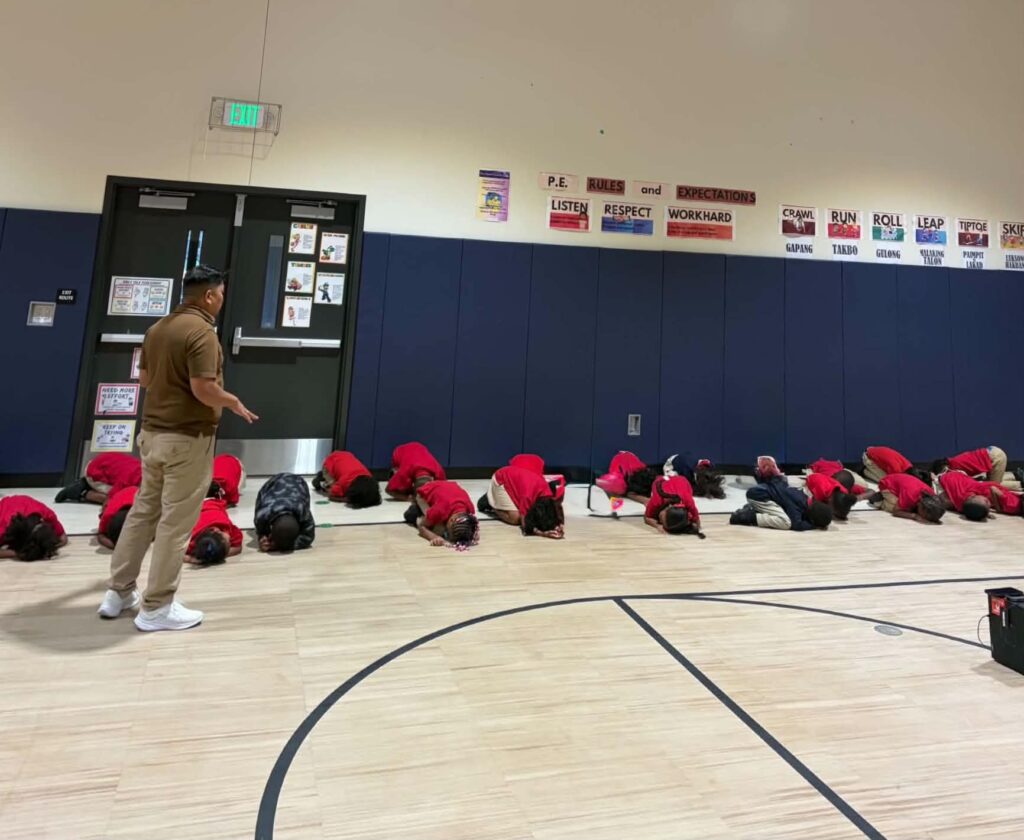
He weaves yoga into his PE classes to give his scholars, as he calls his students, room to develop flexibility, body awareness, focus, self-regulation, and overall wellness. For some children, the quieter work on the mat matters as much as anything that happens on the field.
Underneath all of it is a principle he returns to again and again. PE, in his classroom, is not reserved for the fastest or the most coordinated kids.
“I want every student to feel that they belong in my class, regardless of their athletic ability, background, confidence, or previous experience with physical activity,” the Filipino educator says.
Anyone who remembers being the last one picked for a team will understand why that matters. For Vicente, the payoff is watching a child realize that the gym is not a place to dread.
“The most satisfying part of my work is seeing children discover that Physical Education is a place where they can succeed, connect with others, and enjoy being physically active,” he says.
Culture you can play

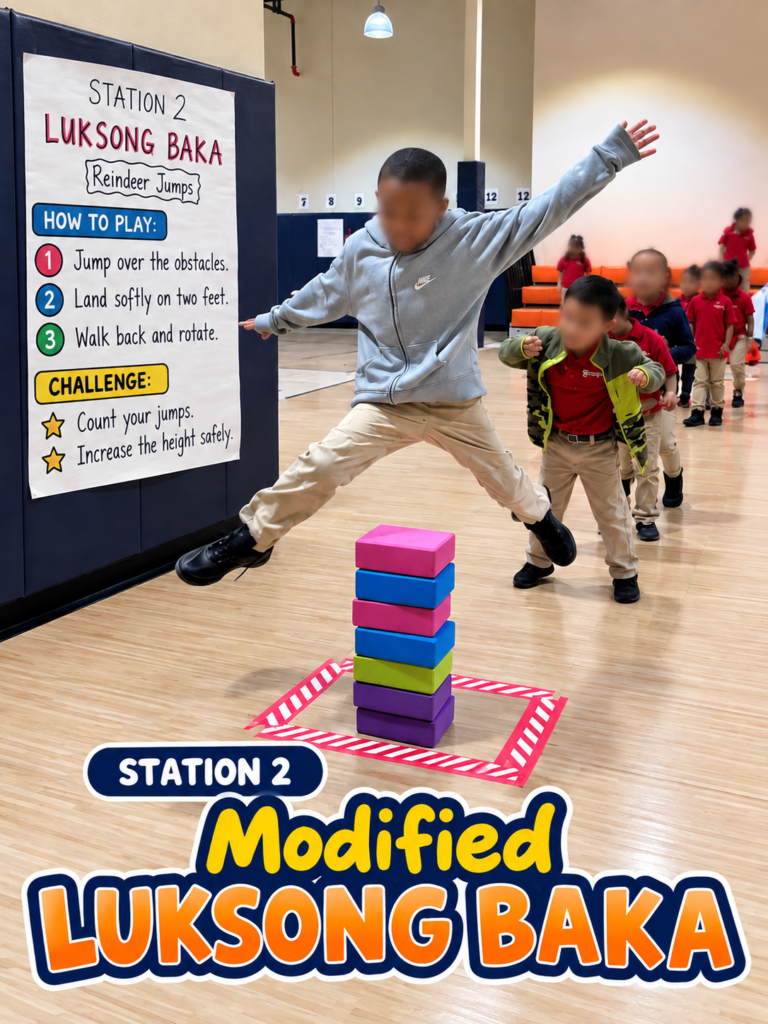
The return to PE gave Vicente something his first-year assignment could not: a way to bring the Philippines into the room without a textbook. His background in sports, dance, and traditional Filipino games lets him introduce experiences that many of his students might otherwise never encounter.
He is clear that this is not a cultural lesson delivered from the front of the class. The children learn by doing.
“They do not simply hear about Filipino culture—they can move it, play it, and experience it,” Vicente says.
For the cultural exchange teacher, this is the program’s purpose made physical. A game passed down through Filipino childhoods becomes, for a group of American elementary students, a first real encounter with a culture on the other side of the Pacific.
“For me, this is cultural exchange in its most meaningful form,” he says.
It also connects to his longer-term work. Vicente wants to study traditional Filipino games as a researcher, not just teach them as a coach.
“I hope to help preserve and promote Filipino movement culture by studying our traditional games and exploring meaningful ways to integrate them into contemporary Physical Education,” he says.
Building bridges beyond the gym
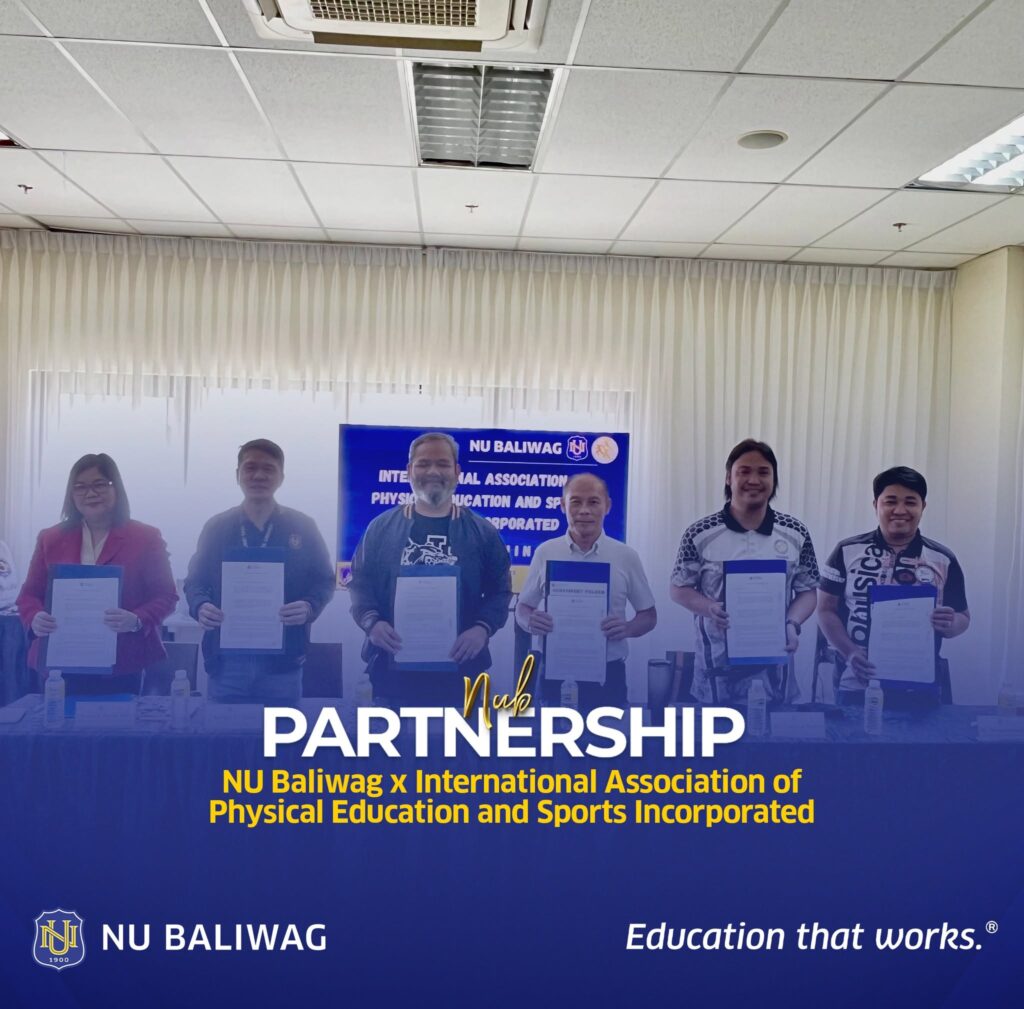
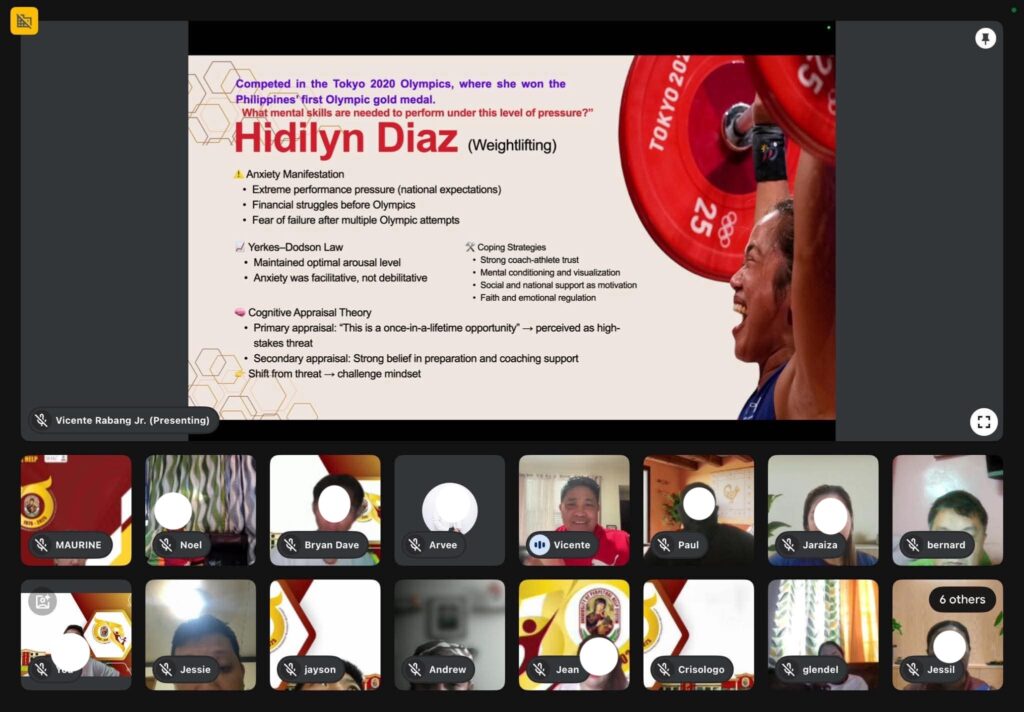
Vicente’s work does not end at the school gate. He serves as Head of International Linkages for the International Association for Physical Education and Sports (IAPES), a role that fits a trait he openly admits to: he likes connecting people.
Living in the United States has widened that network. The PE teacher has built ties with organizations in his field, including SHAPE America and the California Association for Health, Physical Education, Recreation and Dance (CAHPERD). He wants those connections to serve more than his own career.
“Knowledge becomes more powerful when it is shared,” Vicente says.
His goal is to build bridges between Filipino Physical Education professionals and the wider international community, so practitioners on both sides can exchange practices and research. He wants to see more Filipino PE teachers, researchers, coaches, and students taking part in international conversations, conferences, collaborations, and studies.
While teaching full-time abroad, he is also pursuing a Ph.D. in Physical Education and Sports. The degree, he says, is not about adding letters after his name. He is pursuing it “not simply to earn another academic qualification, but to deepen my knowledge, strengthen my practice, and share what I learn with my students.”
That idea runs through almost everything he says: learning is only worth something once it is passed on. What he picks up in his doctoral studies and research, he says, eventually finds its way back to his classroom.
His research interests span Physical Education, physical activity, wellness, and traditional Filipino games. His advocacy, though, fits into a single sentence.
“My advocacy is simple: to help elevate Filipino Physical Education and Filipino educators on the global stage,” the Filipino educator says.
What a paycheck can’t measure
Vicente does not pretend that money is irrelevant. He talks about it with the frankness of someone who knows what overseas work means to Filipino families.
“Of course, financial stability is important, especially when you have a family and responsibilities,” he says. “Still, I have learned that a paycheck cannot measure some of the greatest rewards of working abroad.”
For him, those rewards include a different educational system, students from diverse backgrounds, new teaching practices, and professional learning opportunities that changed how he sees his field. Being outside his comfort zone, he adds, has made him more adaptable, independent, and open-minded.
The biggest surprise was what distance revealed about home. The creativity, resourcefulness, resilience, and work ethic he developed teaching in the Philippines turned out to be some of his greatest strengths in an American classroom.
“Sometimes, you have to leave home to recognize how much home has already given you,” Vicente says.
He describes his purpose abroad in a line that sounds almost like a pledge: “I am not here only to earn more; I am here to learn more, experience more, connect more, and eventually share more.”
That outlook shapes the advice he gives fellow Filipinos overseas. His first piece of it is about social media, where overseas life tends to show up as new jobs, trips, and milestones.
“Do not compare your journey with someone else’s timeline,” the PE teacher says. What those posts rarely show, he points out, are the sacrifices, homesickness, rejection, uncertainty, and financial pressure behind them.
He urges kababayans to stay ambitious but grounded, to keep learning while working hard, and to surround themselves with people who respect their values. On money, he offers a line many overseas Filipinos will recognize as easier said than done: “Help your family, but also learn to establish healthy financial boundaries.”
His most emphatic advice, though, speaks directly to the humbling first year he went through himself.
“You may enter a new country where nobody knows your previous titles, achievements, or sacrifices. But you did not arrive empty-handed,” Vicente says. “Be humble enough to learn from your new environment, but confident enough to know that you also have something to offer.”
The question that matters
After three years abroad, Vicente has come to measure success by something other than personal achievement. He frames it as a question he thinks every overseas Filipino should ask: “Who else can benefit because we were given this opportunity?”
His own answers are specific. A professional connection he makes might one day link another Filipino educator to an international colleague. His research might add something useful to the field. A child in California might grow up remembering a Filipino game played in PE class. Another Filipino teacher might read his story and believe their expertise can cross borders too.
If any of that happens, the former sports coordinator says, his time abroad becomes bigger than his own career.
“I came to America to teach and to learn, but I also discovered another purpose: to build bridges—between cultures, between educators, and between the Philippines and the wider world of Physical Education,” Vicente says.
