



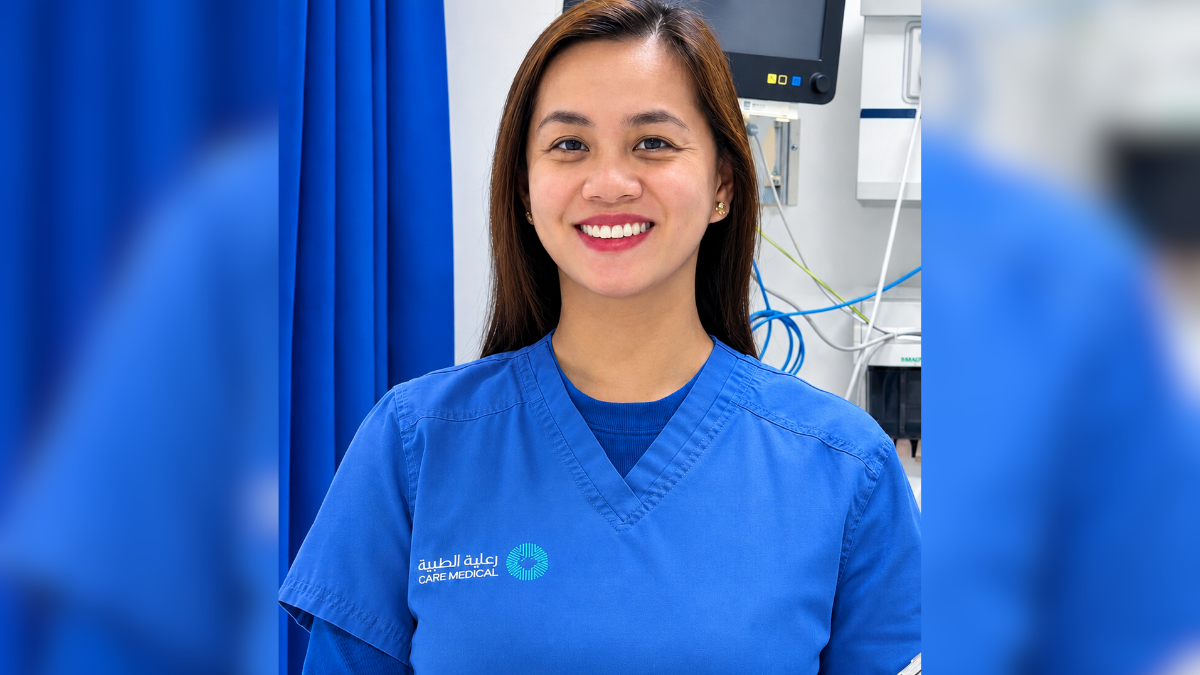

A charge nurse learns to carry other people’s worst days without flinching — the code called after midnight, the family pacing a corridor for news, the patient who grips your hand a little too tightly. You are trained to be the steady one, the calm center of a loud room, and no one prepares you for the shift when the emergency turns out to be your own. Kara Marie Manzano Pasicolan has stood on both sides of that line, and she will tell you the second side taught her more than a decade of the first.

At 36, Kara is a charge nurse at Care Medical Malaz Hospital in Riyadh, twelve years into a life abroad that began, like so many Filipino stories, with one practical dream. “I wanted to provide a better future for my family and create opportunities that might not have been as accessible to me in the Philippines,” Kara shares with TGFM. The sentence sounds ordinary until you sit with everything folded inside it — the birthdays missed, the distance managed, the entire version of herself she had to build far from home.
A dream that started in Cagayan
Before Riyadh, before the award and the night shifts and the leadership title, there was a rural health unit in Solana, Cagayan. Kara spent two years there, from 2014 to 2015, learning community and public health nursing in the unglamorous, essential way that shapes a lot of good clinicians — close to families, close to need.
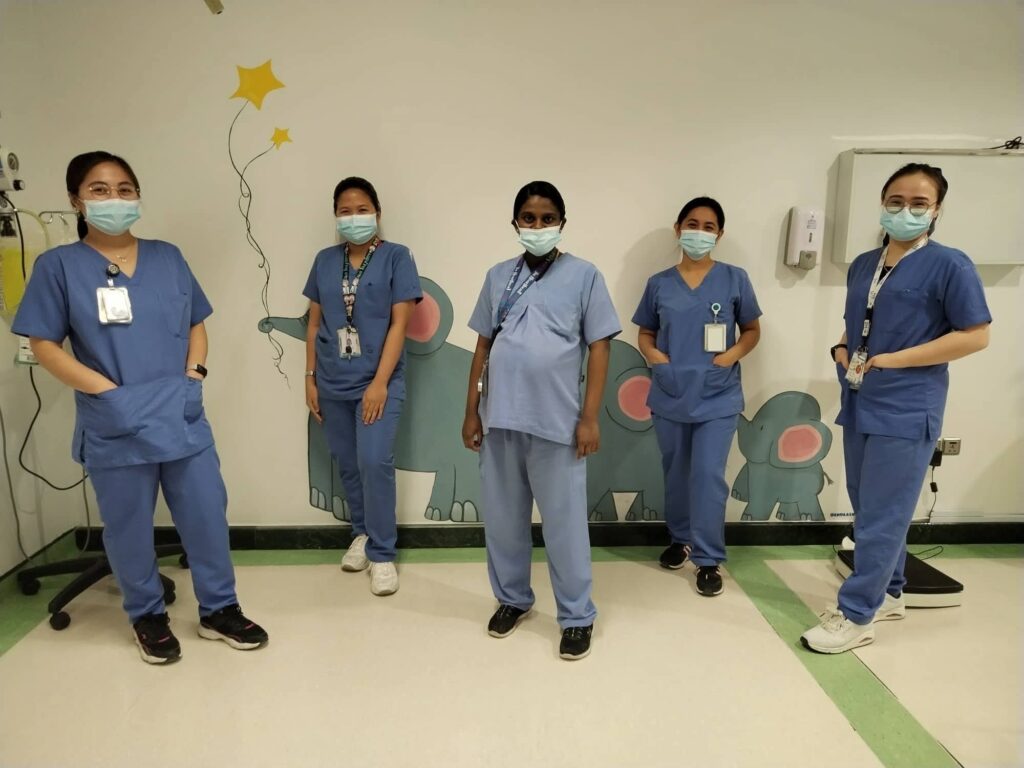
In 2015 she made the leap that reorganizes an overseas worker’s whole life. Her first posting abroad was a small Saudi polyclinic, where Kara worked as an emergency nurse for two years. Then, in September 2017, she joined Care Medical Malaz Hospital, the institution she still serves today. The years there stacked responsibility on responsibility until she rose to charge nurse — the person who coordinates the floor, supports the staff, and answers for the quality of care on any given shift.
Kara is careful not to romanticize the job, or to shrink it. “Leadership in nursing is not simply about giving instructions,” she says. “It is about being present, making difficult decisions, supporting your team, and, most importantly, caring for patients with compassion and dignity.” In September 2022, that approach earned the Filipina nurse a DAISY Award, the international honor reserved for nurses singled out by patients and their families for extraordinary care. Kara describes it less as a trophy than as a reminder — proof, she says, that “even the smallest acts of compassion can make a difference in a patient’s life.”
The move abroad was never only about a paycheck, Kara insists, and she does not soften the trade. “Every Filipino nurse abroad knows what it means to miss birthdays, celebrations, family gatherings, and important moments,” she says. What made the distance survivable was the belief underneath it: “that our sacrifices today can create better opportunities for the people we love tomorrow.” Along the way she found the harder, quieter benefits of the expatriate life too — multicultural teams, unfamiliar systems, the independence that comes from solving problems with no one nearby to call. “Living far from family forces you to become stronger,” Kara says.
Ask her why she stays in work that is, by her own admission, physically exhausting and emotionally heavy, and the answer is plain. “There is something deeply fulfilling about knowing that your actions can bring comfort to someone during one of the most vulnerable moments of their life,” she says.
The shift that changed everything
For eight years the arc was recognizable — the capable nurse climbing, sacrificing, sending the fruit of it home. Then came August 18, 2023, and what began as an ordinary shift in the emergency room.
That day, the nurse accustomed to managing other people’s crises went into labor at just sixteen weeks. Her son arrived far too early and desperately small, weighing only 600 grams, and was admitted straight to the neonatal intensive care unit. In the space of a few hours, Kara crossed from one end of the hospital to the other — from the professional who reassures frightened families to the mother who had become one of them.
What followed was a stretch she describes as living two lives at once. “At work, I had to remain focused and professional. I had patients who needed my attention, colleagues who depended on me, and responsibilities that could not simply be put aside,” Kara recalls. “At the same time, my heart was with my son in the NICU.” She would finish her duties and go straight to check on him, carrying a fear no amount of clinical knowledge could dull. Understanding exactly what the monitors meant, it turned out, did nothing to make them less terrifying.
Kara is unsentimental about what that period asked of her, and it produced the line she returns to most. “Strength does not mean that you do not feel afraid,” she says. “Strength means that you continue moving forward even when you are afraid.” Her family, back home and on the phone, became her anchor. Her colleagues, she is quick to credit, carried her with a patience she has not forgotten. “The experience changed me as a nurse and as a person,” Kara says.

Learning to lead from the other side of the bed
Something permanent shifted in how she practices after that. The charge nurse who came back to the floor was not quite the one who had left it. “Before that experience, I cared for NICU families professionally,” Kara says. “After experiencing it personally, I understood their emotions on a much deeper level.”
She talks now about the family standing just outside the frame of every case — the people a busy hospital can forget to see. “Behind every patient is a family waiting, hoping, worrying, and praying,” Kara says, and she offers it less as a sentiment than as a working instruction. On her rounds, she no longer sees cases or diagnoses first. “I do not simply see patients as cases or diagnoses,” the former ER nurse says. “I see them as someone’s mother, father, child, brother, sister, or loved one.”
That perspective rewrote her sense of what a patient’s relatives actually need from the person in scrubs. Not heroics, Kara has decided. Presence. “Sometimes a patient’s family does not need a miracle from us,” she says. “They need someone who will be there, explain things clearly, show compassion, and give them hope.”
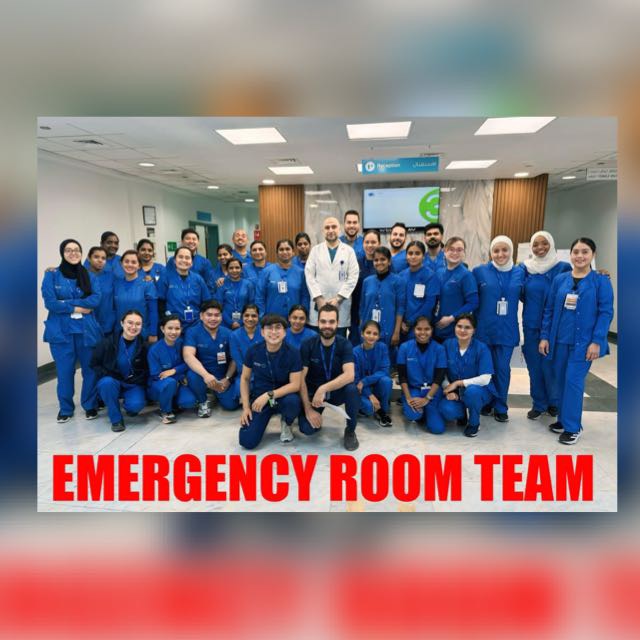
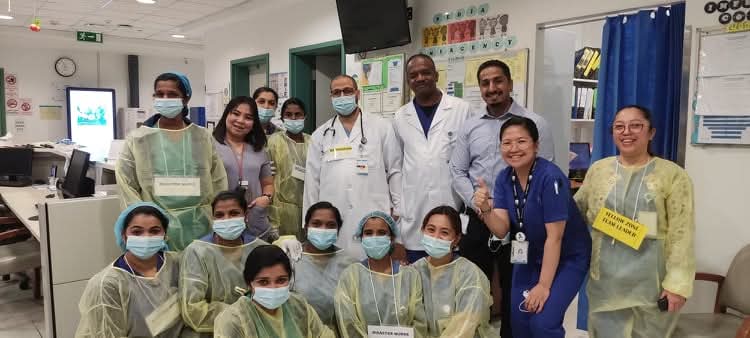
It also sharpened a philosophy of leadership she had been building for years — the conviction that running a floor is mostly about lifting the people on it. “Leadership is not about being the person who knows everything,” Kara says. “It is about helping the people around you become better.” The most satisfying part of the job, she adds, is watching a team hold together under pressure and still deliver care that is both safe and kind. Some shifts, leadership means a hard call made fast; others, it is simply listening to a colleague who is struggling. Both, Kara has learned, count.
What she would tell the ones just starting out
Twelve years in, the former community nurse from Cagayan has counsel for the kababayans arriving now with the same practical dream she once carried — and it is notably gentle for a woman who works in emergencies. “Do not be afraid to dream,” Kara says, “but never forget why you started.”
The rest sounds like someone who has learned the price of pretending to be fine. She urges new arrivals to guard their mental, emotional, physical, and financial health with equal seriousness; to choose their friends carefully; to save, plan, invest, and keep learning; and, above all, to resist the slow erasure of the self. “Do not allow your desire to provide for your family to make you forget to live your own life,” Kara says.
Then she gives them the permission that overseas workers rarely grant themselves. “Being an OFW does not mean you have to be strong every single day,” she says. “Sometimes, it is okay to rest. It is okay to cry. It is okay to ask for help. What matters is that you stand up again and continue.”
Kara’s own plans point, eventually, homeward. She wants to carry the leadership and clinical experience she has built in Riyadh back into the Philippine healthcare system one day, to keep mentoring younger nurses, and — the priority beneath all the rest — to simply be present for her family. “Working overseas has given me many opportunities,” Kara says, “but it has also reminded me that time with family is something money cannot replace.” She hopes, too, to advocate for the kind of compassionate, patient-centered care she once needed from the other side of the glass.
Ask her to define success now, and she will not reach for a title or a salary; the NICU took care of that. “Success is not only about promotions, salaries, or professional titles,” Kara says. “Sometimes success is simply surviving a difficult chapter and still choosing to move forward.” Sometimes, she adds, it is caring for patients even when your own heart is hurting — or coming home after a long shift and still finding something left to give.
Kara still puts on the uniform with pride, though the pride means something different than it did when she landed in 2015. “I came to Saudi Arabia as a Filipino nurse looking for an opportunity,” she says. “Along the way, I found something much greater — a purpose to serve, a reason to become stronger, and a deeper understanding of what it truly means to care.” The steadiest person in the room, it turns out, was made steadier by the one shift she could not control.
