



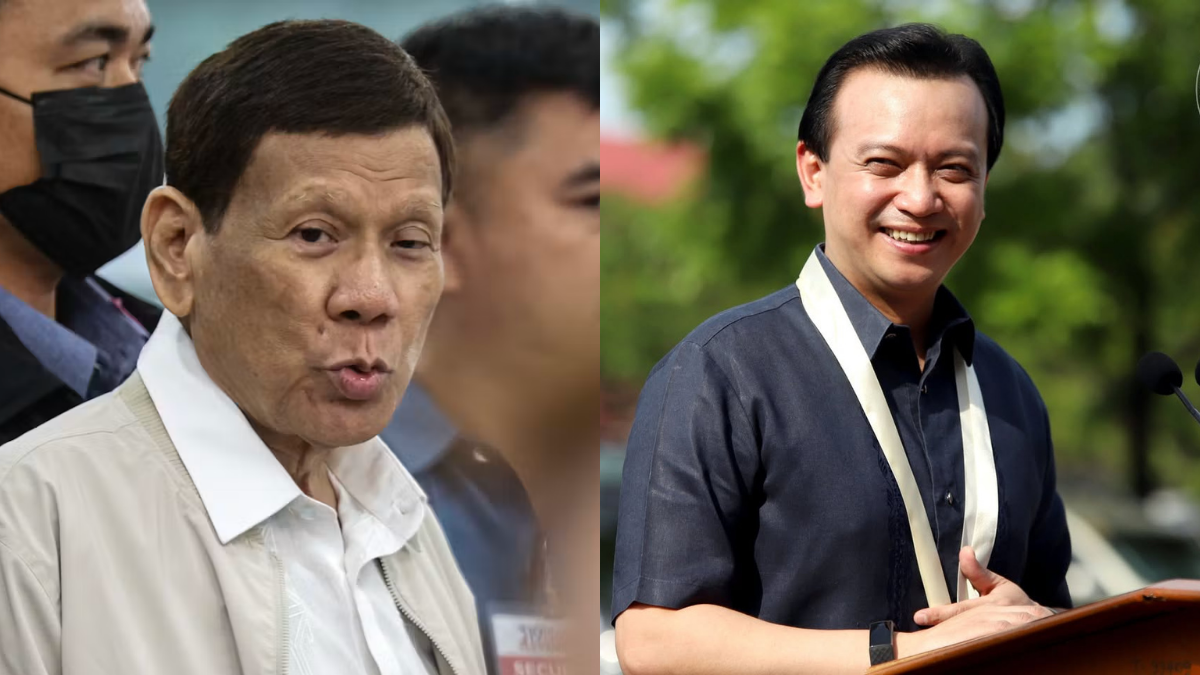

The legal team representing former President Rodrigo Duterte has petitioned International Criminal Court judges to weigh in on whether prosecutors overstepped by folding eight fresh incidents into their case, arguing the supporting paperwork traces back to a longtime political rival.

At the heart of the dispute are Incidents 50 through 57, which appear in the prosecution’s 143-page Trial Brief but were absent from the original charge sheet. Defense counsel Peter Haynes is pressing Trial Chamber III for what he calls a “judicial determination” on those entries, giving prosecutors the choice of either amending their brief or striking the incidents altogether.
The gap is straightforward on paper. Where the Document Containing the Charges pinned Duterte’s three counts of crimes against humanity to 49 specific incidents, the Trial Brief now counts 57. Those eight extras are what the defense wants examined.
Much of the objection turns on where the evidence originated. According to the defense, every document behind the new incidents can be traced to a single individual: former Senator Antonio Trillanes IV, a well-known Duterte critic. The team put it bluntly in its filing: “The chain of custody reveals that the documentary evidence cited in the Trial Brief in relation to the eight new incidents has a single political opponent of Mr Duterte, Antonio Trillanes, as its source, and these documents – which include purported internal PNP documentation – bear no indication of authenticity.”
Haynes went further on the point of access, stating that Trillanes “has produced all of the newly disclosed PNP Incident Record Forms underpinning these eight incidents” even though he had “no known legitimate means of accessing internal PNP documentation.”
The forms themselves drew separate scrutiny. Duterte’s lawyers flagged that the records carry neither signatures nor “an official stamp indicating that they are a ‘certified true copy’ of the original.” That, they suggested, raises a harder question about the material’s reliability, since “questions may be raised as to whether these eight incidents would have passed the lower standard of proof applicable at confirmation, had they been included in the original pre-confirmation brief and document containing the charges.”

What is known about the incidents themselves is limited. Several reportedly took place in the National Capital Region and Region IV-A during 2016, or involved people listed on an “illegal drug personalities’ watchlist.” The defense says it only learned of the additions on August 31, when prosecutors emailed notice of their Trial Brief submission.
The procedural argument runs alongside the evidentiary one. Prosecutors defended the additions by describing them as within the confirmed charges, framing them as acts committed in a “time during which and an area where criminal acts were allegedly committed by an identifiable group of perpetrators against an identifiable group of victims.” The defense rejects that reasoning, contending the incidents came without the judicial sign-off such changes require.
Drawing on earlier ICC rulings dealing with amended charges, Haynes argued that while a trial chamber may permit prosecutors to “add a victim without recourse to Article 61(9),” that latitude does not stretch to a “new incident setting out a new time, place, individual criminal act, principal perpetrator, and victim.” Any additional criminal acts, he said, must “fall squarely within the facts and circumstances of the charges.”
Timing sharpens the complaint. The eight incidents surfaced roughly three months ahead of Duterte’s trial, set to open November 30. The defense maintains the charge document and the current brief “no longer match,” and that the new material “exceed the scope of the confirmation decision.” As Haynes framed it, “Each incident rests upon fresh evidence and seeks to introduce an entirely new set of material facts, meaning authorisation is required.”
For the defense, the underlying principle is that prosecutors cannot expand a confirmed case on their own initiative. “It is abundantly clear that judicial oversight is essential, and that the Prosecution cannot merely add to the confirmed charges proprio motu and without judicial authorisation,” Haynes said.
