



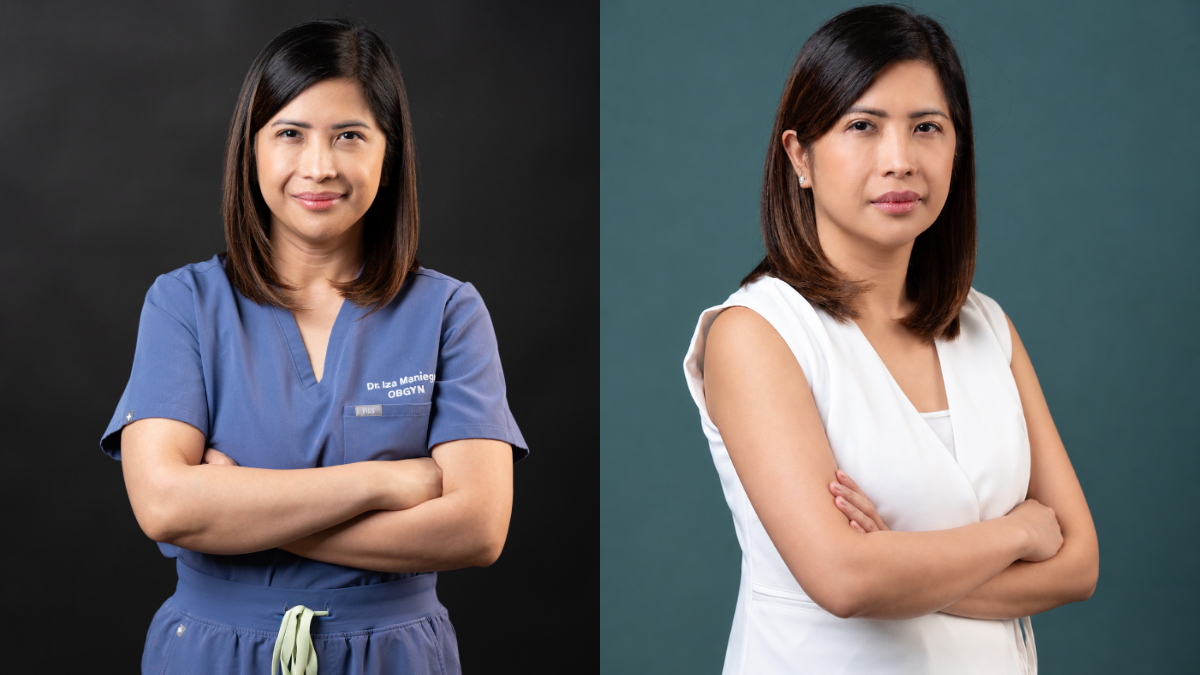

Every physician can recite the value of early detection. It’s on the posters, in the pamphlets, in the scripted reminders about screenings and check-ups. But there’s a difference between knowing something as medical fact and carrying it as a wound. For Dr. Iza Roelle Labian Maniego, a Specialist Obstetrician-Gynecologist at Prime Medical Center in Deira, Dubai, that difference has a name and a face — her twin sister’s.

The two truths sit side by side in almost everything she says: the clinical confidence of a fellowship-trained surgeon, and the quiet grief of someone who wishes she had known sooner.
A calling before it was a career
Dr. Iza’s path into medicine wasn’t a matter of picking a lucrative specialty from a list. She talks about it as something closer to vocation. “For me, medicine was never just a career—it was a calling, shaped by compassion, deepened by love, and strengthened by training,” she shares with TGFM.
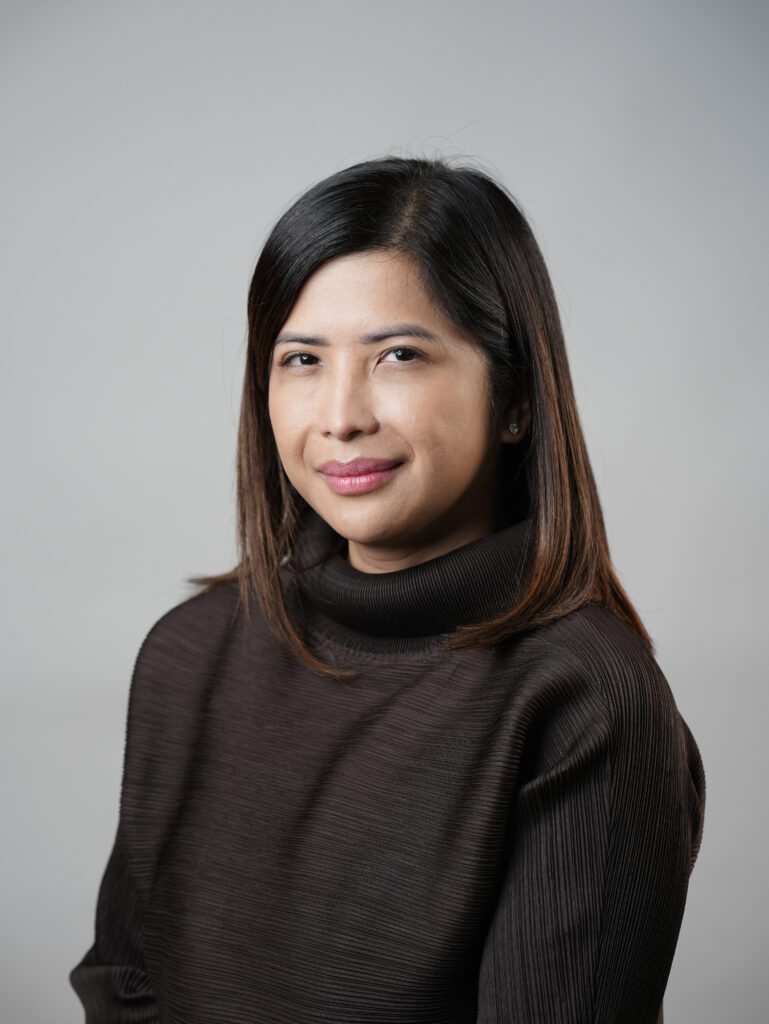
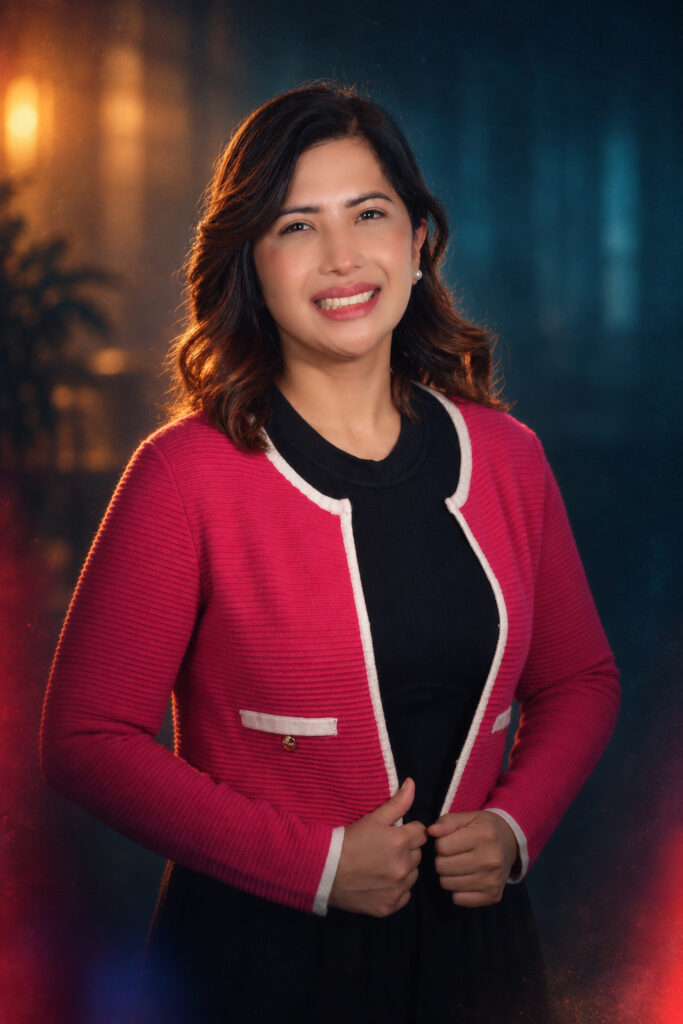
She trained where the volume was highest and the resources were thinnest — a tertiary government hospital in the Philippines, Quirino Memorial Medical Center, where she completed both her residency in Obstetrics and Gynecology and a two-year fellowship in Minimally Invasive Gynecologic Surgery. She is a Fellow of the Philippine Society for Gynecologic Endoscopy and the Philippine Obstetrical and Gynecological Society.
She’s insistent that the institution be named, and the reason is generosity rather than résumé-building. Training in a government hospital, she explains, exposed her to a breadth of patients and situations that shaped more than her technique. “It taught me not only to be technically competent, but also to be resourceful, resilient, and compassionate,” she recalls. The fellowship sharpened her interest in surgical approaches that let patients recover faster and with less trauma to the body.
What she returns to, again and again, is the people who taught her. She counts herself fortunate to have trained under mentors who were, in her words, excellent clinicians and wonderful teachers both. “They pushed me to become better, challenged me when I needed to improve, and taught me lessons that went far beyond textbooks and operating rooms.” Much of the confidence she practices with today, she says, was built in those years — and she carries their teaching into every patient encounter, hoping to one day guide younger doctors the same way.
Her decision to leave for Dubai in November 2022 followed a familiar logic. Like many Filipinos working overseas, she wanted better financial and professional prospects, and the chance to test herself in a different healthcare system. But underneath the practical calculation was something she rarely says out loud in a clinic.
The sister who changed how she practices
Her twin sister had been fighting Stage 4 ovarian cancer for years. Working abroad meant Dr. Iza could help support her treatment — and, in one of the choices she now treasures most, bring her to Dubai for a vacation, to share the city and the experience with her and their family.
“That experience reminded me that providing for our families is not only about financial support,” she says. “Sometimes, the greatest gift we can give is the opportunity to create memories together.”
Her sister passed away in 2023. She’s direct about how much it cost her: one of the most painful experiences of her life, made harder by the distance, by the strain of being a doctor, a sister, and a daughter all at once from another country. What carried her through was ordinary and essential — her family, the people around her, her faith, and the plain necessity of moving forward. Grief, she found, doesn’t lift so much as change shape. “I learned that grief doesn’t necessarily disappear,” she says. “Instead, you learn to carry it differently.”
The way she carries it is through her work. Her sister’s illness rewired how she sits across from a patient. It taught her, she says, “to listen more closely, to never dismiss a woman’s concerns, and to appreciate how important early diagnosis can be.” The refrain that runs quietly beneath her practice is a wish she can’t undo — I wish we had known earlier. Maybe she could have had more time.
That wish is not a burden she sets down at the clinic door. It’s the thing she brings in with her. “Behind every diagnosis is a person, a family, and a story,” she says. “I cannot change her story. But I can let her story influence mine.”
Where the reward actually lives

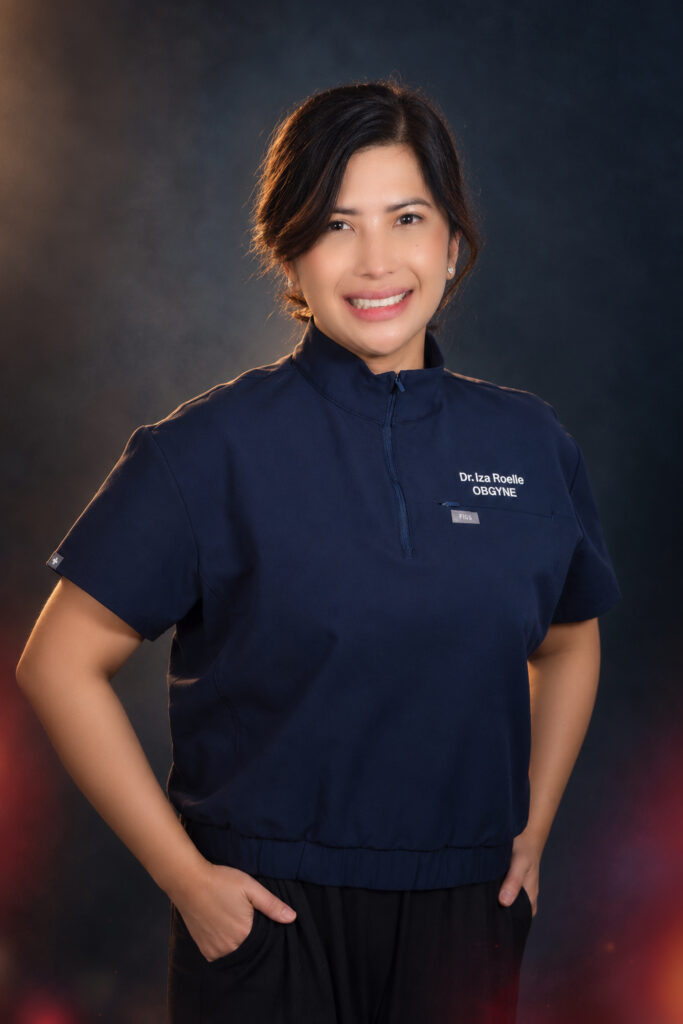
Ask her what she loves about the field and she doesn’t lead with the surgery or the science. She leads with the listening. Medicine, to her, isn’t only about treating disease — it’s about understanding a patient’s fears, giving reassurance, and helping her make informed choices about her own body. The relationships are the point. Some patients, she notes, eventually become friends, and she considers it a privilege to be let into their stories and their journeys.
There is, of course, the singular joy of her specialty — being present when a woman finally meets her baby, caring for someone through an entire pregnancy and sometimes watching a family grow over years. She calls it one of the most beautiful moments in a woman’s life, and being there for it, incredibly fulfilling.
But the satisfaction she describes with the most weight is quieter and easy to miss. It’s the early catch — the finding that looks unremarkable until careful assessment says otherwise. “There were moments already when a patient came with something that may initially seem unremarkable, but through careful assessment and appropriate investigation, we are able to identify an early malignancy,” she says. What makes it especially rewarding, she adds, is when catching it early spares the patient from extensive or unnecessary treatment — sometimes leaving nothing more to do than watch closely.
It’s not hard to hear her sister in that. The whole architecture of what she finds meaningful is built around the difference a few months of warning can make. “Knowing that I may be able to help another woman have more time with the people she loves is what makes my profession truly rewarding.”
What Dubai gave back
The move demanded adjustment — a new healthcare system, a different workplace culture, a patient population drawn from everywhere. She frames the challenge as growth. Professionally, the multicultural environment pushed her to keep learning and adapting; personally, living far from home made her more independent and more resilient. It also sharpened her appreciation for the things that are easy to take for granted. “Family, time together, and the simple ability to be present for the people we love,” as she puts it.
She’s clear-eyed about the loneliness that can come with the expatriate life, and offers a practical antidote she clearly lives by: be deliberate about who and what you let close. “Protect your peace by being intentional about the people and environments you surround yourself with,” she says. “Choose relationships that encourage growth, positivity, and mutual respect.” A fulfilling life, in her telling, is a matter of balance — working hard and chasing goals, but leaving room for the people and pursuits that recharge you.
Being a doctor, she believes, means never being finished. She keeps attending conferences and workshops, keeps refusing complacency. “I want to give my patients the best care I can, and that means never becoming complacent and always being willing to learn something new.”
Carrying it forward
Whatever comes after her years abroad, the shape of it is already clear to her: keep practicing, pass what she knows to younger doctors, and advocate for women’s health — especially early detection and awareness of gynecologic cancers, ovarian cancer chief among them. Her plea to women is simple and hard-won. Don’t ignore the persistent or unusual symptom. Seek advice early. Sometimes an early consultation is the whole difference.
Her advice to fellow Filipinos abroad comes from the same place, and it’s the lesson she paid the highest price to learn. Remember why you left — most of us go to build a better life for our families — but don’t defer the living. “We often think, I’ll spend more time with my family when things are better, or I’ll do it when I have more time,” she says. “But life doesn’t always wait for us.”
So work hard, save wisely, guard your well-being, and choose the people you trust with care. Keep improving. But don’t let the relationships be the thing you sacrifice. “You can build a life abroad while remaining deeply Filipino at heart,” she says.
Four years into her Dubai chapter, coming up this November, the Filipina OB-GYN has arrived at a version of the doctor she once hoped to become — not despite what she lost, but partly because of it. Every woman who walks into her clinic is, to her, a chance to do a little more and listen a little closer. Her sister taught her that behind the chart and the diagnosis there is always a person with time worth protecting.
It’s a lesson she can no longer separate from the work. And, in its way, it keeps her sister in the room.
