



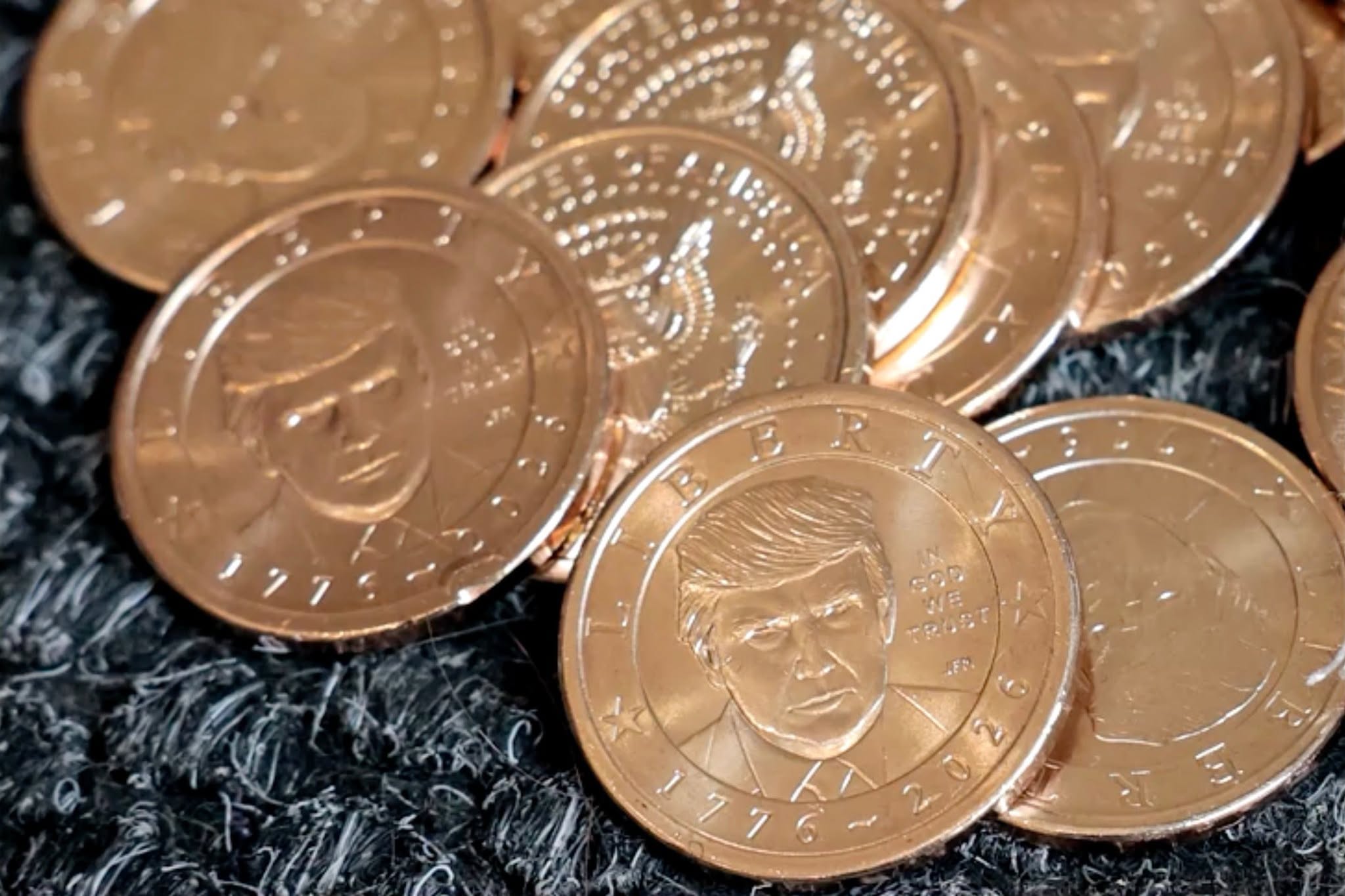

A federal panel that Congress created to weigh in on U.S. currency designs was largely cut out of the process before the Treasury moved forward with a $1 coin bearing President Donald Trump’s likeness — a gap that sits at the center of the legal fight now surrounding the piece. Two members of the Citizens Coinage Advisory Committee, an 11-person body established in 2003, told ABC News they never got a genuine chance to examine the design, apart from a handful of last-minute overtures from the Mint in November and December.

Treasury disputes that account. In defending Secretary Scott Bessent’s decision to proceed, U.S. Treasurer Brandon Beach said the Mint gave the committee “multiple reasonable opportunities to review proposed designs, but the CCAC expressly declined.” Beach argued the review requirement had therefore been met, adding that the panel’s function is “only to advise” Bessent, who “has sole discretion on final design selection.”
The coins reached the public on September 2, 2026, and demand outstripped supply almost immediately. CNN reported that the 25-coin rolls and 100-coin bags were listed as out of stock within hours of going on sale at noon, with the Mint’s site noting more inventory was being produced. A roll of 25 sells for $61 and a bag of 100 for $154.50 — a premium of more than 50 percent over face value, according to The Washington Post. Shoppers in Washington could also feed a vending machine at the Mint’s coin store to buy individual pieces for $5 apiece.
Struck in Philadelphia, the coin carries a portrait of Trump on the obverse alongside “Liberty,” “In God We Trust” and “1776 ~ 2026,” marking two and a half centuries since the signing of the Declaration of Independence. The Mint’s chief engraver, Joseph Menna, based the likeness on an official White House photograph. Descriptions of the reverse have varied in press accounts, with some outlets pointing to an eagle grasping an olive branch and arrows beneath an “E Pluribus Unum” banner and others noting a “250” inscription tied to the anniversary.

The legal objections trace back to a longstanding rule that only a deceased person may be depicted on American money — a norm rooted in the early republic’s wish to avoid the trappings of monarchy. Supporters of the coin lean on the Circulating Collectible Coin Redesign Act of 2020, which Trump signed near the close of his first term. As Time reported, that statute bars portraits of living people from the reverse of semiquincentennial coins but stops short of imposing the same limit on the obverse, where Trump’s image sits. The administration told Newsweek it does not require congressional sign-off, citing precedent.
That precedent is thin. The only sitting president ever to appear on a U.S. coin was Calvin Coolidge, silhouetted behind George Washington on a half-dollar issued for the country’s 150th anniversary in 1926. Of the million pieces struck then, about 860,000 came back to the Mint and were melted for lack of buyers.
Opposition is also taking shape in Congress, where Democratic Sens. Jeff Merkley and Catherine Cortez Masto have put forward a bill that would block any living or sitting president from appearing on U.S. currency, commemorative coins included.
