



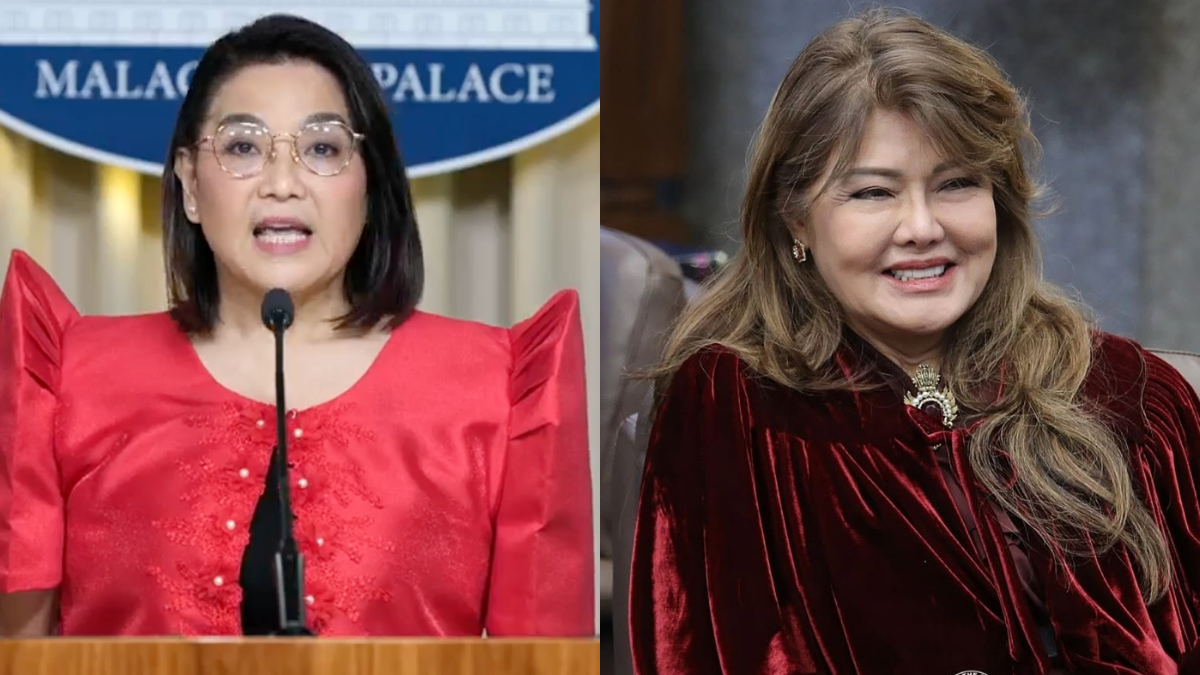

Command over public money — not physical handling of it — is what determines accountability, Malacañang argued as it pushed back against a line of questioning at Vice President Sara Duterte’s impeachment trial that focused on whether she ever touched the confidential funds herself.

Presidential Communications Office Undersecretary Claire Castro made the case that direct contact with government cash is not required to establish liability over how it is spent. She framed the issue around who gave the orders rather than who physically moved the money, stressing that authority over public funds can be exercised through a directive alone.
Central to her argument was testimony from Gina Acosta, the former special disbursing officer at the Office of the Vice President. According to Castro, Acosta confirmed the chain of authority when she recounted how the confidential funds moved: “Let us remember that the witness admitted that the one who gave the confidential funds, the entire P125 million, was ordered by the vice president to her security officer, Colonel Lachica, when it comes to OVP.”
That admission, Castro said, tied the spending back to Duterte regardless of the operational details. “We can see here that the control and command came from the vice president, and it was admitted by the ex-SDO of the OVP, Gina Acosta,” she said.
The remarks came a day after the 17th day of proceedings, when Senator-Judge Imee Marcos pressed Acosta on whether Duterte had personally handled or taken any of the funds. Castro characterized that questioning as an effort to protect the Vice President. She acknowledged Marcos was within her rights as a senator-judge but took issue with where the inquiry was headed. “She wants the vice president to get through the accusation regarding the spending of confidential funds,” Castro said in Filipino.

Even if Marcos succeeded in showing that Duterte never held the cash or personally assembled the liquidation papers, Castro argued, that would not clear her of command responsibility for the office’s spending. She said Acosta’s repeated deflections to Col. Raymund Lachica, described as the one who implemented matters on the ground, still traced back to the top. “The truth is still coming out because she still pointed to VP Sara and Colonel Lachica,” she said.
Castro also drew attention to how the funds were documented and settled, saying Acosta’s account exposed a recurring pattern in the way money was liquidated under Duterte’s leadership. She grounded her concern in the nature of the money itself. “Let us remember that this is a public fund, and this confidential fund is part of public funds,” she said.
Gaps in the paper trail, in Castro’s telling, are enough to trigger scrutiny from oversight bodies. “If it is not accounted for properly and the documents are missing, it means that there is prima facie evidence,” she said.
Pressed on whether the prosecution had built a strong enough case to justify a conviction over the confidential funds, Castro offered qualified agreement. “In a way, yes,” she said, adding that responsibility rested with those who directed the money: “When it comes to pointing the vice president and Colonel Lachica, they are the ones who controlled the funds for the confidential funds.”
