



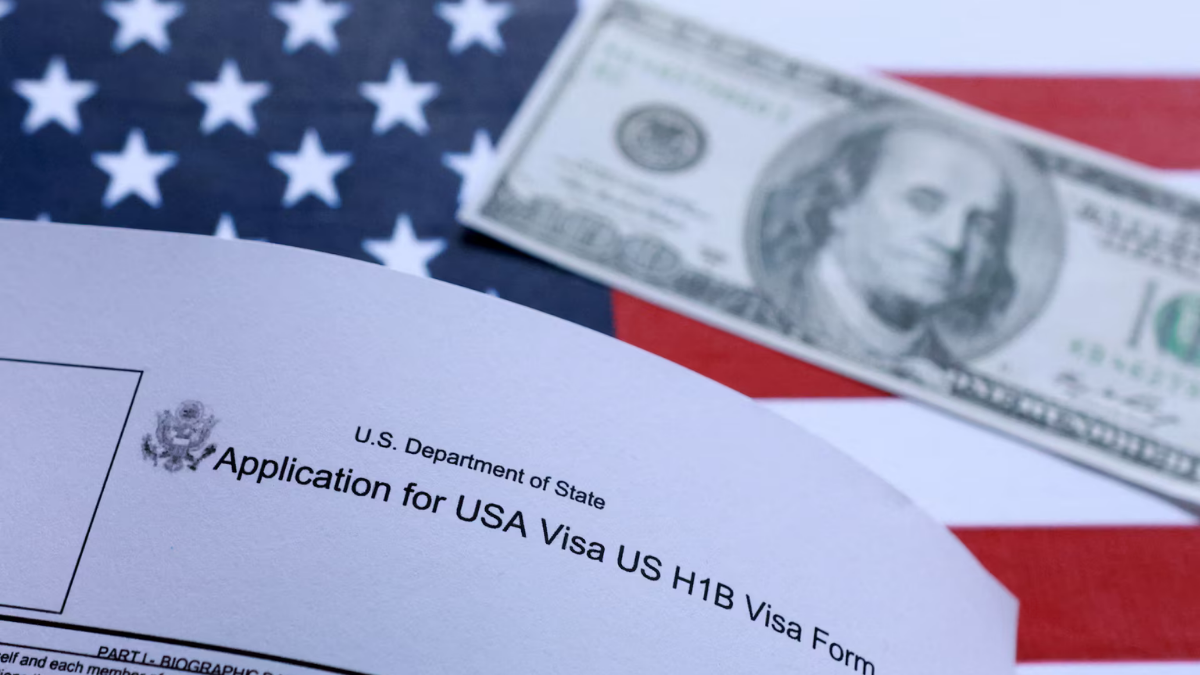

A challenge to the H-1B visa fee remains active in multiple courts even as the Trump administration works to lock the charge into federal regulation permanently.

On Monday, the Department of Homeland Security posted a proposed rule setting the fee at $103,265 for new H-1B visas. The measure appeared in the Federal Register ahead of formal publication on Tuesday, triggering a 30-day window for public comment. Officials could finalize the regulation before the year ends.
The push stems from a proclamation Trump signed in 2025, which introduced the six-figure charge temporarily and instructed DHS to write rules that would make it lasting. That proclamation is set to lapse in September, a year after its issuance.
Before Trump acted, securing certain H-1B visas usually carried costs somewhere between $2,000 and $5,000, varying by circumstance. The new charge dramatically inflates that price for sectors that lean on the program, including technology, higher education, and scientific research.
Under the H-1B system, American companies can bring on foreign professionals trained in specialized fields. Each year the program grants 65,000 visas, plus an additional 20,000 reserved for applicants holding advanced degrees, with approvals lasting three to six years.
Court records show that by late February, roughly 70 employers had submitted the $100,000 payment across 85 visa applications.
The legal fight has been building. In June, a federal judge determined the fee was unlawful and barred the administration from collecting it. That ruling is now under review by an appeals court in Boston, while a separate court weighs whether a judge in Washington, DC, was correct to dismiss a challenge brought by a prominent business group.

Those suing include the US Chamber of Commerce — the country’s largest business lobby — along with states led by Democrats and a mix of labor unions and employers. Attorneys involved have signaled the complaints could be revised to target the newly proposed rule after it becomes final.
Central to the litigation is the argument that Trump’s authority to bar entry cannot be stretched to nullify the statute establishing the H-1B program. The plaintiffs further contend that DHS lacks the power to levy fees or taxes to raise federal revenue absent approval from Congress.
Administration lawyers counter that the charge should not be treated as a conventional tax, and that judges have limited grounds to second-guess presidential decisions over who may enter the country.
Supporters of the fee, Trump among them, argue the H-1B program is exploited by firms swapping American employees for lower-cost foreign hires. Employers and industry groups reject that framing, saying the visas fill genuine gaps where qualified domestic candidates are scarce and let businesses compete for elite talent.
The administration has pursued other changes as well. Earlier in August, DHS issued a separate rule attaching fees as high as $4,500 to requests to extend H-1B workers’ stays or to move employees from abroad into US-based roles. It has additionally directed tighter screening of applicants and floated a revised selection method that would give preference to workers with stronger qualifications and higher pay.
When Trump invoked the fee, he relied on presidential authority under federal immigration law to limit the entry of foreign nationals deemed harmful to national interests — the same power now at the center of the courtroom disputes.
