



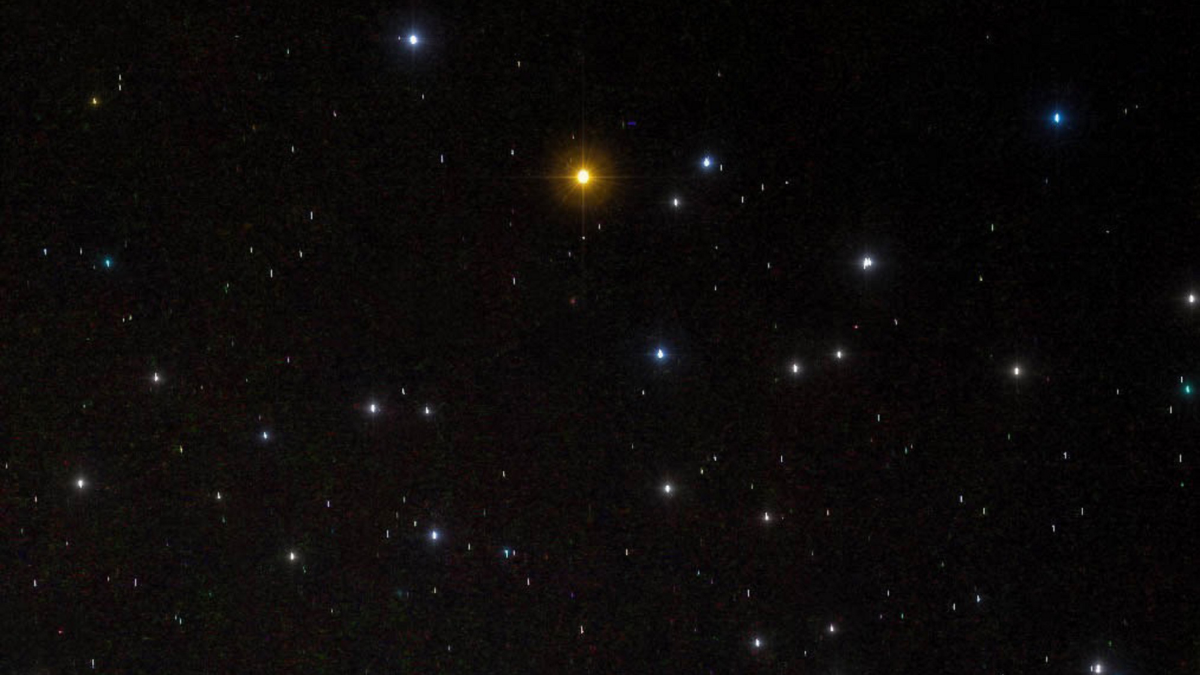

Communities across the Arabian Peninsula have for centuries read the reappearance of a single star as a sign that the hardest weeks of summer are numbered. That marker, the star Suhail, formally returned over the UAE on Monday, August 24 — a date that shifts only slightly year to year and carries deep seasonal meaning throughout the region.

Known to astronomers as Canopus, Suhail is the second-brightest star in the night sky, trailing only Sirius. According to Ibrahim Al Jarwan, Chairman of the Emirates Astronomy Society and a member of the Arab Union for Astronomy and Space Sciences, the star begins climbing above the south-eastern horizon near dawn from August 24 in the central Arabian Peninsula. When skies cooperate, observers can catch it roughly 40 minutes before sunrise, sitting low in the south-east.
Cloud cover and fog have so far kept the star hidden from view in the UAE, where haze near the south-eastern horizon before dawn has obscured it.
The star’s arrival does not bring an abrupt drop in temperature. Al Jarwan noted that cooling usually begins after August 20, yet heat tends to linger through the end of September alongside heavy humidity and stretches of morning fog. What Suhail signals instead is the start of a gradual loosening of the summer’s grip.
Long before meteorological forecasting existed, the star’s yearly reappearance ranked among the most significant astronomical events for people in the region, guiding decisions tied to farming, fishing, and raising livestock. Its return this year follows a roughly three-and-a-half-month absence; the star slipped below the south-western horizon in the evening sky around the start of May.

A number of natural cues accompany this stretch of the calendar. Al Jarwan described cooler water and ground temperatures near dawn, soil that holds moisture through the morning after an evening watering, and camels that drink less. Samr trees start greening along their southern sides, and seabirds such as the sallal make their appearance. As sea temperatures ease, fish begin drifting toward the coast.
The period opens the first 10 days of Al Safri within the traditional Al Drour calendar, a regional framework used to follow seasonal and climatic shifts. Arabs have long treated Al Safri as the earliest of the changing seasons, one that stirs anticipation of gentler weather and welcome rain. Farmers use these weeks to ready themselves for the agricultural season ahead, while livestock owners trim sheep hooves to safeguard the animals’ health.
Geography limits who can witness the event. Because Suhail sits far to the south, it is hard or impossible to observe from much of the Northern Hemisphere beyond about 38 degrees north latitude. Across the Arabian Peninsula it does become visible, surfacing first in southern areas before reaching skies farther north.
In scientific terms, Suhail is the Arabic name most often applied to Canopus, also cataloged as Alpha Carinae, in the constellation Carina. The star lies about 310 light-years away — meaning the light greeting observers in the UAE this week set out on its journey some 310 years ago.
