



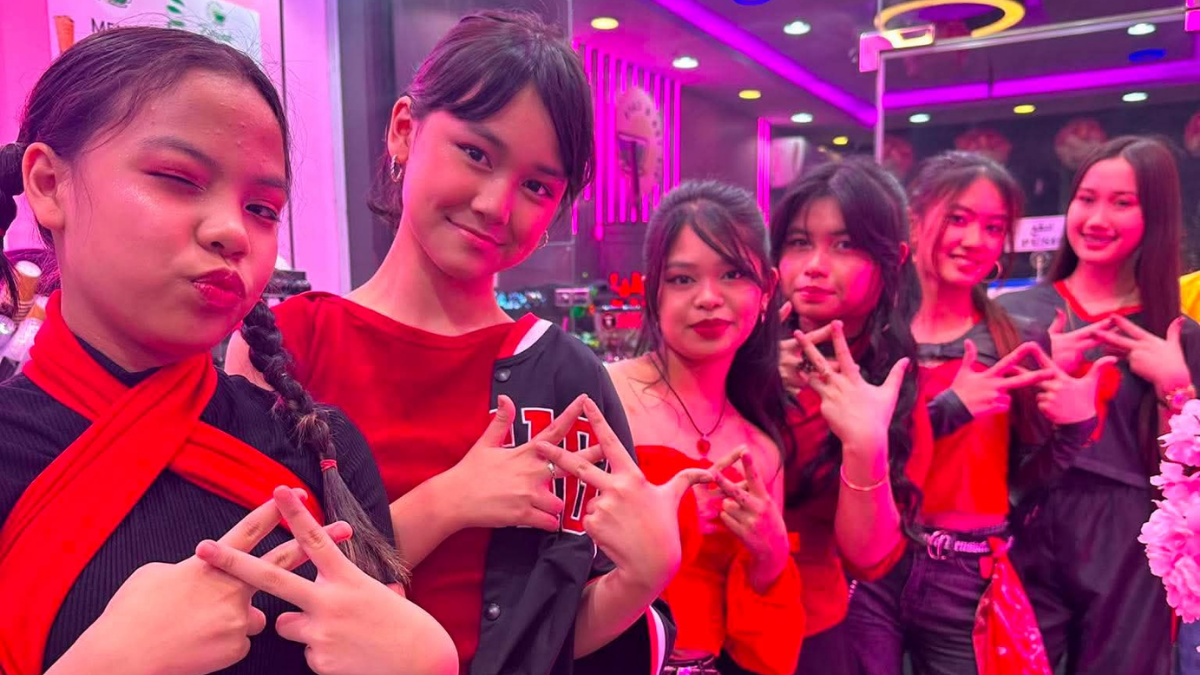

When the daughters of overseas Filipino workers in Jeddah step onto a stage together, they call themselves TALA — the Filipino word for star. It fits. The group of teenage girls has set out to shine as what their management describes as the first P-pop group in the Saudi Arabian city, carrying a genre born in the Philippines into the heart of the Filipino community abroad.

TALA performs under The Dynamic Entertainment and Events Production, or D.E.E.P., a talent management group whose roster spans singers, dancers, hosts, and other performers. The group was created by Regie Mata, the production’s founder, director, and talent manager, who wanted to give young Filipinos in Jeddah a platform to express their talents and represent Filipino culture.
“As P-pop continues to grow in the Philippines, we saw an opportunity to bring that energy to the Filipino community here in Saudi Arabia,” Mata said.
The idea grew out of a simple observation. Across Jeddah’s Filipino community are children of OFWs with a gift for singing, dancing, and performing — but not always a stage to develop it. Mata built TALA to fill that gap, describing it less as a performing act than as a family where the girls can grow, learn, and inspire others.

Members were chosen for their talent and potential, but also for attitude, commitment, and a willingness to learn. Training runs across vocal development, choreography, stage presence, facial expression, and group synchronization, alongside lessons in professionalism — how to work as a team, handle pressure, and carry both TALA and the wider Filipino community well.
The lineup is led by Mei, who serves as leader and main vocalist. Elisha and Kim handle lead vocals, with Elisha also taking on lead rap and standing as the group’s visual. Khaila is the main rapper. Viell holds the center position and leads the group’s dancing as main dancer, with Jaja as lead dancer. Their fans go by a name of their own: Starlights.

Balancing the group with the rest of their lives is a genuine challenge, and one the production is careful about. “We always remind them that school and family come first. TALA should never become a reason for them to neglect their education or responsibilities,” Mata said. Rehearsals and performances are scheduled around academic commitments, worked out in close coordination with the girls’ parents, so the girls can pick up time management and discipline while doing what they love.
The community’s response has been warm — audiences excited to see young Filipinos representing them through P-pop, families cheering the girls on, and younger children coming away inspired to pursue their own talents. TALA is still new, but the support suggests there is room for the genre among Filipinos in Saudi Arabia.
Mata hopes the group grows into something larger than its performances — a set of role models for young Filipinos, particularly the children of OFWs growing up far from the Philippines. The plans ahead include more shows, original music and content, bigger events, and eventually representing the Filipino community beyond Jeddah.
What Mata most wants for the girls, though, is something they will only understand with time. “We want the girls to look back someday and realize that TALA gave them more than performances — it gave them friendship, confidence, discipline, unforgettable memories, and the courage to dream bigger,” Mata said.
TALA is one of two female groups under D.E.E.P. The other, TRINOVA, brings together three young performers — Deanne, Jovey, and Elisha.
