



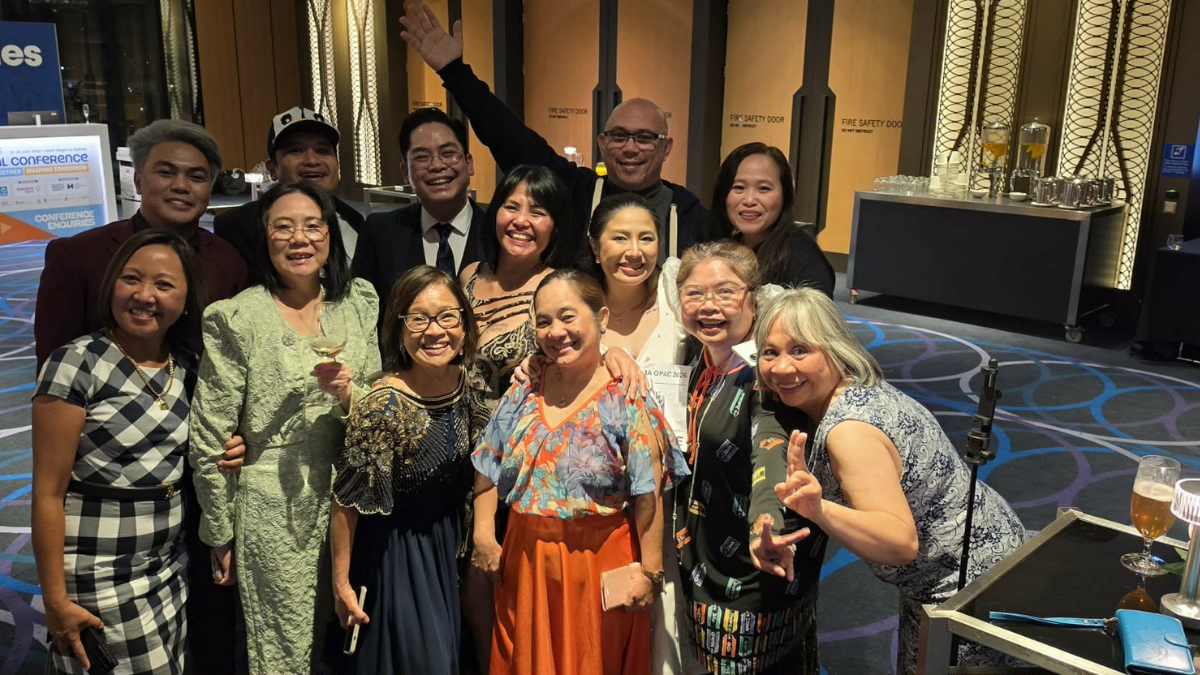

For Filipino nurses in Australia, professional leadership increasingly extends beyond clinical practice. It also means having a voice in the decisions that shape staffing, working conditions, professional recognition and, ultimately, patient care.

Over the past five years, the Filipino Nursing Diaspora (FiND) Network has actively engaged with the NSW Nurses and Midwives’ Association (NSWNMA), the state-based union representing nurses and midwives in New South Wales. Many FiND Network members are also NSWNMA members, creating an important intersection between diaspora engagement and collective professional advocacy.
The experiences of Filipino NSWNMA delegates Glen Chua, Merilyn Holmes and Rommel Lagare illustrate why this engagement matters.
For Glen, unionism is a natural extension of nursing advocacy. Nurses advocate for patients every day, he explains, but they must also advocate for colleagues and for workplace conditions that make safe, compassionate and person-centred care possible. His union involvement has strengthened his confidence in public speaking, workplace advocacy and leadership, including speaking before hundreds of nurses during industrial action and participating in discussions about reasonable workloads and safe staffing.
Importantly, Glen connects union solidarity with a deeply Filipino concept: bayanihan. Collective action, he argues, reflects the familiar principle that communities achieve more when people stand together and share responsibility. His message to Filipino nurses is equally clear: “Don’t be shy, and don’t be scared to speak up. Your voice matters, your experience matters, and there is power in solidarity.”
That message resonates strongly with Merilyn Holmes. As a nurse from a culturally and linguistically diverse community, Merilyn became involved because she wanted nurses and midwives to feel supported, respected and heard. Union participation helped her find her own voice while developing the confidence to advocate for colleagues who may otherwise feel overlooked.
For Merilyn, Filipino representation is not simply about visibility. It is about participation. “We belong at the table, and our voices matter,” she says, encouraging Filipino nurses to become involved, build connections and recognize the value of their cultural and professional perspectives.

Rommel Lagare similarly emphasizes the importance of solidarity for culturally diverse nurses. Seeing the union present in workplaces, he observes, reminds members that they are not alone. For culturally and linguistically diverse communities, union participation provides a mechanism through which voices can be heard—and can encourage more Filipino nurses to eventually become representatives themselves.
Together, their experiences point to a broader opportunity for the Filipino nursing diaspora.
Filipino nurses already make significant contributions at the bedside. But representation must increasingly extend to the places where decisions are made—union committees, professional associations, executive leadership, education, research and policy. Glen hopes that over the next decade more Filipino nurses will move from being members to becoming active participants, advocates and leaders.
This is where the relationship between FiND Network and NSWNMA has particular significance. Diaspora organizations can strengthen cultural connection, mentorship and professional networks, while unions provide structures for collective workplace advocacy. These roles are distinct but complementary.
There is also a valuable connection back to the Philippines. Experiences gained through union participation in Australia—around collective advocacy, workforce conditions, safe workloads, representation and leadership—can contribute to wider conversations about strengthening the nursing profession internationally. Glen envisions solidarity developed abroad becoming part of a broader movement that empowers Filipino nurses both in Australia and in the Philippines.
For FiND Network, continued engagement with NSWNMA therefore represents more than institutional partnership. It reflects a shared belief that nurses should not merely work within health systems—they should have meaningful opportunities to shape them.
Filipino nurses have already earned their place at the bedside. The next frontier is ensuring their voices are equally present at the table.
