



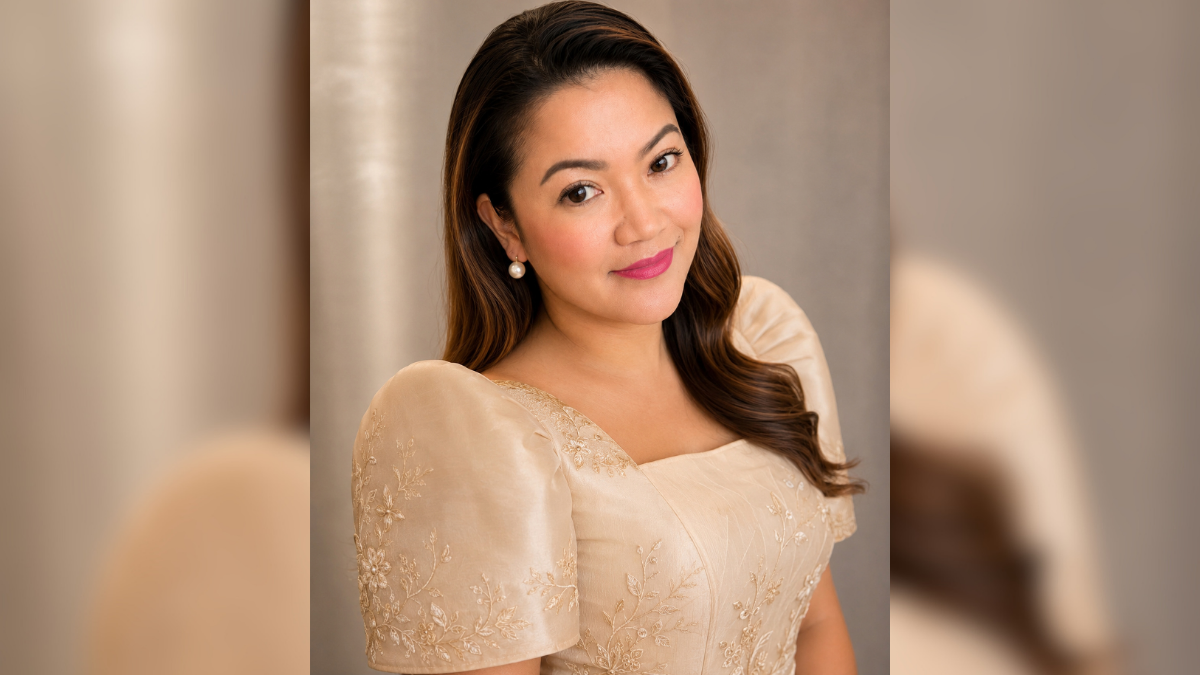

The classroom she walked into in 2023 looked nothing like the ones she had commanded for nearly two decades. There were the same fluorescent lights and the same restless adolescent energy, but the policies were foreign, the paperwork unfamiliar, and the woman standing at the front—an academic dean and graduate school professor in her old life—was, for the first time in years, a beginner again. Dr. Bethel N. Zurbano had built a career in the Philippines that few educators achieve in a lifetime. Then she gave it up to start over.

Not entirely, of course. What she carried across the Pacific could not be packed into a suitcase or listed on a work visa. But the outward markers of that career—the title, the seniority, the institutional standing—stayed behind. What she found in California was a middle school special education classroom, a stack of unfamiliar legal requirements, and the daily work of proving herself all over again.
Two decades before the leap
To understand the weight of that fresh start, it helps to know what came before it. For almost twenty years, Bethel moved through nearly every role the Philippine education system offers. She was a secondary school teacher, a college instructor, an academic dean, a graduate school faculty member, a thesis and dissertation adviser, a research panelist, and a guest lecturer. She sat as a board member and executive officer of the Philippine Association for Teachers and Educators, Region IV-A.
Each role sharpened something different. The classroom taught her how to build confidence in students. Teaching future educators and school leaders taught her how to connect theory to the reality of a working school. And the deanship, perhaps most of all, taught her how to lead when the decisions were hard and the stakes belonged to other people.
“This experience taught me how to lead responsibly, work collaboratively, make difficult decisions, and remain focused on the needs of learners and educators,” she says of her years as an academic dean. It is a tidy summary of an untidy job—overseeing programs, supervising faculty, managing students, building community partnerships—and it explains why leaving felt less like an escape than a deliberate sacrifice.
The reason for that sacrifice was not ambition in the usual sense. A single mother, Bethel framed nearly every major decision around her children. “As a single mother, many of my decisions are guided by my desire to give my family a better life and provide my children with opportunities that may help them build a successful future,” she shares with TGFM. Better opportunities, greater financial stability, a more secure future—those were the drivers. But she is quick to complicate the familiar overseas-worker narrative that reduces the choice to money.
“My decision to work abroad was not based solely on financial considerations,” the Filipino educator says. “It was also about accepting a new challenge, expanding my professional capacity, and discovering how I could continue serving others in a different country.” She had come to believe her Philippine experience had prepared her to contribute abroad. She also understood the price of that belief: she would have to be humble enough to learn everything again.
The humility of starting over
She arrived in the United States in 2022 and began working in a California public school in 2023—her first employment outside the Philippines. Today she serves as an 8th Grade Resource Specialist and Middle School Special Education Teacher at Fairview Middle School in the Gonzales Unified School District. The work is exacting. She develops and implements Individualized Education Programs, monitors academic progress, provides classroom interventions and accommodations, and collaborates with general education teachers, administrators, and families.

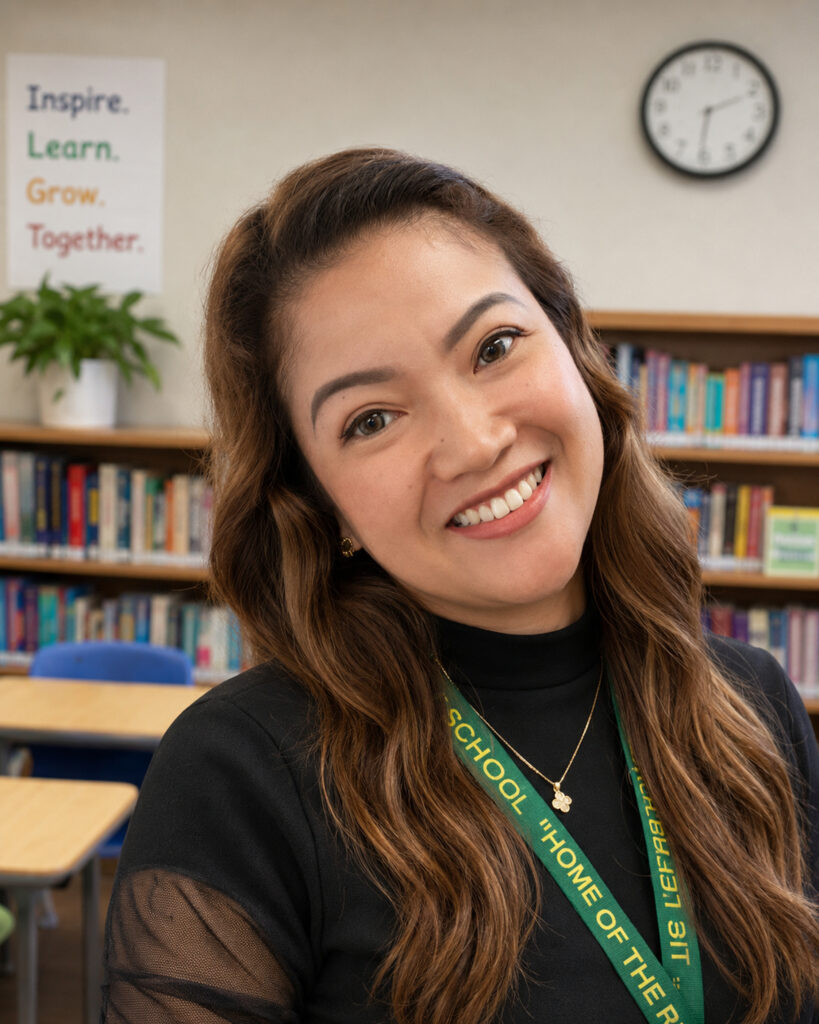
None of it came pre-loaded. Despite her years of experience, she had to absorb an entirely new apparatus: unfamiliar special education procedures, legal requirements, documentation systems, and classroom expectations, along with new ways of communicating with students and families from backgrounds she had never encountered. The former academic dean was, in the most literal sense, back at her desk doing homework.
There were nights of doubt. “There were moments when I questioned whether I was doing enough or whether I could meet all the expectations placed upon me,” she recalls. The expectations came from every direction at once. She was completing credential requirements, continuing her graduate studies, teaching graduate classes, and raising her children—each of these a full undertaking, all of them running in parallel.
And she was doing it far from home. The distance is a specific kind of hardship that many overseas Filipino workers know well and few outsiders fully grasp. “Important moments, family concerns, and personal difficulties can feel heavier when loved ones are far away,” she says. There were seasons of loneliness, financial pressure, emotional exhaustion, and, in her words, major changes in her personal life—all of it borne while she remained the steady one for her children.
What shifted things was a decision that runs against the grain of the self-reliant migrant story: she let people help her. “I learned that asking for help is not a sign of weakness,” she says. She allowed trusted friends, colleagues, mentors, church members, and fellow Filipino educators to hold some of the weight. Her children remained her clearest reason to keep going. And she drew on her parents, former missionaries, who had taught her early that faith, service, and perseverance were not slogans but daily practice.

Finding her voice again
If the classroom demanded she start over professionally, another community gave her a way to rebuild something less tangible—her sense of standing among peers. Before she became Executive Vice President of the United Federation of Fil-Am Educators, Los Angeles Chapter, she was elected Public Relations Officer of the UNIFFIED Los Angeles–Orange County Chapter. On paper it is a line of career progression. In her telling, it was closer to a lifeline.
“The officers and members warmly welcomed me, believed in my abilities, and gave me opportunities to contribute to the organization,” she says. “Their support strengthened my confidence and reminded me that I was not alone in my journey abroad.” For an educator who had led professional organizations back home and then arrived in a new country as an unknown, the welcome mattered. It gave her a place to put her communication and organizational skills to use again, and, just as important, a room full of people who understood exactly what she was navigating.
The public relations role, she says, “helped rebuild my confidence and allowed me to see that I could continue growing as an educator and leader even in a new country.” That rediscovered voice carried her into the Executive Vice President position, where she now supports programs promoting educator unity, professional development, and community service. Every opportunity to serve, she has come to believe, becomes preparation for a larger one.
Her professional life abroad has stayed unusually full. Alongside the special education work, she serves as an adjunct graduate school faculty member at Philippine Christian University through its transnational and online education program, teaching master’s and doctoral students scattered across the United States. She advises theses and dissertations and sits on research defense panels. It is a striking range: on any given week she might guide a middle schooler through an accommodation plan and a doctoral candidate through a dissertation defense.
She insists the two feel the same from the inside. “Whether I am supporting a middle school student with an Individualized Education Program or guiding a doctoral student through a dissertation, I experience the same sense of purpose,” she says. The purpose is what she keeps returning to, and it is most visible in the smallest classroom moments—a student asking for help, finishing an assignment alone, raising a hand. “These moments may appear small, but they represent significant growth,” she says.
What she would tell the next one
Ask her what she has learned, and the answer bends away from achievement and toward character. “Leadership is not built through titles alone,” she says. “It is developed through years of learning, service, sacrifice, humility, and willingness to accept responsibility.” Coming from someone who has held a long list of titles, the observation carries weight precisely because she has watched them fall away and rebuild.
Her advice to fellow Filipinos abroad is practical and hard-won. Be patient with yourself, because adjusting takes time. Stay humble and teachable even if you were accomplished at home. Keep investing in your growth—new skills, proper certifications, and clear immigration and employment documentation, with guidance from trustworthy professionals on legal and financial matters. Be wise with money: save consistently, avoid unnecessary debt, and refuse to measure success against what others display online.
She is equally direct about relationships. “Not everyone who appears friendly will have sincere intentions,” she warns, urging people to build connections with those who respect their values and to set boundaries around anything that damages their peace or dignity. But isolation, she adds, is its own trap—find a community, whether through work, church, or a professional group.
Perhaps her most resonant counsel is about the ego bruise of migration itself. “Do not be ashamed to begin again,” she says. “Your position, title, or status may change when you move to another country, but your knowledge, experiences, values, and abilities remain with you.” It is the lesson of her own story, distilled. The dean became a beginner and lost none of what actually mattered.
She anchors all of it in faith. There will be seasons, she says, when plans stall and rejections pile up, and she has come to read those detours as possible redirections. “Your value is not determined by your job title, immigration status, income, relationship, or material possessions,” she says. “Your worth comes from who you are, how you treat others, and how faithfully you use the opportunities entrusted to you.”
Looking ahead, she wants to take on broader leadership in inclusive education—building systems where students with disabilities are genuinely included rather than merely placed in a room. She hopes to keep teaching graduate students, publishing research, writing books, and eventually creating programs that guide Filipino educators through the same difficult transition she made. She knows that terrain intimately now: the credentialing, the confidence-building, the search for a community that feels like home.
For her, the arc of the last four years has never really been about arrival. “Success is not simply reaching a destination,” she says. “It is becoming stronger, wiser, kinder, and more faithful along the way.” The woman who walked into that unfamiliar California classroom as a beginner did not lose the career she left behind. She translated it—into a new language, a new system, a new chapter—and, in the translating, found she had more to give than a title ever measured.
