



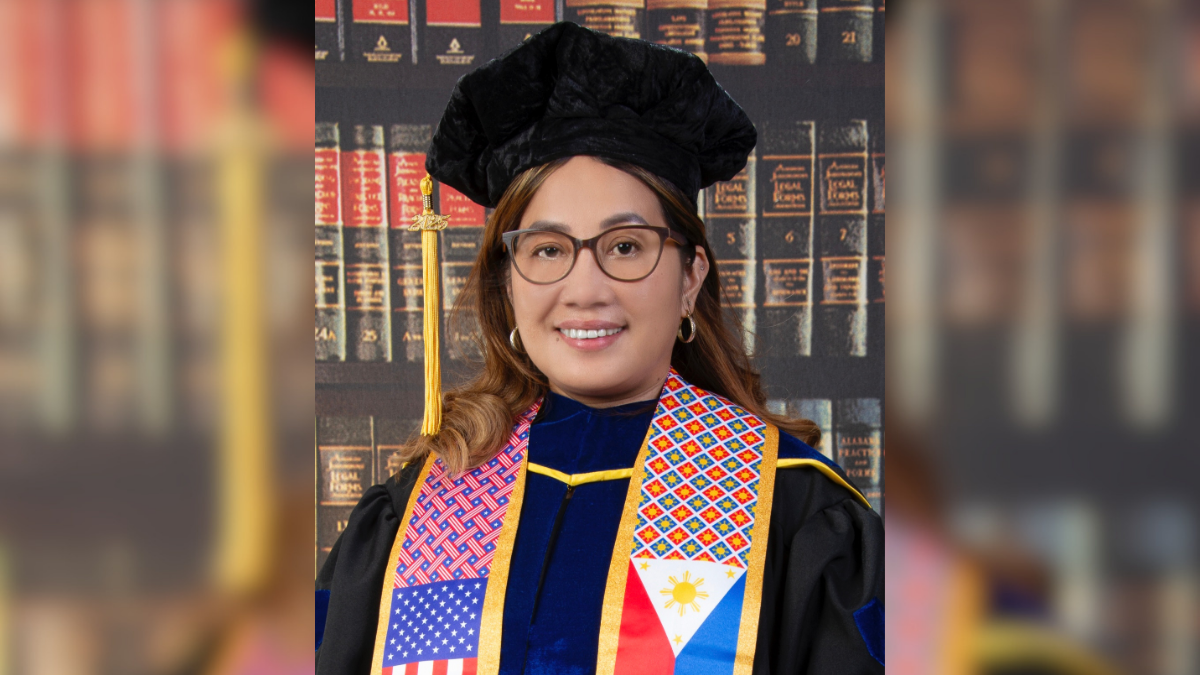

Some careers announce themselves in an office with a nameplate on the door. Teaching announces itself in the small, electric moment when a struggling student’s face suddenly changes — the eyes widen, the shoulders straighten, and something clicks into place. Dr. Marivit Mariano-Gamboa has spent nearly a quarter of a century chasing that moment, first in the classrooms of Pampanga and now across the Pacific, where she has built a career on a simple conviction: if you want to change hundreds of lives, start by changing the teacher standing in front of them.

At 48, she serves as an Instructional Coach and Instructional Lead Teacher at Panorama Elementary School in Maryland, part of the Prince George’s County Public Schools system. It is a role that sits at the intersection of two worlds — the classroom and the leadership table — and it is exactly where she wants to be after 19 years abroad.
From dancing lessons to data meetings
Dr. Marivit’s story does not begin in the United States. It begins in Floridablanca, Pampanga, in 1999, when a fresh graduate of Holy Angel University walked into Saint Augustine Academy to teach intermediate grades. She taught every content area then, the way young teachers in the provinces often do, learning breadth before depth.
What set her apart wasn’t a curriculum framework. It was rhythm. “Beyond just teaching students how to dance in extracurricular activities, I actively incorporated dance into my daily academic lessons to make them incredibly energetic and alive,” she shares with TGFM. The strategy worked. Lessons that might have gone flat instead pulsed with movement, and her students leaned in.
Over seven years, she moved from Saint Augustine to Holy Family Academy, where she specialized in Reading, English, and Language Arts, and then to a public school near her hometown in San Isidro, Lubao, teaching both primary and intermediate grades. Private sector, public sector, primary, intermediate — she collected the full range of Philippine classroom experience. And along the way, she kept stepping into roles most young teachers avoid. She led initiatives. She collaborated. She watched her principal mentors closely and absorbed how they carried themselves.
Those years, she says, built the resilience that made everything after possible. By 2007, she was ready to test that resilience on a much larger stage.
The greener pasture had a price
The decision to leave carried two engines. One was professional. “As an educator, I am constantly seeking new ideas, innovative learnings, and opportunities to elevate my craft,” she explains, and the United States offered a scale of challenge the Philippines could not. The other engine was more personal, and heavier.
As the second eldest among her siblings, she had made a promise. “I made a personal promise to support my family financially, particularly my parents. I wanted to give back to them for everything they sacrificed to give me a future,” she says. That sentence recurs throughout her story like a refrain — the family that sacrificed, the daughter determined to repay them. It is not a footnote to her ambition. It is the foundation of it.
But the arrival was harder than the departure. Culture shock and homesickness hit first and hit hardest. A new educational system meant relearning things she thought she already knew. Cultural nuances she had never encountered required constant recalibration. And underneath all of it ran the steady ache of distance from the people she loved most.
Her strategy for surviving it was, in a sense, characteristically stubborn: she buried herself in her craft. Rather than wait for the homesickness to fade, she went back to school. She earned a Master’s degree in the United States. Then, in a move that says a great deal about where her heart remained, she pursued her doctorate not in America but at Central Luzon State University in the Philippines, graduating with her PhD in 2025.
Turning hurdles into hardware
The doctorate was only part of it. The former Pampanga teacher also pushed toward the most demanding credential available to educators in the United States, becoming a National Board Certified Teacher — a grueling process requiring the completion of four separate components and a battery of assessments. She passed all of them.
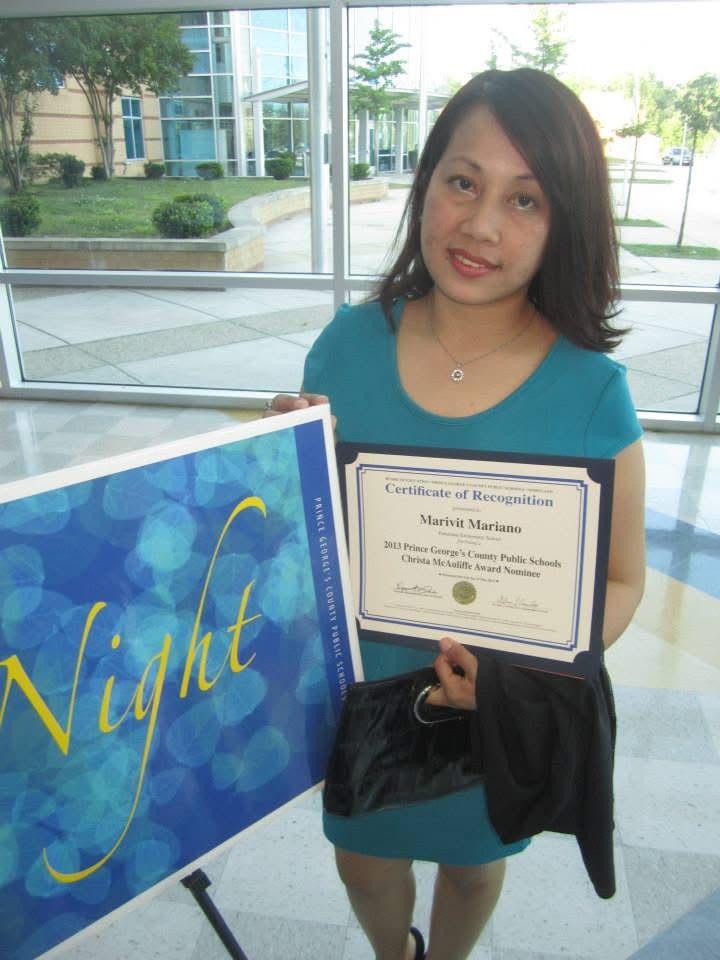
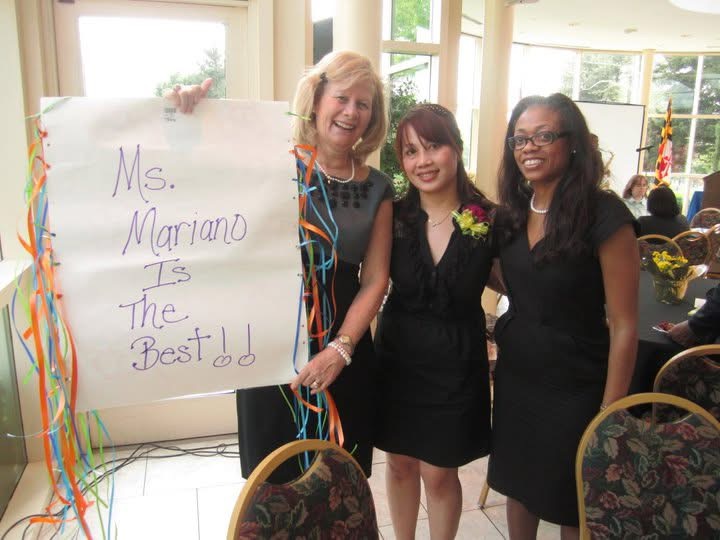
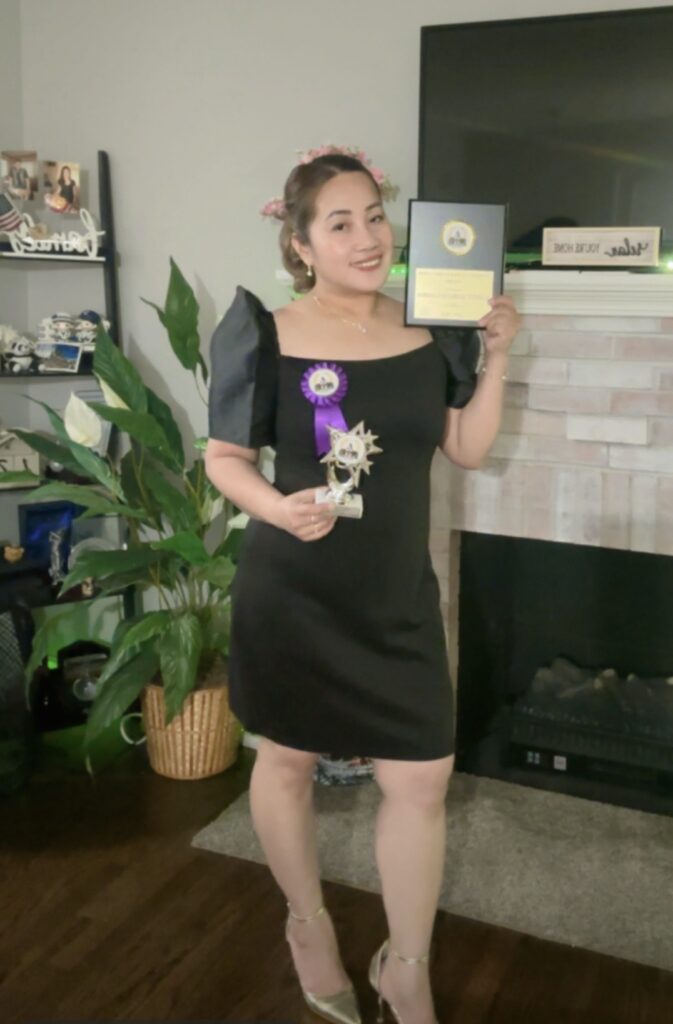
Then came the recognition that turned private effort into public affirmation. “As an international teacher, it felt almost unbelievable to receive numerous awards and nominations,” she says, describing multiple nominations for Teacher of the Year and a nomination for the prestigious Christa McAuliffe award. For an educator who had crossed an ocean and started over, the accolades landed with particular weight. They were proof that the gamble had paid off — that a Filipina who arrived carrying homesickness and a promise had climbed to the front ranks of her profession in a country not her own.

Still, she is careful about where she locates the source of her drive. The awards motivated her, but the anchor was always her parents. She returns to them again and again, framing every degree and every honor as something she achieved on their behalf as much as her own.
Leading the leaders
Today, her work looks different from the dancing math lessons of her early career, though the underlying instinct is the same. As an Instructional Coach and Lead Teacher, she splits her time between instructing students directly and steering the adults around her. She leads data-driven collaborative planning, maps curriculum, and helps build the common formative assessments that measure whether core subjects are landing. She delivers demonstration lessons, conducts peer observations, and offers non-evaluative feedback — the kind of guidance meant to develop teachers rather than judge them. New hires come to her for orientation. As a member of the school’s Instructional Leadership Team, she consults with the principal and serves as a liaison between leadership and her grade-level colleagues.
It is a lot of hats. But for her, the appeal is not the titles — it is the reach. “The most satisfying aspect of my work is witnessing that ‘lightbulb moment’—not just in students, but in the teachers I mentor,” she says. The logic is multiplicative, and she states it plainly: “Knowing that empowering a single teacher ultimately elevates the learning experience for hundreds of students is what keeps me incredibly passionate, motivated, and deeply in love with this field every single day.”
That, more than any award, is the definitive highlight of her career — the privilege, as she puts it, of leading other educators and driving institutional growth.
A school of her own, someday
The work abroad has given her plenty: advanced instructional methods, new technologies, exposure to educators from every background, and the financial capacity to keep the promise she made before she left. It has also, she says, taught her something broader about her countrymen. Working overseas “has proven to me that Filipino educators are truly world-class and can thrive on any global stage.”
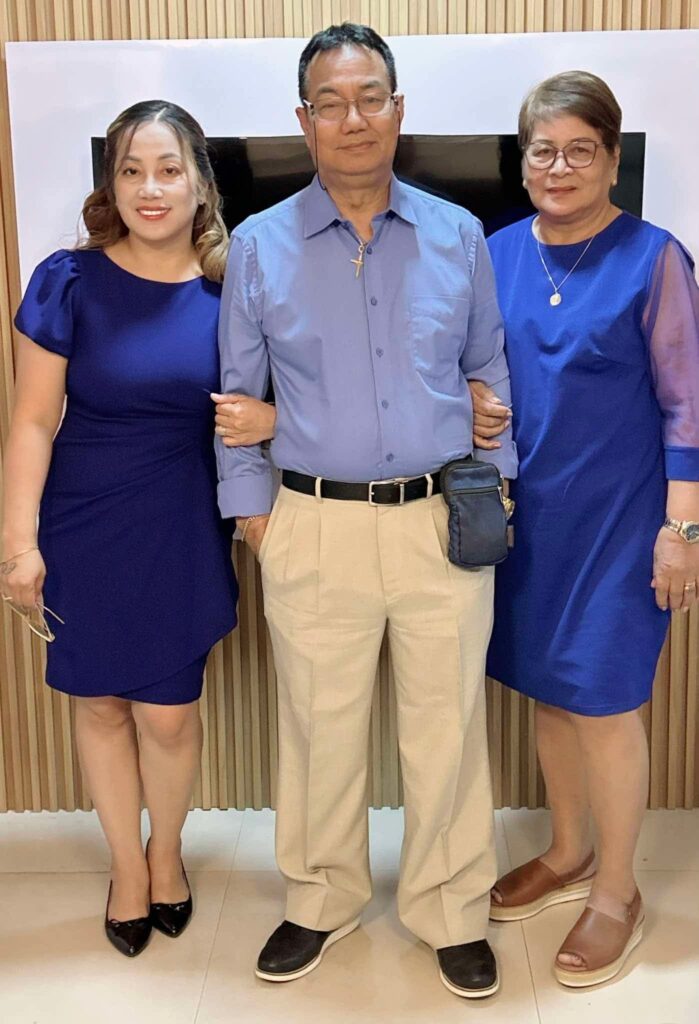
She intends to prove that at home, eventually. Her long-held dream is to establish her own school in the Philippines — a plan she describes with clear eyes about the difficulty. “While I am fully aware that launching a school is a massive undertaking filled with financial and administrative challenges, I believe that no dream is impossible if you have the vision to back it up,” she says. Coming from a family of educators, armed with a PhD and National Board Certification, she believes she can bring elite instructional strategies back to Filipino students.
That advocacy is not sitting idle until then. Though she has no ties to any recruitment agency, she spends her personal time helping relatives, friends, and fellow Filipino teachers apply for positions in the United States — reviewing applications, running mock interviews, opening doors she once had to find herself. “I want to see my kababayans succeed on the global stage, and helping them open these doors is my way of paying it forward,” she says.
The advice, and the anchor
Ask her what she would tell a fellow Filipino struggling overseas, and the answer circles back to where her own story started. “My most important advice is to never lose sight of your ‘why,'” she says. When the homesickness strikes and the challenges feel insurmountable, that reason is what keeps a person moving.
The rest is practical. On work, she urges kababayans never to stop improving and never to shy away from leadership. On money, she counsels discipline — support the family back home, yes, but save and invest for your own future too. On trust, she advises building a positive support system and discerning carefully whom to let close.
And then the reassurance, offered from someone who has earned the right to give it: “If an international teacher like me could overcome the hurdles of culture shock to earn a PhD, achieve National Board Certification, and lead in a US school, you can absolutely conquer your dreams too.”
For all the titles beside her name, she insists the real measure of her success lies elsewhere. “My success is not defined by the titles next to my name, but by the network of exceptional mentors and the love, unity, and strength of the family that stands behind me,” she says. Nineteen years, one PhD, a wall of nominations, and a school still waiting to be built — and the educator from Pampanga counts all of it as a single, ongoing gift to the people who made her.
