



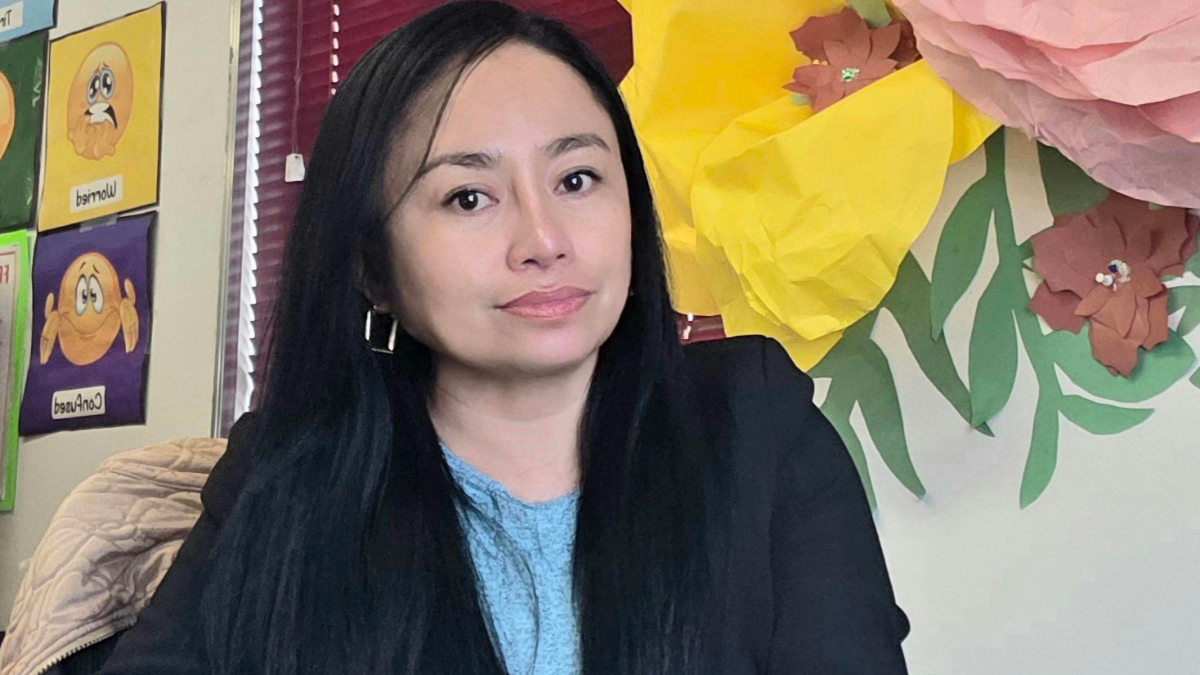

The J-1 Exchange Teacher Program had already stationed her thousands of miles from home, but the real test was smaller and stranger than distance: a single classroom holding students from Grade 6 through Grade 12, each one learning at a different pace, all of them looking to one teacher for answers. This is the daily reality for Dr. Arlyne Nanol Labadan, a 46-year-old Filipino educator who left a stable career in the Philippines to become a Principal-Teacher in rural Alaska — one of the most remote corners of the American school system.

From a far-flung barangay to a bigger stage
Dr. Arlyne’s story did not begin in Alaska. It began in 2007, in one of the second farthest barangays of her hometown, where she took her first assignment with the Department of Education. The resources were thin, but her ambition was not. With her students, she built a school publication that went on to earn recognition at the Regional Level — an early lesson that shaped everything that followed.
“That achievement taught me that every child has the potential to succeed when given the right guidance and encouragement,” she shares with TGFM.

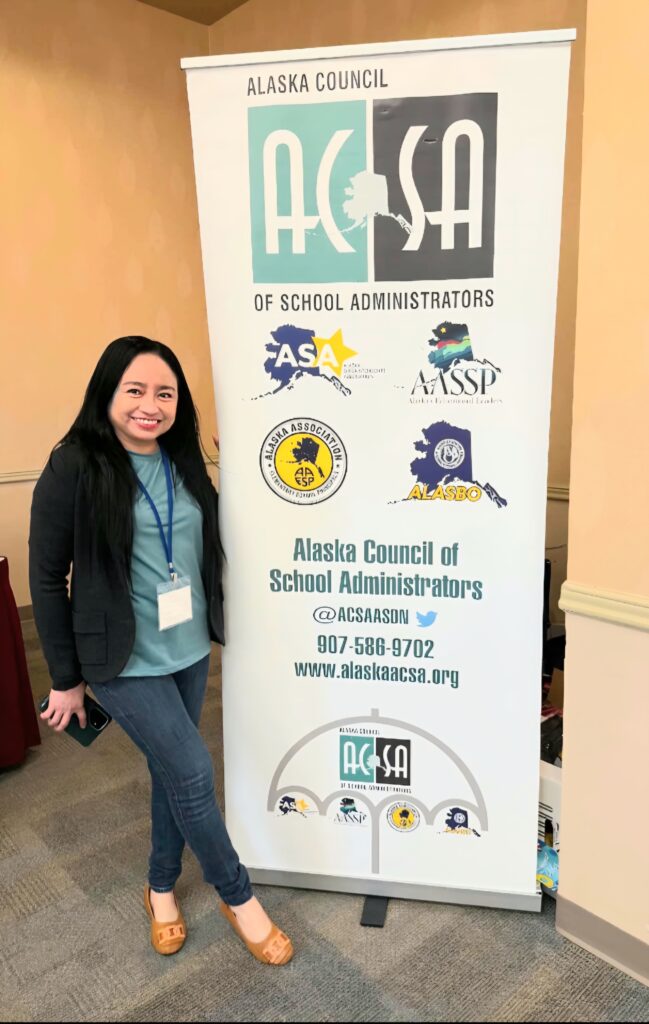
The years that followed brought steady climbs. She moved to a pilot school under the Special Science Program, teaching Grade 1 students while sharpening her craft. Promotions came in sequence — Teacher II, Teacher III, and finally Master Teacher in 2018. Along the way, the former journalism coach mentored fellow teachers and pushed school improvement projects that reached beyond her own classroom.
By most measures, she had built the kind of career many educators spend decades chasing. Then she decided to start over.
Four job offers, one month, and a leap north
In 2021, the Master Teacher applied independently for the J-1 Exchange Teacher Program in the United States. What happened next surprised even her: within a single month, she received four job offers from five applications. She accepted the role of Principal-Teacher in rural Alaska, stepping into a position that made her both a school leader and a classroom teacher at once.
For Dr. Arlyne, the decision was never about money.
“Working abroad was never just about seeking better opportunities financially,” she explains. “It was about challenging myself professionally, expanding my perspective as an educator, and proving that Filipino teachers can compete and excel globally.”
The adjustment was steep. A new climate, a new culture, and an entirely different educational system all arrived at once. Carrying the weight of two jobs — principal and teacher — often left her drained.
“Living far from my family was emotionally difficult, and balancing the responsibilities of being both Principal and Teacher often left me physically and mentally exhausted,” she recalls.
Rather than retreat, the Filipina educator leaned into structure and mindset. She managed her time carefully, kept learning, and reminded herself why she had come. Her faith, she says, was her steadiest anchor, alongside family, colleagues, and mentors who checked in during the hardest stretches.
The classroom that teaches the teacher
What kept her going was the work itself. Teaching a multigrade classroom — students spread across seven grade levels — forced a kind of creativity that a single-grade room never demands.
“Each student learns differently, and I enjoy designing lessons that meet their individual needs while encouraging them to become independent learners,” she says.

The role expanded quickly. Beyond teaching, she took on duties as the Alaska Excel Coordinator, overseeing academic programs aimed at lifting student achievement. She later became the Teachers’ Union President for her district, a position that let her advocate for fellow educators and strengthen the ties binding the school community together.
Her satisfaction, she notes, comes from watching growth on both sides of the desk.
“Seeing students graduate with confidence and witnessing teachers grow professionally are among the most rewarding parts of my career,” she says.
The years abroad also fueled her own advancement. She earned a Doctor of Education in Educational Management, secured her Administrator and Principal Licenses, and transitioned from a J-1 visa to an H-1B visa — a change that signaled her move from temporary exchange teacher to long-term professional. In 2026, she was once again promoted to Principal-Teacher.
Carrying the hopes of others
For the Filipina principal, the credentials matter less than what they represent. She frames her success not as a personal trophy but as proof of possibility for teachers watching from home.
“With faith, perseverance, and humility, Filipino educators can thrive and make meaningful contributions anywhere in the world,” she says.
That conviction shapes her plans for the future. She hopes to eventually bring what she has learned back to the Philippines — mentoring teachers, running leadership and instructional training, and sharing the practices she has absorbed abroad. Advocacy for quality education and teacher empowerment sits at the center of that vision.
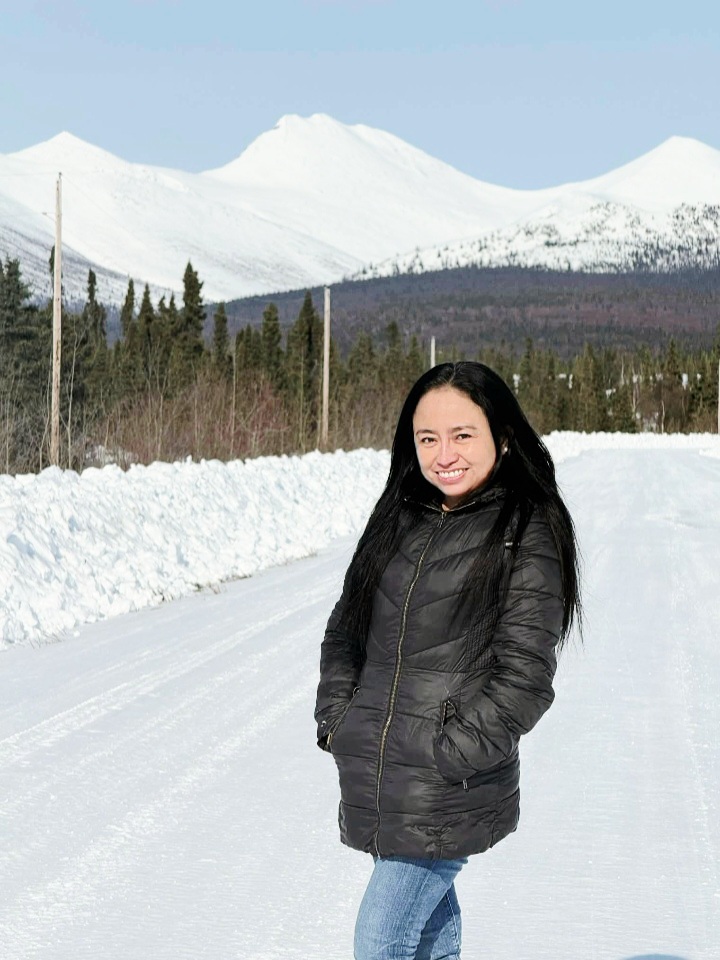
Her advice to kababayans working overseas is grounded in the same values that carried her through Alaska’s winters.
“There will be moments of loneliness, homesickness, uncertainty, and disappointment,” she says. “These experiences are normal, but they should never define your journey.”
She urges fellow overseas workers to keep investing in themselves, to live within their means, and to choose their relationships with care. Above all, she points back to the discipline of purpose.
“Every sacrifice you make today is preparing you for greater opportunities tomorrow,” she says.
Looking back on the arc from a remote Philippine barangay to a school at the edge of the American map, Dr. Arlyne measures her career by something other than titles.
“Success is not measured solely by promotions, titles, or awards,” she reflects, “but by the lives we influence and the legacy we leave behind.”
It is a fitting summary for an educator who has spent nearly two decades proving that where a teacher starts has little to do with how far she can go.
