



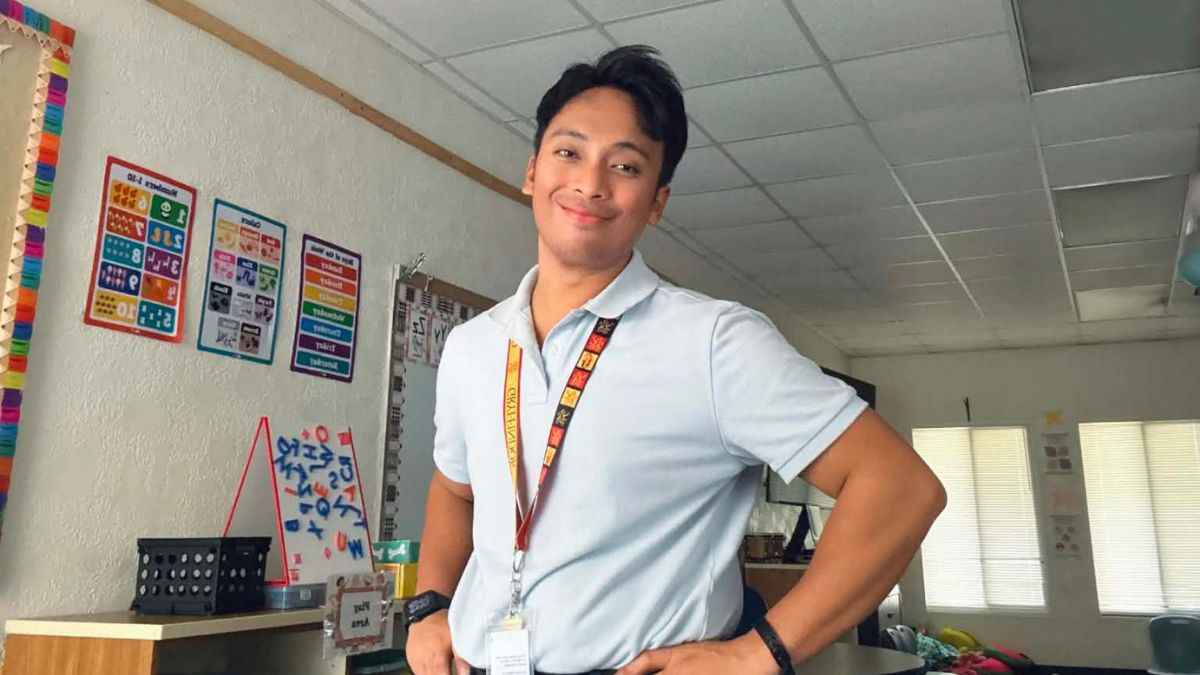

Special education rarely makes it into the highlight reels of teaching. There are no dramatic valedictorian speeches, no packed auditoriums applauding a perfect exam score. The wins are quieter: a child who finally holds a pencil the right way, a student who speaks a full sentence for the first time, a kindergartner who walks into a classroom without crying. For Johndel Rey Aduca, those small victories are the whole point — and they carried him nearly nine thousand miles from Zamboanga City to a self-contained classroom in Pensacola.

At 28, the Filipino educator teaches kindergarten and first-graders with a range of learning needs as an ESE VE self-contained teacher at O.J. Semmes Elementary School, part of the Escambia County Public Schools District in Florida. His days are built around Individualized Education Programs, differentiated instruction, and data-driven progress tracking — the technical scaffolding of special education. But ask him what the work is actually about, and the answer is disarmingly simple.
“I believe that every child, regardless of their abilities or challenges, deserves patience, understanding, support, and the opportunity to succeed,” he shares with TGFM.
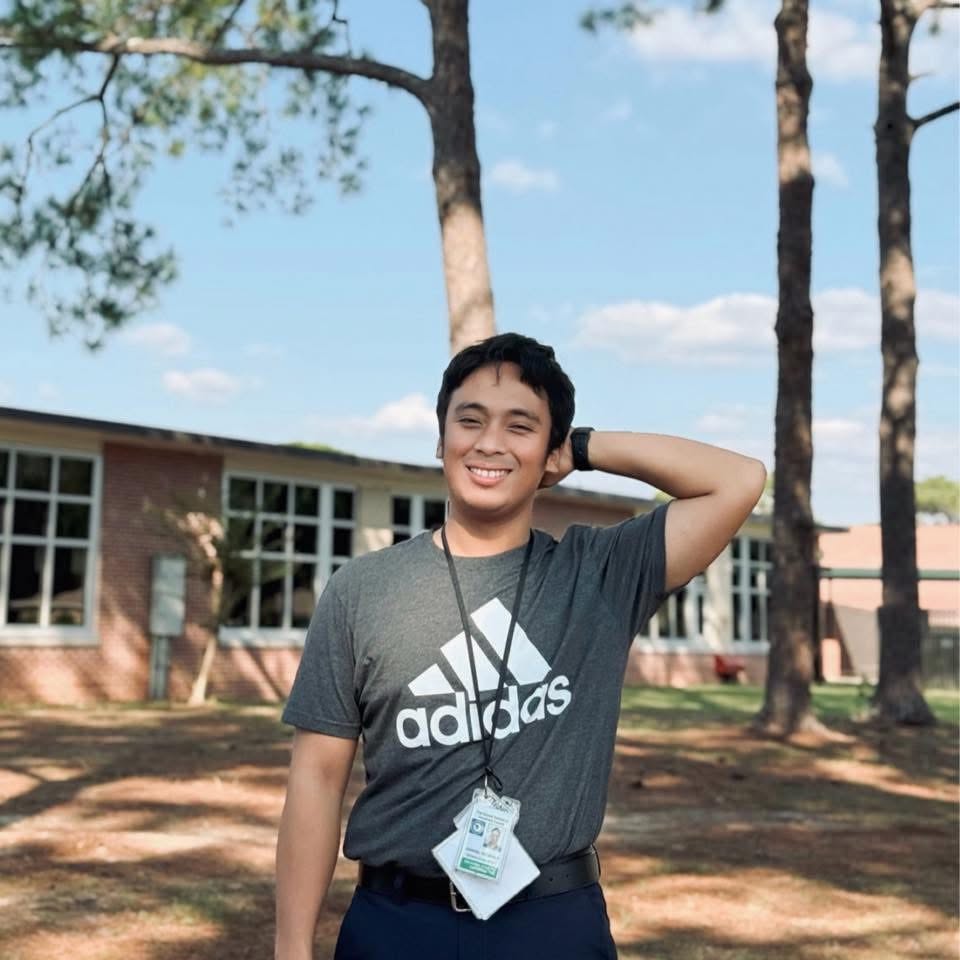
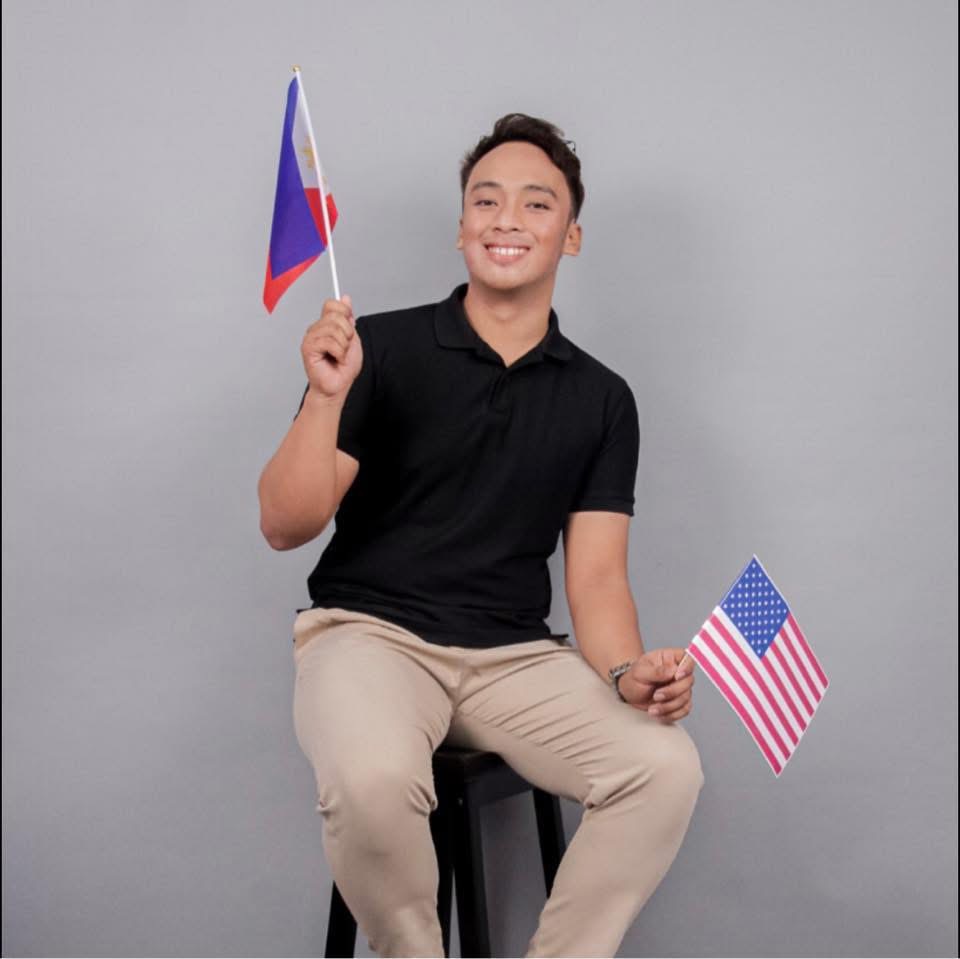
That conviction did not arrive fully formed. It was built over years, across two countries, and through a stretch of personal darkness that he now speaks about with unusual candor.
A dream that got redirected
Johndel grew up as the youngest in a family that knew the weight of a tight budget. He describes a household that was not financially wealthy — a lower-income home where the currency was effort rather than comfort. “We learned the importance of hard work, perseverance, gratitude, and resilience,” he recalls. Being the youngest came with a particular kind of pressure, the quiet resolve to eventually give back to the people who had gone without so he could get ahead.
His plan, for a long time, was straightforward: teach in the Philippines under the Department of Education. He applied. The opportunity never materialized. For many young teachers, that closed door is where the story stalls — years of waiting for a permanent item, cycling through contractual and substitute roles. He chose to read it differently.
“Instead of viewing it as a disappointment, I believed it was God’s way of redirecting me toward a different path and a greater purpose,” he says.
Before that redirection took him overseas, he had already stacked up the kind of experience that rarely shows on a résumé line. He taught at Western Mindanao State University’s Integrated Laboratory School high school. He worked as an inclusive special education teacher from 2021 to 2023, a private online and home-visitation tutor before that, a special education teacher at a therapy center in Zamboanga City, and a substitute across the Baliwasan and Tagasilay districts for close to a year. It was scattered, demanding, and frequently underpaid — the connective tissue of a teaching career being assembled one short-term role at a time.
One moment from those years still anchors him. A student with exceptionalities — the kind of learner an institution quietly writes off — made the honor list. “This was a very rare accomplishment in the institution,” the former inclusive-education teacher says, “and seeing my student overcome challenges and succeed was one of the most fulfilling moments of my career.” It confirmed something he had suspected all along: that potential is far more evenly distributed than opportunity, and that the right support can close the gap.
In 2023, the door that had stayed shut in the Philippines swung open somewhere else. He was hired as a J-1 Cultural Exchange Teacher in the United States, arriving in Escambia County as part of a wave of international educators recruited to fill post-pandemic vacancies. He carried it as more than a job offer. He saw himself standing in for an entire country — a chance to represent Filipino teachers in an American classroom, and to bring Filipino food, music, dance, games, and heritage to students who had never encountered them.
The part nobody warns you about
The version of working abroad that circulates on social media is airport selfies and first paychecks converted to pesos. The reality of those first weeks, for the young teacher, was something far harder to post about.
“During my first few weeks in the United States, I experienced intense emotional and mental struggles that I could not fully explain at the time,” he says. He is direct about how far it went: moments of feeling overwhelmed, signs of depression, even episodes of hallucination. Being thousands of miles from his family, learning an unfamiliar education system, and shouldering the pressure to succeed in a role he had fought hard to earn collided all at once.

It is not a detail most professionals volunteer in a career profile. That he does says something about how he now understands strength — not as the absence of struggle, but as the willingness to name it. “I learned the importance of acknowledging my struggles, seeking support, and trusting the process of growth and adjustment,” he says.
What pulled him through was a combination of faith and people. He credits his belief in God as the steadying force during the worst of it, the thing that “provided me with strength during moments of uncertainty.” Around that core were his family back home, friends, and mentors — a support system he leaned on rather than a burden he tried to carry alone. His life mantra, the one he returns to when the ground feels unsteady, is blunt and unpoetic: keep on track, focus on your goal.
He came out the other side changed. “Those experiences shaped me into a more resilient, compassionate, and understanding educator,” he says — and it is not hard to see how a teacher who has weathered his own disorientation might have unusual patience for a five-year-old struggling to make sense of a room.
What the evaluations don’t capture
By the metrics Florida uses to grade its teachers, the Filipino educator has done more than adjust. He was rated Highly Effective for two consecutive years under the state’s teacher-evaluation system, and speaks with evident pride about mastering the observation rubric through reflection, professional growth, and data-driven instruction. For two years running, he was nominated for Teacher of the Year at his school.
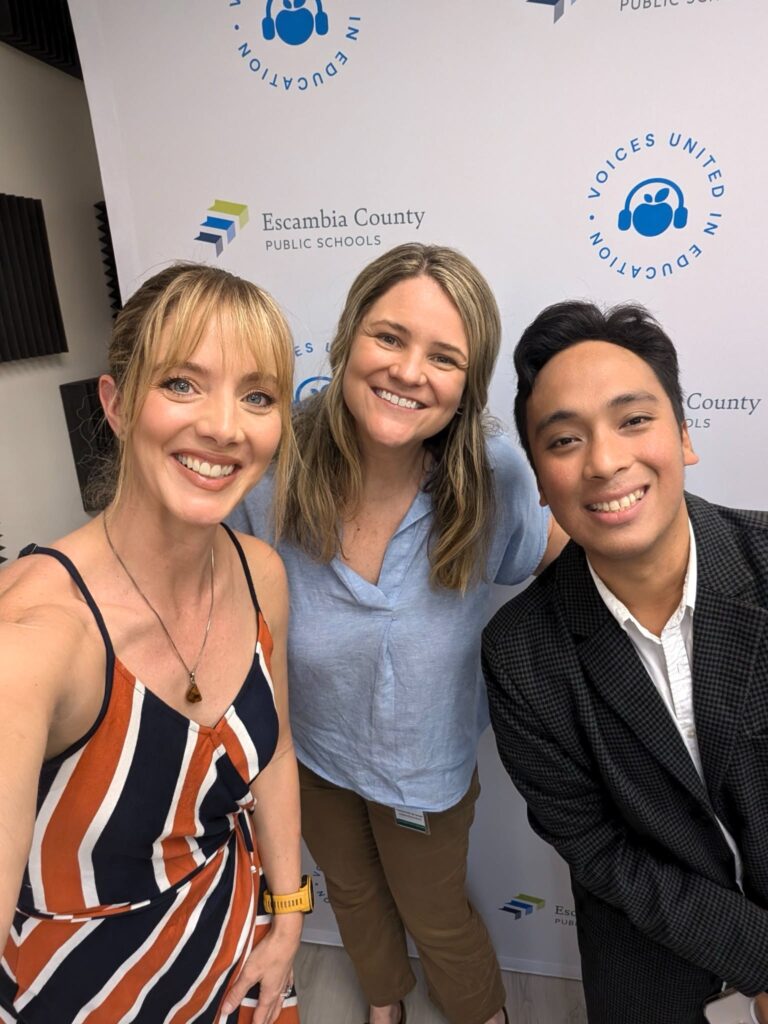
The work has spilled well beyond his own classroom. He has served as a Teacher Ambassador for DonorsChoose for three years, connecting educators to resources and funding — no small thing at a school where the overwhelming majority of students come from economically disadvantaged homes. He was invited onto a district podcast spotlighting the international teachers who chose to teach in Escambia County. And he has been selected to mentor incoming international teachers in the coming school year, a role that lets him hand down the hard-won map he wishes he’d had when he landed.
Still, he is clear-eyed about which parts of the job actually move him, and they are not the ones that fit on an evaluation form. “The most satisfying part of my work is witnessing my students grow, overcome challenges, and achieve milestones that others may have thought were impossible,” he says. He talks about students building not just academic skills but confidence, independence, and the practical tools to live fuller lives. “Seeing their progress and knowing that I played a role in their journey gives me a deep sense of purpose.”
There is a second, quieter reward running underneath all of it. Working abroad gave the youngest child in a lower-income family the ability to do what he had always intended — to provide. “Being able to contribute to their well-being and give back for their sacrifices has been one of the greatest rewards of this experience,” he says. The J-1 salary is not only a number in an account; it is a promise being kept.
Building a bridge back home
For all that Florida has given him, the young teacher’s ambitions bend back toward the Philippines. A J-1 visa is finite — three years, extendable to five — and he is already thinking about what he carries home when it ends.
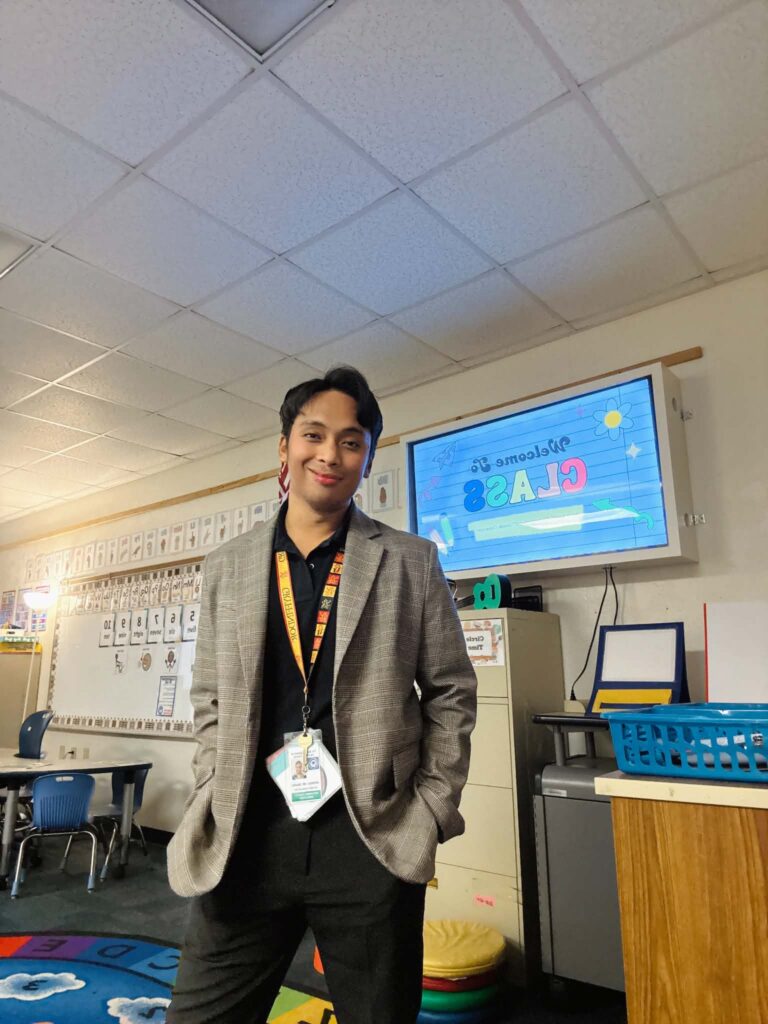
“After completing my tenure abroad, my goal is to bring home the knowledge, skills, and experiences I have gained as an international educator,” he says. What he wants to build is an advocacy: inclusive education for students with special needs, better support systems, more accessible classrooms, and equal footing for learners whose abilities are too easily underestimated. He wants to encourage the next generation of Filipino teachers to chase growth opportunities without losing their roots — to be, as he puts it, a bridge between cultures.
His advice to kababayans weighing the same leap is honest about the cost. “Being away from home is not easy; there will be moments of loneliness, homesickness, uncertainty, and struggles that will test your faith and strength,” he says. He tells them to hold onto the reason they started, to work with integrity, to manage money wisely, and to choose relationships built on respect and genuine support rather than convenience.
Then there is the line that reads like it came straight out of his own hardest weeks. “Success abroad is not measured only by what you earn,” he says, “but also by the person you become, the lives you touch, and the hope you bring to your family and community.”
It is a fitting measure for a teacher whose biggest victories will never make a highlight reel — a pencil held correctly, a sentence spoken, a child who believed something was impossible until someone stayed patient long enough to prove otherwise.
