



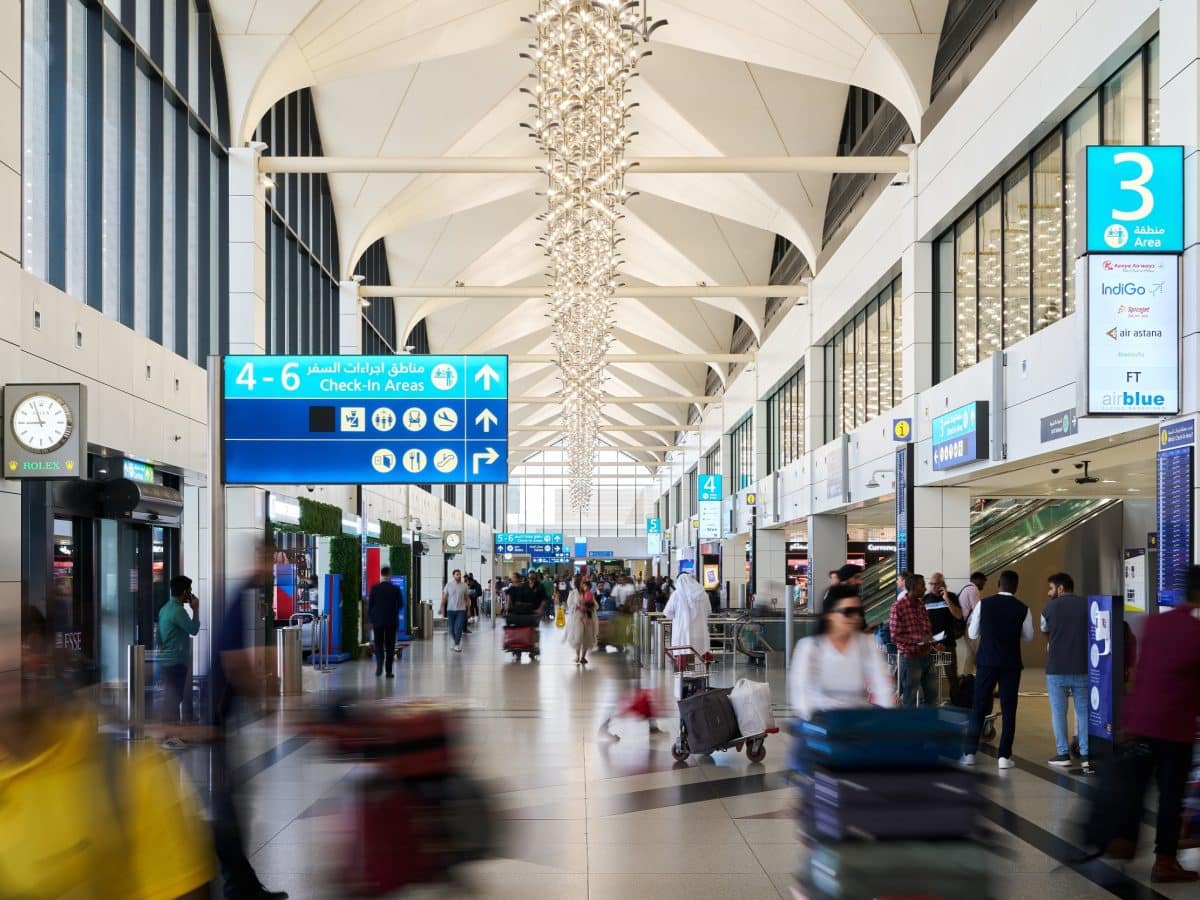

Dubai International Airport has emerged as the world’s leading hub for scheduled international seat capacity this July, offering 4.35 million seats and outpacing four other major global airports during the month.

The figures come from OAG, an aviation analytics company based in the United Kingdom, which placed Dubai above London Heathrow, Amsterdam Schiphol, Seoul Incheon and Paris Charles de Gaulle. Heathrow followed in second at 4.23 million seats, a decline of 1 per cent. Schiphol posted 3.82 million, a 1 per cent gain. Incheon and Charles de Gaulle registered 3.75 million and 3.70 million respectively, both close to where they stood a year earlier, the 24.ae news portal reported.
Behind Dubai’s standing this month is an 18 per cent jump in capacity compared with July 2025, a figure that points to steadily widening route networks and connections.
Much of the airport’s recent handling of heavier volumes has depended on technology. Working alongside the General Directorate of Residency and Foreigners Affairs, Dubai Airports rolled out a tool that lets passengers check their smart gate eligibility before they arrive at passport control. That feature sits within a larger biometric system, where enrolled travelers clear checkpoints through iris and facial scans in a matter of seconds.

The airport’s dominance is not confined to a single month. It opened 2026 by claiming the global lead in January with 5.5 million scheduled seats, edging past Atlanta’s Hartsfield–Jackson, then held the position in February at 4.9 million, according to OAG’s monthly figures.
Across all of 2025, Dubai kept its ranking as the busiest airport worldwide for international passenger traffic measured by seat capacity, reaching 62.4 million seats, up 4 per cent from the previous year. Passenger throughput hit 95.2 million over the same period, the highest yearly total the airport has ever recorded, Dubai Airports said.
That pace has extended into the current year, with 18.6 million travelers moving through the airport between January and March as airspace conditions across the region settled and carriers grew their schedules.
Among the newer offerings is the “Red Carpet” corridor, introduced in August 2025, which permits several passengers to complete passport formalities at once without showing any documents. The process relies on live biometric checks and takes anywhere from six to 14 seconds to complete.
