



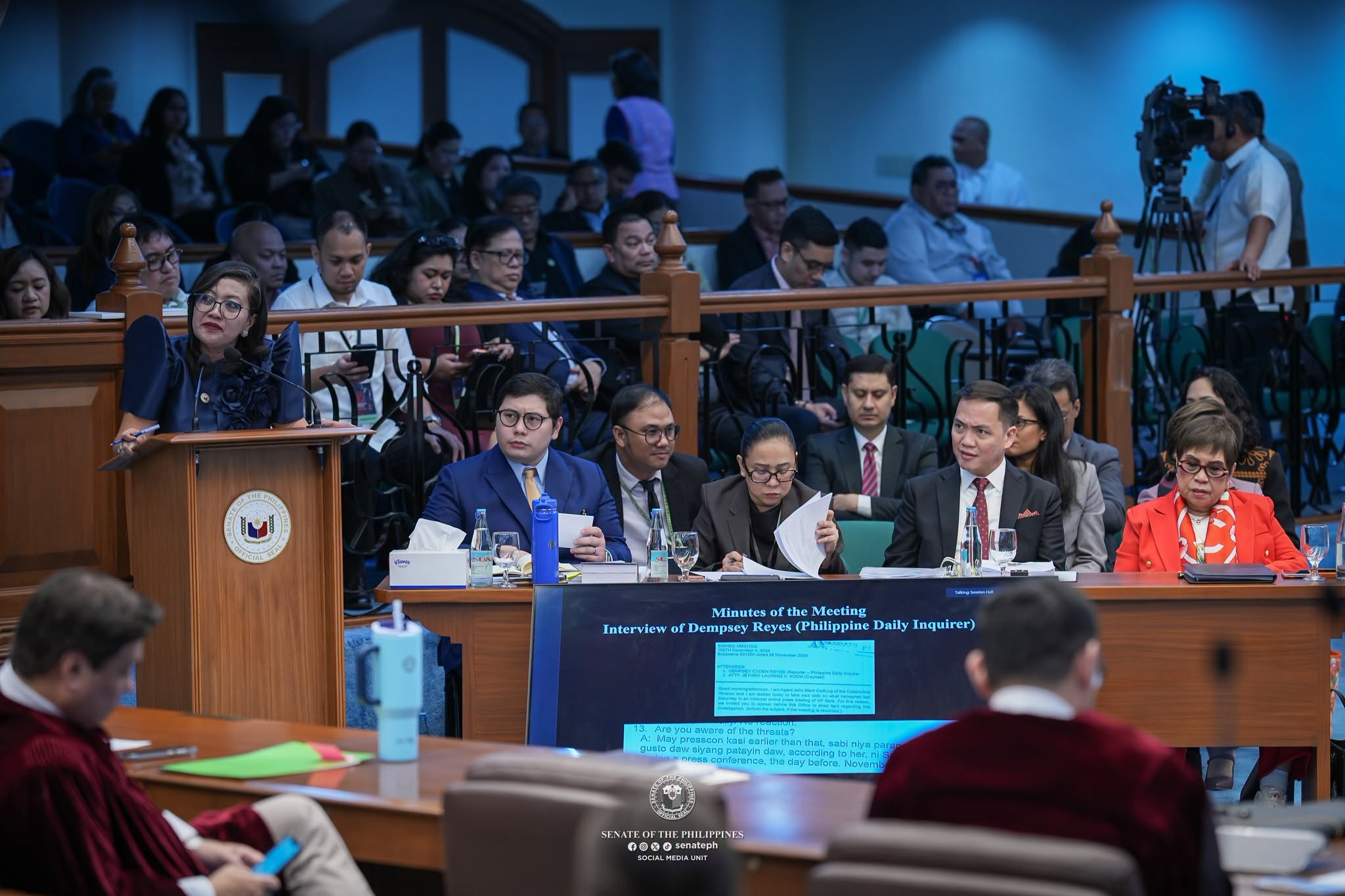

House impeachment prosecutors are considering whether to formally ask the Senate impeachment court to spell out the boundaries of questioning senator-judges, after a pointed exchange during Wednesday’s hearing raised doubts about what either party is permitted to ask.

Rep. Terry Ridon, one of the House prosecutors, said the panel needs certainty on whether clarificatory questions directed at a senator-judge are off-limits or allowed in cases where the query itself is unclear.
“Magandang makapaglinaw po with the Senate impeachment court kung ‘yan ho ba talaga ‘yung patakaran ng korte… Kung halimbawa hindi ganoon kalinaw ‘yung pagkakatanong po ng senator-judge. Tingin ko naman may karapatan ‘yung atin pong panels, whether defense or prosecution, na humingi at magtanong ng paglilinaw mula po sa mga nagtatanong pong senator-judge,” Ridon said.
The prosecution has yet to settle on the format such a request would take. “Papag-usapan muna namin bilang prosecution panel kung will it require a formal manifestation or will it be an oral manifestation or is it something na hindi na dapat bigyan ng mahabang panahon,” Ridon said.
Weighing on the panel’s thinking is the tone of Sen. Robinhood Padilla’s remark that the prosecution had “no right to ask a question” of a senator-judge. Ridon described both the statement and its delivery as carrying significant weight. “Kasi medyo mabigat din po ‘yung binanggit na wala kang karapatang magtanong. And the manner by which it was delivered, medyo mabigat din po. So, I think for the guidance of either party, defense and prosecution, baka very important po to clarify that particular matter,” he said.

On the question of impartiality, Ridon drew a line between the roles of the parties and those hearing the case. He read the Senate impeachment rules as placing the duty of political neutrality squarely on the senator-judges, whose task is to weigh each piece of evidence from either side without bias. Padilla had branded the prosecution “one-sided” during Wednesday’s session.
That characterization drew a rebuttal from Benjamin Tolosa Jr., counsel and legal spokesperson for the House Prosecution, who argued the nature of the trial makes neutrality impossible for the parties themselves. “We cannot be neutral since it’s an adversarial proceedings,” he said, adding that the prosecution’s stance rests on what he called the strength of the evidence behind the articles of impeachment. “Ang position namin d’yan, nakabatay sa malakas na ebidensya itong articles of impeachment na ito. So, ang position namin, we’re on the side of the truth. Hindi mo siya magkahiwalay na bagay,” he said.
The neutrality discussion traces back to guidance from Presiding Officer Francis Escudero, who on Wednesday encouraged both camps to name a spokesperson who does not simultaneously act as trial counsel. Escudero warned that the demands of the proceeding could eventually blur the line between arguing the merits and offering purely procedural observations.
Tolosa said he took the presiding officer’s words as guidance rather than a rebuke, and pledged to keep his public statements clear of the case’s substance. “We appreciate the reminder of the Presiding Officer… It was not an admonition, it was just a reminder… Moving forward, just like what we’ve been doing from the start, we’ll make sure that all of our statements will not violate the sub judice rule, and it will fall under the exemption which is the doctrine of fair and accurate reporting,” he said.
Whether Tolosa will relinquish either of his dual roles remains unresolved, though he signaled he would scale back his media duties at the appropriate stage. “But siguro, para mas masigurado din natin na hindi magkakaroon ng problema, when it’s my time to be on deck, I’m gonna cut back my spokes duties,” he said.
