



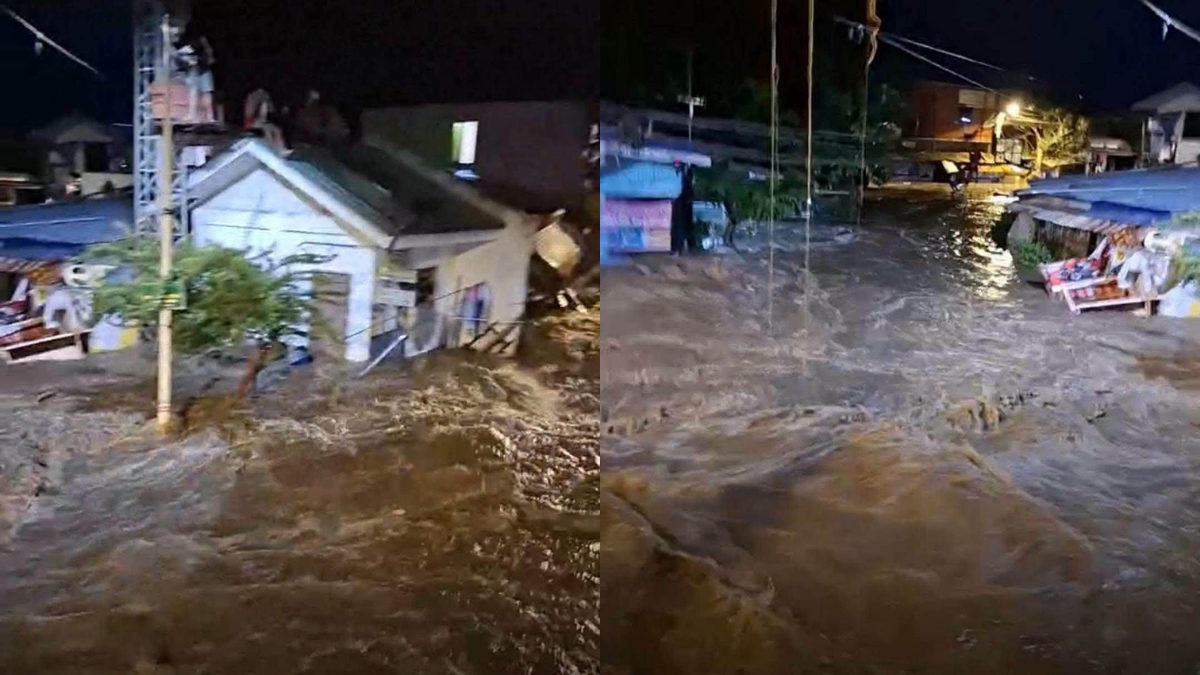

The multibillion-peso flood control allocation once channeled to Davao City’s first district has resurfaced as a subject of online debate this week, after upstream rains again submerged parts of the city and sent residents scrambling to higher ground.

Floodwaters from the Talomo and Matina rivers spilled into Tugbok and Talomo districts on the evening of July 24, leaving scores stranded and, in some accounts, forcing residents onto rooftops. Critical water levels above human height were recorded in several barangays before the City Disaster Risk Reduction and Management Office reported that all river systems had subsided late that night. The flooding followed separate monsoon-driven inundations in the city on July 22 and typhoon “Inday” on July 10.
Each episode has revived the same question circulating on social media: where did the money go? The city’s first district, then represented by Rep. Paolo “Pulong” Duterte, was allotted funding during 2020 to 2022 that figured prominently in a House inquiry into alleged anomalous flood control projects. DPWH Undersecretary Maria Catalina Cabral confirmed the P51 billion infrastructure allocation for the district at the September 9, 2025 hearing, based on the National Expenditure Program and General Appropriations Act for those years.
The figure is often shorthanded online as a “P51 billion flood control fund,” though the sum covered infrastructure broadly. DPWH documents later placed the district’s 2020–2022 infrastructure total at P49.8 billion, with only about P9.12 billion earmarked specifically for flood control systems.

Paolo Duterte has repeatedly rejected any wrongdoing. “If you really want to find ghost projects under that P51 billion – go ahead, investigate it. Just please show all the records, and check on the ground,” he said in a statement, adding that “Davao has nothing to hide.” He has maintained that every flood-control project along the Davao and Matina Rivers was implemented, inspected, and validated by the DPWH and the Commission on Audit.
Critics have pressed the opposite point. ACT Teachers Party-list Rep. Antonio Tinio flagged irregularities in dozens of projects along both rivers, including duplicated contracts and links to contractors already under investigation. On May 19, 2026, a day after an earlier round of Davao flooding, Tinio went to the Office of the Ombudsman to seek an investigation into P4.4 billion worth of flood control projects.
The recurring flooding in a city that received billions for flood mitigation has become the crux of the public argument. Administration lawmakers have noted that the Dutertes governed Davao for decades without resolving its flooding problem. For residents wading through waist-deep water this week, the online ledger of promises and outcomes remains conspicuously unbalanced.
