



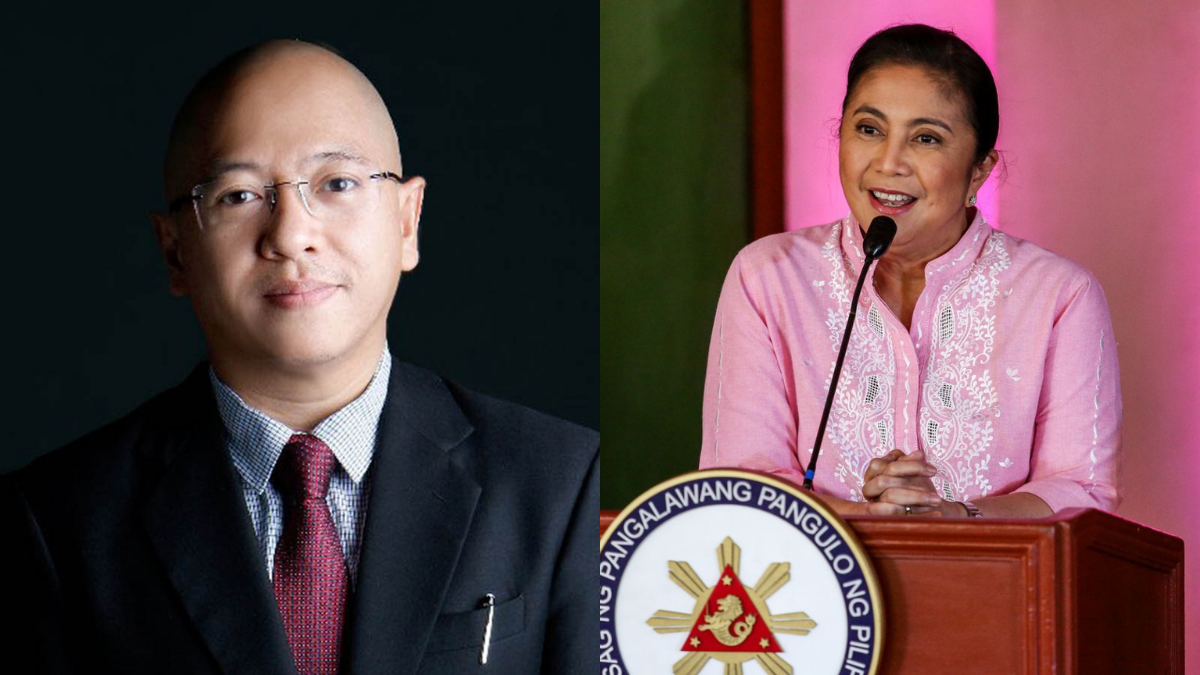

A former solicitor general has laid out six reasons why a presidential bid would be an unrewarding proposition for Naga City Mayor Leni Robredo — then argued she should run anyway.

Florin Hilbay, who served as the government’s chief lawyer before the Duterte administration, published the argument in a social media post carried by Inquirer.net. His conclusion turned on a distinction between personal interest and national need.
“BUT SHE SHOULD. Not for herself, but for the sake of a nation so thirsty for good governance,” Hilbay wrote, adding that the Philippines has “lost our way for an entire decade already, and it’s time to course correct.”
The bulk of the post catalogs what he described as structural problems awaiting whoever wins in 2028. Hilbay placed national debt at P18.5 trillion, an amount he contended cannot realistically be settled over the short or medium term and which, as it grows, will drive currency devaluation, inflation, and widening inequality.
Foreign policy figured as a second obstacle. He characterized the West Philippine Sea as a volatile file with no straightforward resolution, complicated by Manila’s uneasy dealings with Beijing and by what he called an aging empire weighed down by 40 trillion dollars in debt and armed forces of limited coercive reach.
On the domestic front, Hilbay pointed to Congress as a barrier to any reform-minded chief executive, describing the flood control controversy as an intensified version of long-running pork barrel practices among legislators. He questioned what leverage a president would hold in disciplining lawmakers.

Welfare dependency drew a similar assessment. Hilbay argued that assistance programs function as an efficient mechanism for politicians to purchase loyalty using funds drawn from citizens themselves, and that a president confronting the system would find herself negotiating with, in his framing, an addict and a doctor profiting from the addiction.
He also called the bureaucracy bloated and inefficient, saying productive citizens shoulder excessive taxes and regulation. The sheer difficulty of mounting a campaign — the funding, logistics, and coordination involved, along with betrayals capable of ending friendships and alliances — rounded out his list.
Staying put, by his reckoning, offers the safer path: continued work in a high-trust local environment, a reputation as a model of good governance, and permanent standing as what supporters call the TOTGA, or “The One That Got Away.”
Hilbay closed by invoking theorist Hans Hermann Hoppe, who wrote that democracy ensures “the bad ones go to the top.” That dynamic, he suggested, may explain why capable presidents have tended to be those who never sought the office and had to be pushed into running.
The former solicitor general noted he has had no contact with Robredo since 2019 and holds no sway over her decision. He said he was not attempting to persuade her, though a few million Filipinos might.
