




The commute is the part nobody writes about. Not the diploma, not the classroom, not the moment a student finally reads a full sentence out loud — just the getting there, the daily arithmetic of distance and mud and time that decides whether a child in a remote barrio finishes school at all. For thousands of Filipino kids in the provinces, that math is brutal, and most of them lose.

Dr. Ruth Mirhan Orense won it. Then she kept winning it for 32 years, across three countries.
Growing up in Happy Valley, Socorro, Oriental Mindoro, she left home before sunrise into freezing morning air, navigating narrow dirt paths, river crossings, and steep mountain inclines to reach her classroom. During monsoon season the calculation got worse. “Crossing deep rivers and flooded paths just to get to school and back home,” she recalls of those months, when the dirt roads turned to thick, slippery mud that ruined footwear and soaked her uniform before the school day had even started.
What she did after those treks says more than the treks themselves. Following farm chores and hours of physical exhaustion, she studied by the dim glow of a lamp. Not for exams. “I read because every page opened a world beyond the mountains,” she says.
The mountain, in her telling, was never the enemy. “While others saw the mountain as an obstacle, I saw every step upward as a step closer to a life where I could serve others and break the cycle of hardship,” she says. Her patience, she is certain, was forged on those trails — and patience would turn out to be the single most valuable credential she ever earned.
The classroom that taught the teacher
She came back to the Philippine school system as a substitute, then passed the Board Examination for teachers and became permanent and eligible. What followed was a workload that sounds implausible on paper: pioneer Special Education elementary teacher at Juan Morente Sr. Memorial Pilot School under the Department of Education, while simultaneously handling Third Grade classes at the same school.
She calls those years her crucible, and the word fits. SPED work in a provincial pilot program in the early 1990s meant building the practice while teaching it. What she learned there reorganized her understanding of the job entirely.
Progress arrived in fragments — the quiet triumph of a child mastering a new word, unlocking a simple task. She learned to read the unseen weight her students carried, some struggling with lessons, others facing personal hardships not unlike the ones she had climbed past herself. And she abandoned any notion that instruction flows one direction. “Teaching isn’t about lecturing from a textbook,” the Filipina educator says. “It’s about connecting with a human heart and decoding how a unique mind understands the world.”
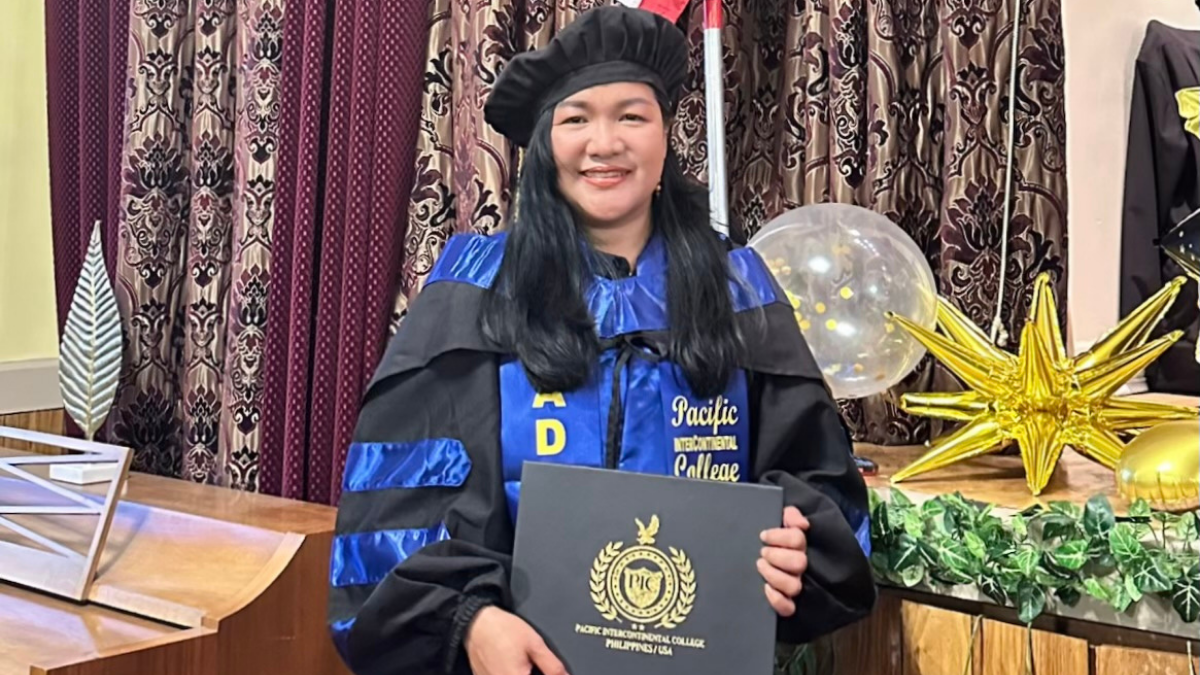
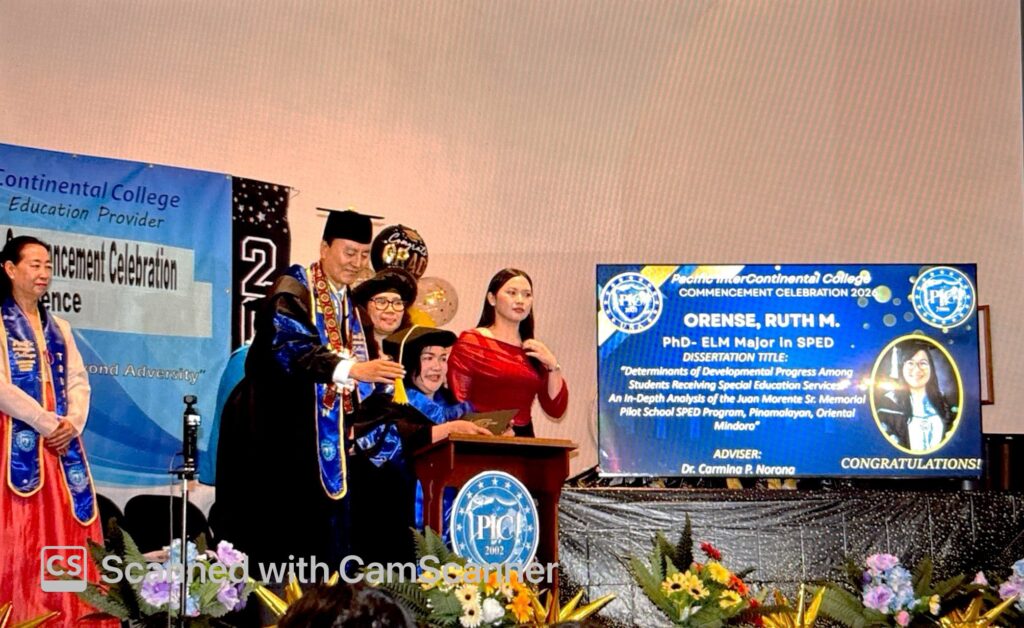
The academic credentials accumulated alongside the classroom hours rather than before them: an undergraduate degree at Abada College in Pinamalayan, then a master’s in Administration and Supervision at Divine Word College of Calapan, followed by doctoral management units there. The Ph.D. in Special Education came later, from Pacific Intercontinental College, with the certificate conferred at a commencement program in Chicago, Illinois.
She is clear-eyed about what that specialization actually requires. “Special Education requires more than intellect; it requires an extraordinary level of patience, empathy, and advocacy — qualities I had cultivated on the mountain trails of my childhood,” she says.

Seventeen years in Bahrain
The leap to the Kingdom of Bahrain was, in her framing, a search for a broader perspective. It became something closer to a second education. Seventeen years as an elementary educator in a multicultural, expatriate-heavy environment reshaped how she taught, forcing her to bridge languages, cultures, and backgrounds through what she describes as the universal language of care and instruction.
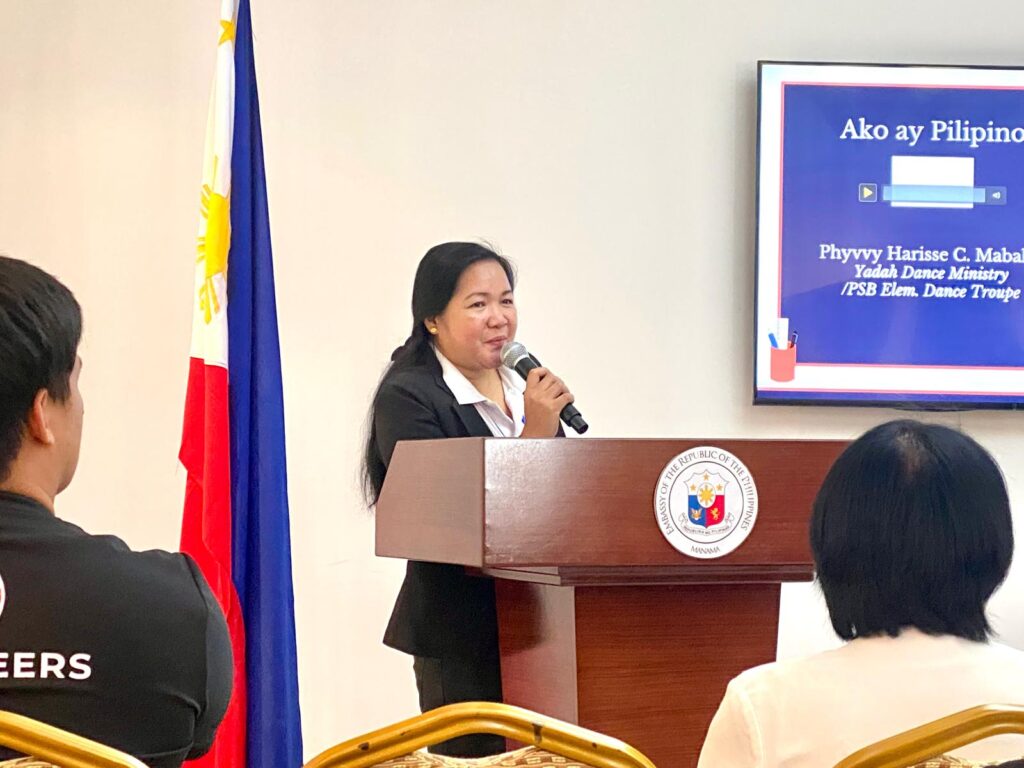
It also pushed her out of the classroom and onto a stage. Joining Toastmasters to find her authentic voice on larger platforms, she won a Champion title in a speech competition, represented Bahrain at the Annual Toastmasters Conference in Abu Dhabi, and received a Distinguished Leadership award. The skill transferred directly back to her advocacy — structuring her thoughts, leading with confidence, conquering stage fear.
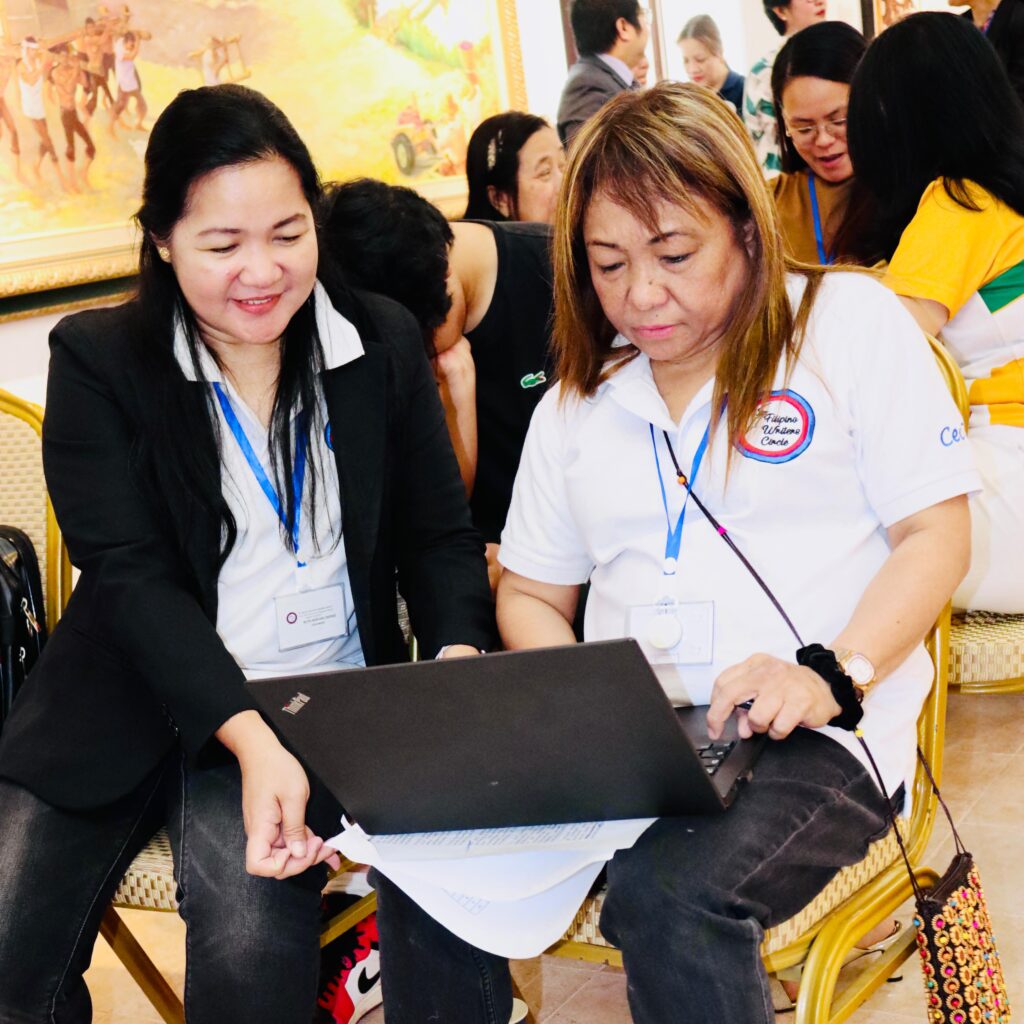
Then there was the writing. As Vice President of FilWrite Bahrain, the Filipino Writers’ Circle, she found a community of overseas Filipinos and a way to document what was happening to them. She wrote up OFW experiences and Philippine school events, weaving stories of struggle, triumph, and cultural adaptation into a record that would otherwise have vanished.
Bahrain, she says, became her second home — the place that proved to her that an educator’s value is not bound by national borders, but by the strength of the connections built with students and families.
Ambassador in Leesburg
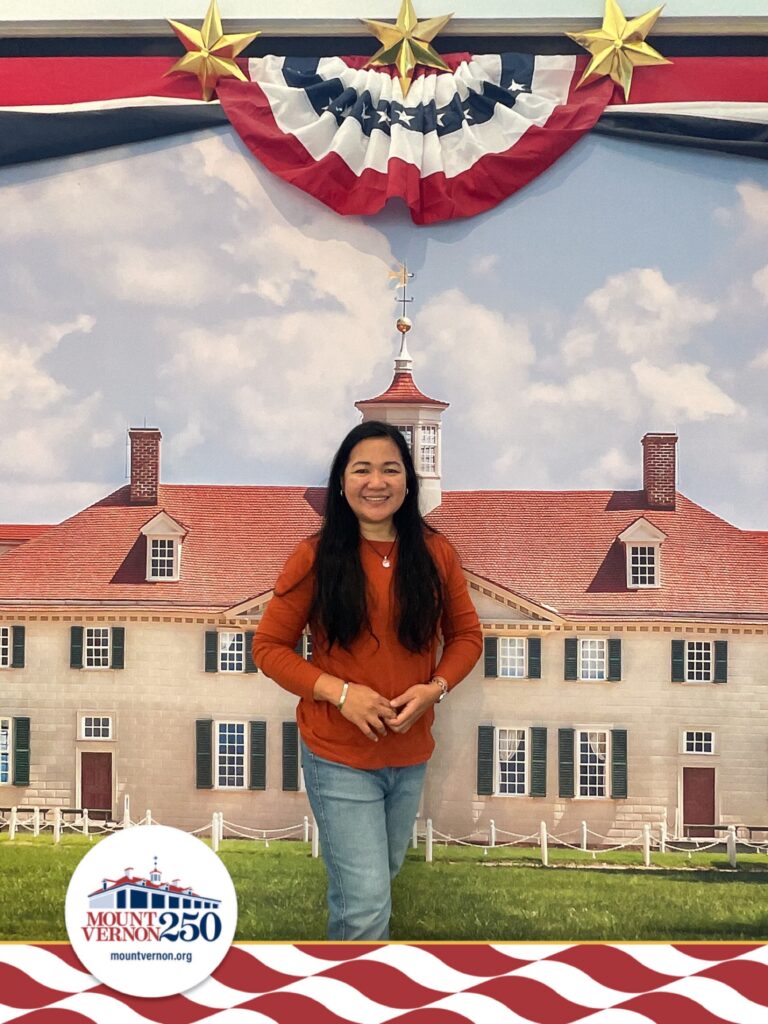
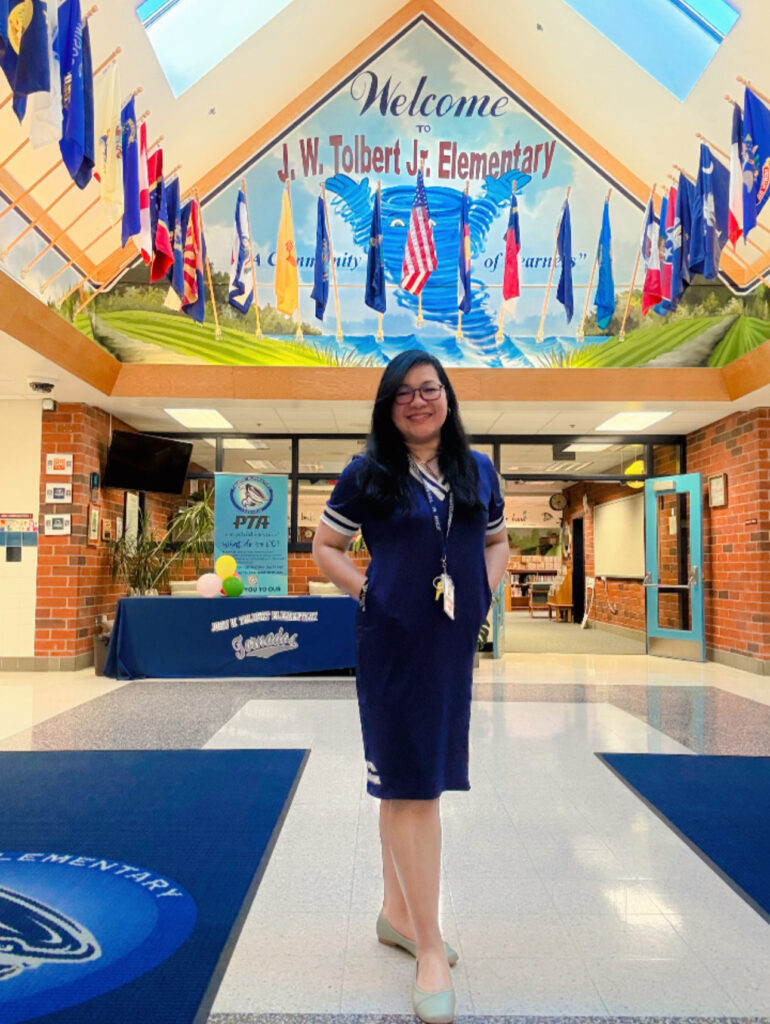
Selected for a rigorous exchange program, the veteran teacher now serves as an Ambassador Teacher in the Loudoun County Public School District, at John W. Tolbert Elementary School in Leesburg, Virginia. She walked in carrying 32 years of experience and, as she puts it, the heart of a Filipino educator — bringing insights gathered in Mindoro and Bahrain to American students and colleagues.
The awards on her shelf she treats as footnotes. Reflection points, she calls them, from a life spent in service. The actual return has always been measured in students: the young minds she has pushed to keep climbing, however steep their own mountains happen to be.
Which brings her back to the girl with the lamp and the wet uniform, still, after all of it, reading past midnight.
“A true educator never stops being a student,” she says. “The moment you stop learning is the moment you stop growing as a teacher.”
