



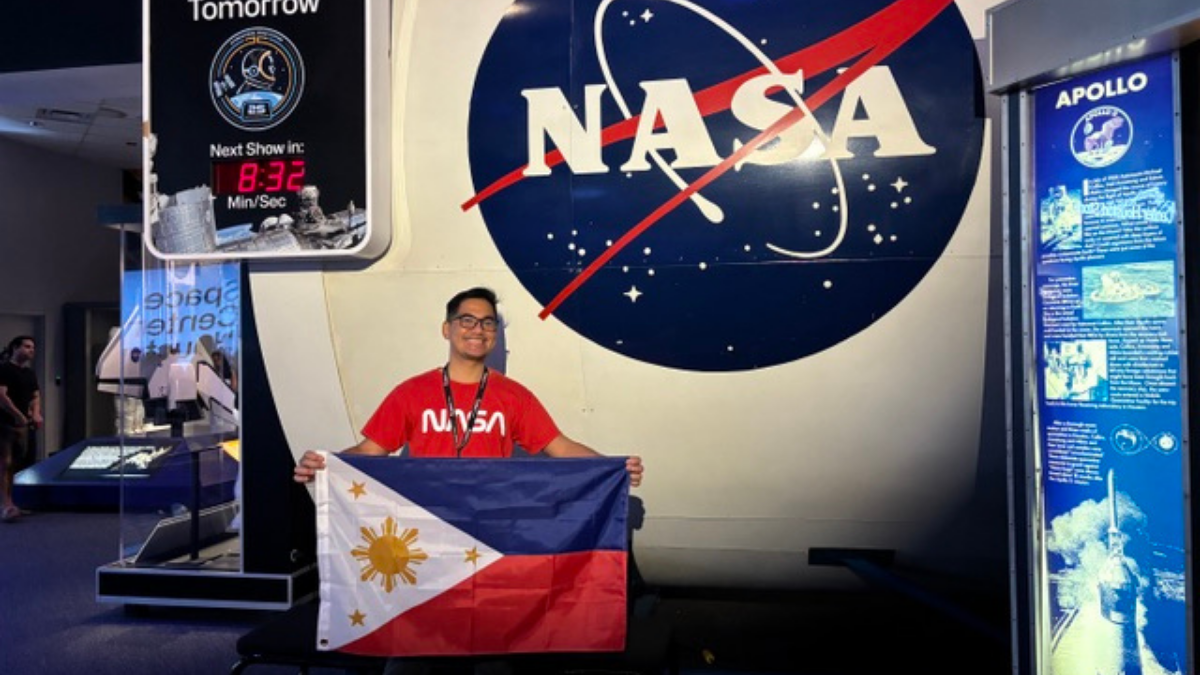

For more than a decade, his workdays were measured in millimeters — HVAC ducts, wastewater treatment layouts, and MEP systems drawn to exacting international standards across job sites in Saudi Arabia and the United Arab Emirates. This week, that same precision has carried Anthony “Tony” Mendoza to Houston, Texas, where he stands as a finalist in a NASA-sponsored student design competition, the only Filipino on his team.

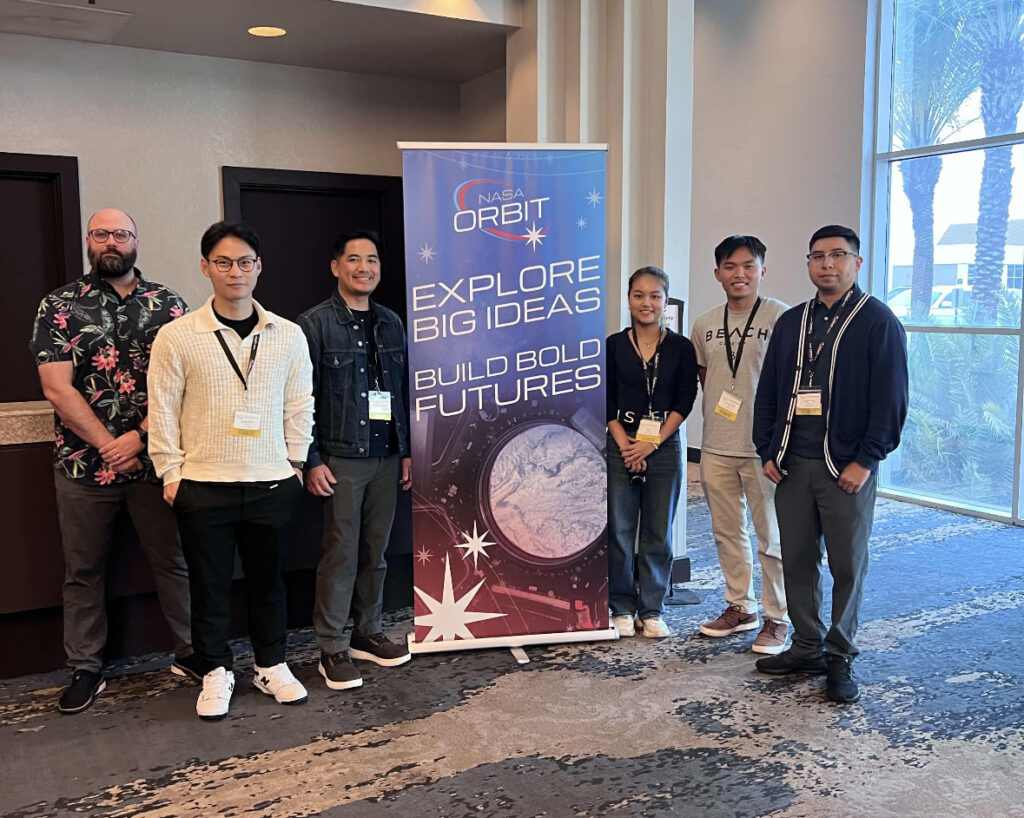
Tony is the CAD design and system modeling specialist for Team MEKAH, a student group from Santa Ana College in California competing in the NASA ORBIT Challenge — a multi-phase national competition in which college teams design next-generation technology for space exploration and compete for a share of up to $380,000 in prize funding. His team reached the finals with Project Threshold, a design centered on precision mechanics and lunar mission safety, and traveled to Houston this month for the in-person pitch showcase.
His path to that stage was anything but direct.
A career built one course at a time
After finishing high school in 2002, Tony could not go straight to college. His family could not afford it, so he went to work instead, taking a job as a production operator at the Cavite Export Processing Zone to help support his household. The turning point came in 2009, when an uncle paid for a short AutoCAD training course. “That training changed my life,” he shared with TGFM. He built his technical skills as an AutoCAD operator in the Philippines before deciding to try his luck abroad, moving to Saudi Arabia in 2012.
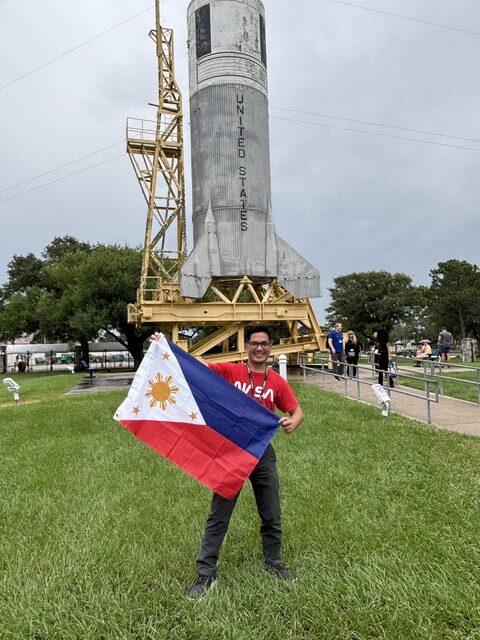
His work as a mechanical designer took him across borders — a stint in Canada from 2013 to 2015, then to the UAE, where he spent nearly a decade as a mechanical and MEP designer handling technical design, system modeling, and coordination for specialized contracting firms. Even with a full-time career, he kept studying, completing an Associate in Arts degree online at the University of the Philippines Open University in 2022.
Then came the boldest decision. At 40, Tony left an established career in the Gulf to move to the United States and finish his bachelor’s degree in design. “I wanted to prove that it is never too late to finish what you started and to chase your highest dreams,” he said.
Where OFW experience meets rocket science

On Team MEKAH, Tony’s job is to turn abstract engineering concepts into exact, manufacturable 2D and 3D digital models using tools such as AutoCAD, SolidWorks, and Autodesk Inventor. For Project Threshold, he spent countless late nights refining the technical layout, making sure every component and joint fit together down to the millimeter — because, as he put it, in space engineering there is zero room for error.
He credits his years in the Gulf as his sharpest advantage. “My 13 years of real-world experience in the Middle East was my greatest advantage in this competition,” he said. Academic theory matters, but he argues that a decade of resolving design clashes on live industrial sites, HVAC setups, and wastewater plants taught him how materials behave under pressure and how to troubleshoot quickly under tight deadlines. “The discipline, resilience, and MEP design expertise I developed as an OFW in the Gulf are the very foundations that allowed me to lead the complex 3D modeling and structural layout of our project.”
A milestone dedicated to a father, and to a community
For Tony, the Houston stage carries a weight beyond the competition itself. His late father was also an OFW who worked in the Middle East to provide for the family. “Being here at NASA is not just my personal victory; it is a tribute to my father’s legacy of hard work and quiet sacrifice,” he said.
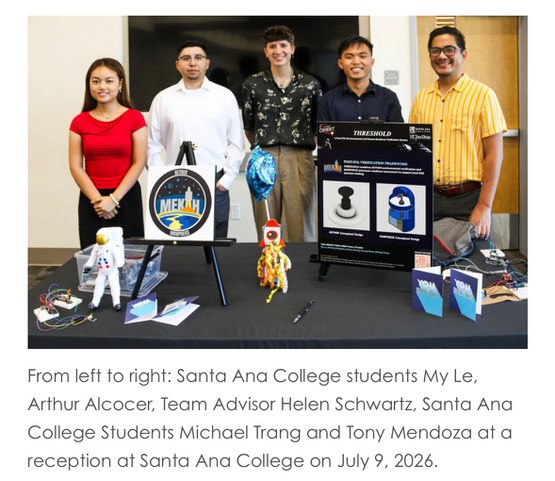
He extends that dedication to Filipino workers everywhere. “I want my fellow OFWs to see my journey and realize that the sacrifices they are making today in foreign lands are building a foundation for something great,” he said. “We are not ‘just’ workers; we are innovative designers, engineers, and creators capable of competing at the highest levels, including NASA.”
Team MEKAH is competing for both the finals and the People’s Choice Award, with public voting for the award opening July 17, 2026, at 9:00 AM Houston time — 6:00 PM in Dubai the same day, and 10:00 PM in Manila on July 18. Votes can be cast through the competition portal at nasaorbit.org.
Before flying to Houston, the team received a Certificate of Achievement from the California Legislature recognizing Santa Ana College’s run to the international stage — one more marker on a journey that began, for Tony, at a drafting table half a world away.
