



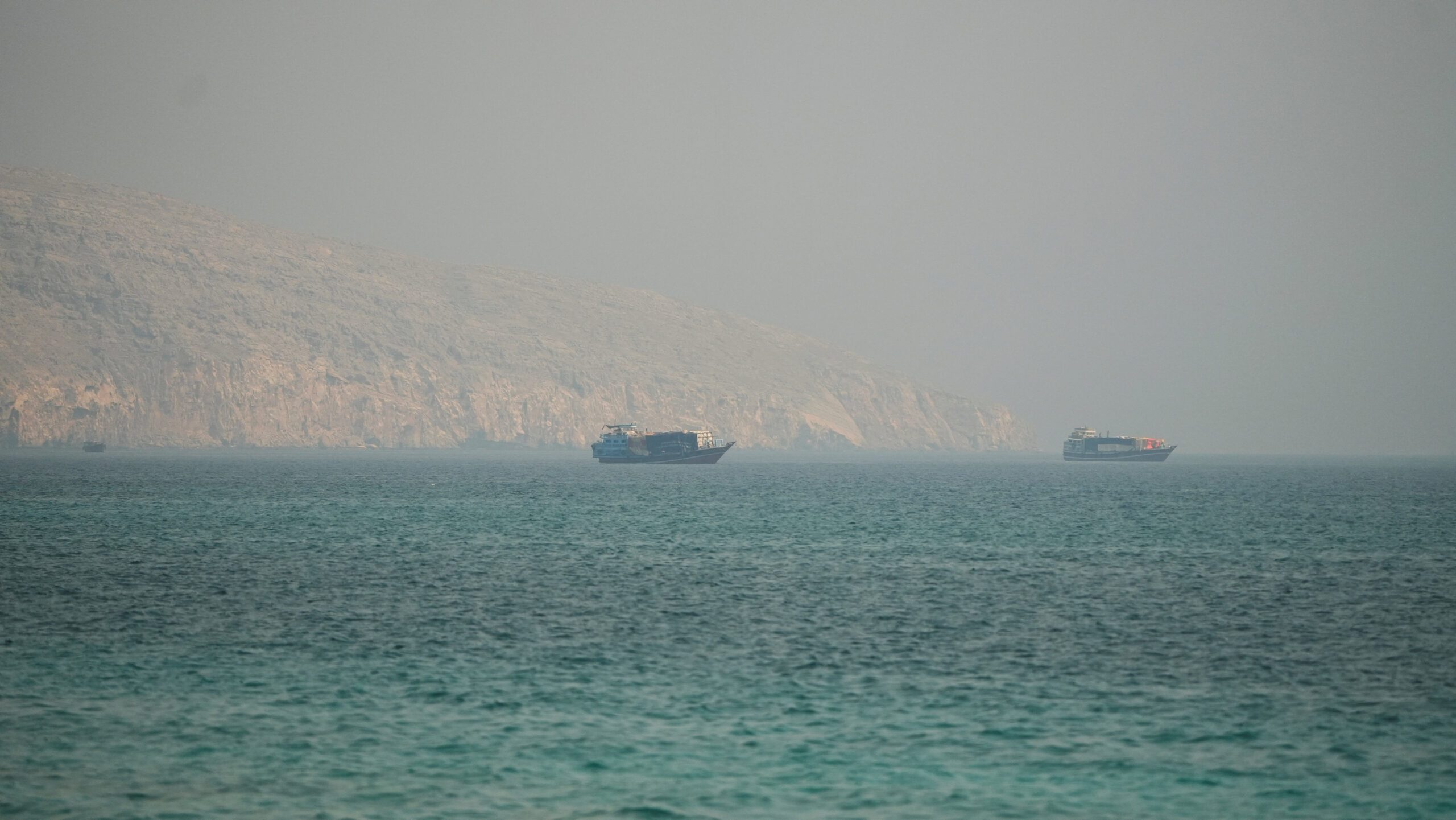

An overnight assault in the Strait of Hormuz has left one Indian crew member dead and eight other seafarers hurt, according to the United Arab Emirates Ministry of Defence, which reported on Tuesday that Iranian cruise missiles had struck a pair of Emirati oil tankers in one of the world’s most vital shipping corridors.

The vessels named by the ministry, the Mombasa and Al Bahiyah, were hit inside Omani territorial waters along the strait’s southern shipping lane, Reuters reported. The crew member who died had been serving aboard the Mombasa.
Among the injured, four sustained serious wounds. The ministry identified six of the eight wounded as Indian nationals, with the remaining two being Ukrainian citizens.
Fires broke out aboard both ships following the strikes, inflicting material damage before crews managed to bring the blazes under control, the ministry said. Abu Dhabi denounced the incident as a “blatant attack” and asserted that it kept “its full right to respond to this escalation”.
Tehran offered its own account of events. The Islamic Revolutionary Guard Corps stated on Tuesday that two “offending” supertankers had been struck and disabled after disregarding repeated warnings, shutting down their navigation systems and trying to cross what the Guards described as a mined passage. The IRGC statement stopped short of identifying the ships or clarifying whether they were the same tankers the UAE had cited.

In that same statement, the Guards leveled accusations at Washington, saying the U.S. had been “inciting vessels to use an illegal route.” Cooperating with the “aggressor enemy,” the IRGC warned, would bring only damage, prolonged closure of the strait, and a worldwide energy crisis.
A separate advisory added to the confusion over exactly what unfolded. The United Kingdom Maritime Trade Operations agency said on Tuesday that a tanker roughly 40 nautical miles northeast of Oman’s Qalhat had been struck by an unidentified projectile. According to the agency, the ship’s master reported that the projectile hit the starboard-side engine room while all crew remained unharmed. Reuters could not immediately confirm whether the UKMTO account described the same event reported by the UAE ministry.
These strikes mark the newest flashpoint in a waterway that has seen mounting friction for weeks. The hostilities trace back to February 28, when U.S. and Israeli forces launched attacks on Iran, opening a conflict that has since rattled the wider Gulf. Iranian forces have retaliated against American installations across several countries, and the fighting has cast doubt on an interim agreement signed last month between Washington and Tehran meant to reopen the strait and end the fighting.
On Monday, U.S. forces conducted a third straight night of strikes against Iran as President Donald Trump reinstated a blockade of Iranian shipping and floated a 20 percent charge for guarding the Strait of Hormuz. Iran’s top joint military command rejected any American authority over the strait’s future, insisting Washington would be barred from intervening.
The stakes tied to the corridor are considerable. Before the February outbreak of fighting, roughly one-fifth of global oil and gas shipments moved through Hormuz each day, carrying upward of 15 million barrels of fuel valued at no less than $1.2 billion to markets around the world.
