



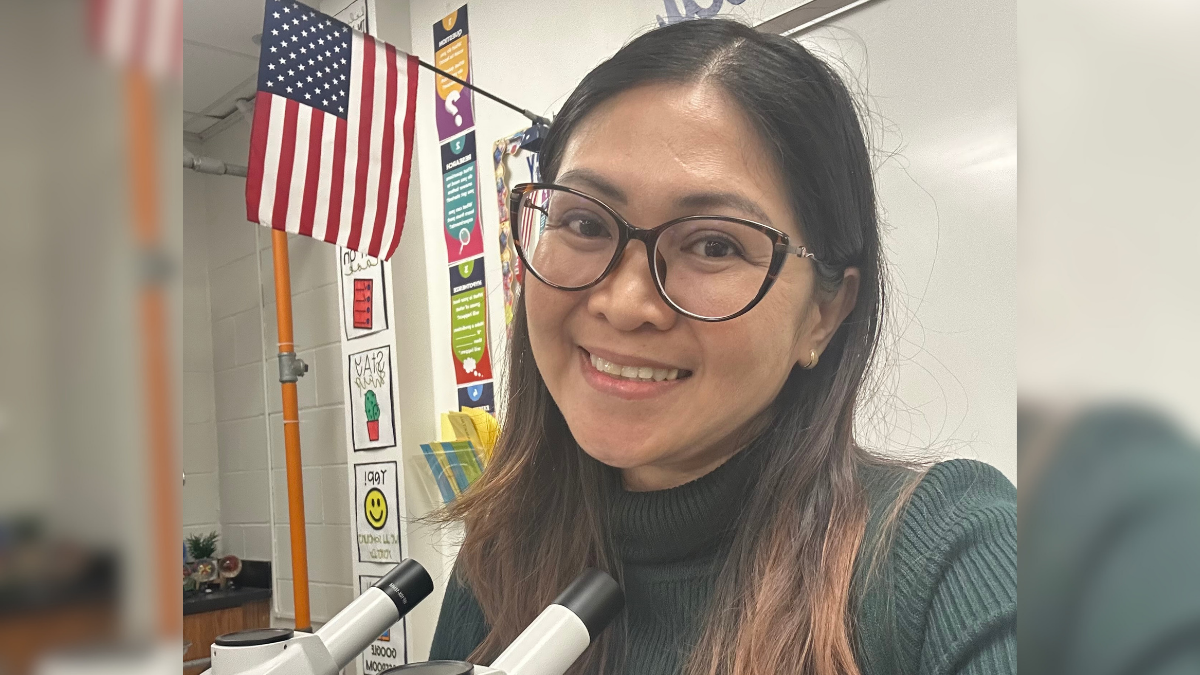

A perfect score of 5 on the AP Biology exam is rare enough that most teachers go entire careers without seeing one. It happened in a first-year AP Biology classroom at Barack Obama Male Leadership Academy in Dallas — taught by a woman who had only just arrived in the United States, still learning the rhythms of an unfamiliar school system.

Sheila A. Lisondra, 48, arrived in Texas in 2023 through the J-1 Cultural Exchange Program, leaving behind Surigao City and years of teaching in Philippine classrooms. It was her first overseas assignment. Five years later, she is still there, teaching AP Biology and Advanced Biology, coaching academic competition teams, and mentoring students through the long climb toward college and STEM careers.
“Every day, I strive to create a classroom where students feel inspired to learn, explore, and believe in their potential,” she shares with TGFM.
Why she left
The decision was never purely professional, and never purely personal. Sheila wanted to test herself against a different educational system, to see what her practice looked like outside the context that had shaped it. She also wanted to carry something with her.
“I wanted to challenge myself, grow as an educator, and experience a different educational system while sharing the excellence and dedication that Filipino teachers are known for around the world,” she explains.
Back home, her work had extended well past lesson plans — science education initiatives, student leadership programs, community outreach. The through-line never changed. “I have always believed that education is not only about academic success but also about shaping character, values, and leadership,” the Filipina educator says.
What the work gives back
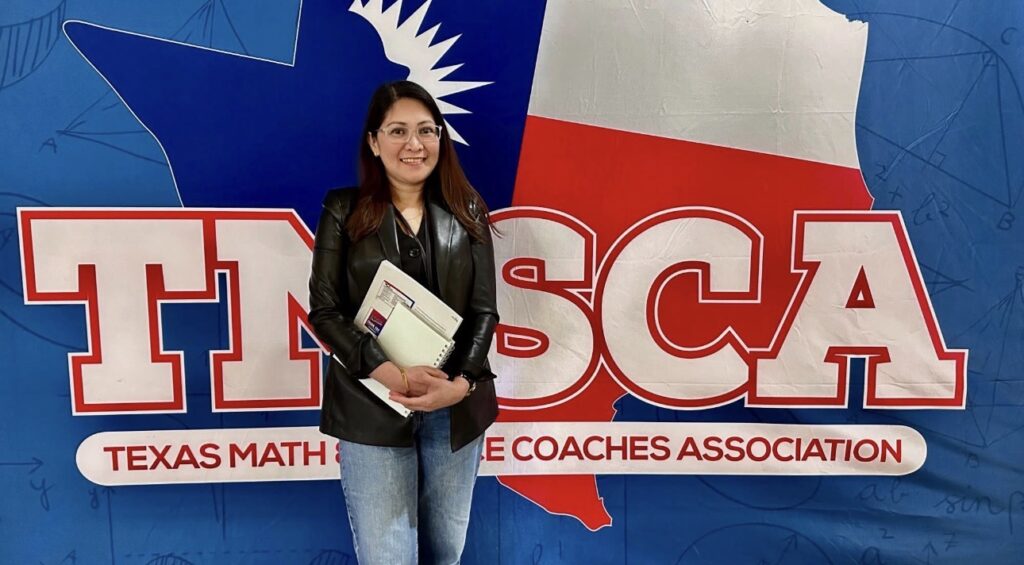
Ask her what she loves most and she does not reach for test scores, though her students have delivered those. Her school has earned recognition in state-level competitions through the Texas Math and Science Coaches Association. The perfect AP score came in year one.
But she talks instead about the moment a student stops flinching at a problem.
“There is nothing more fulfilling than seeing a student overcome challenges, gain confidence, and achieve goals they once thought impossible,” she says. Science, she argues, is uniquely suited to that transformation — a subject built on curiosity, on being wrong in public and trying again. “Being able to guide students through that journey and spark their interest in the wonders of life and nature is incredibly rewarding.”

The classroom has changed her, too. Five years abroad have sharpened her professional instincts, widened her cultural fluency, and given her a support system drawn from across the world. “Most importantly, it has taught me resilience, adaptability, and gratitude,” the Dallas ISD teacher reflects.
The cost nobody sees
Resilience is a word that gets used lightly. It arrived for Sheila the hard way.
There were the ordinary difficulties — the new environment, the unfamiliar culture, the homesickness that sharpens during birthdays and holidays and the family milestones that happen without you. Then there was her father.
“One of the most difficult experiences was losing my beloved father while working abroad,” she says. She found her way through it on faith, on the steadiness of her family, on the friends and church community who closed ranks around her. “Despite the pain, I found strength through my faith in God, the support of my family, and the encouragement of friends and my church community.”
She does not present this as a story of triumph. She presents it as tuition — the price of a life lived at a distance. “Those challenges strengthened my character and deepened my appreciation for the sacrifices that overseas workers make every day.”
What comes next
Sheila is already thinking past her own classroom. She wants to mentor young teachers, to carry back what she has learned, to push for quality science education and open doors into STEM for students who have never considered walking through them.
Her advice to Filipinos working abroad is delivered without ornament. “Life overseas is not always easy, but every sacrifice becomes meaningful when it is anchored in faith, perseverance, and love for family.” Be careful with your money. Keep learning. Choose your people well.
And keep the measure of success honest. “It is not measured solely by achievements or titles,” she says. “It is measured by the lives we touch, the lessons we share, and the positive impact we leave behind.”
One student at a time.
