



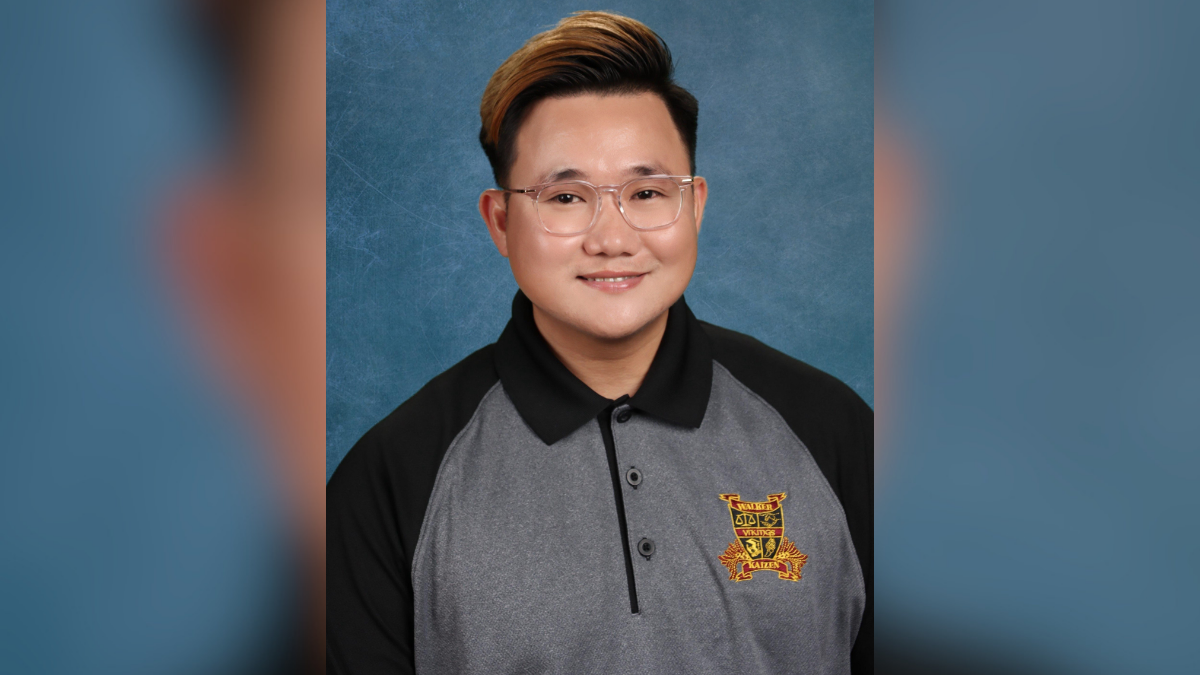

A stable job at a state university, a decent salary, side gigs hosting weddings and debuts on weekends — by most measures, this was a career worth keeping. Then a diagnosis changed everything. Khiemnick A. Bialen, 36, was an Assistant Professor in the Philippines when his father was diagnosed with Alzheimer’s disease in December 2023, and that single moment rearranged the shape of his life. Today he teaches middle schoolers with learning disabilities in Orlando, Florida, and if you ask him how he got there, he will not begin with ambition. He will begin with his family.

A wake-up call in December
For most of his adult life, Bialen had built his career at home and never seriously imagined leaving it. He was an Assistant Professor III at a state university, teaching future special education teachers and supervising pre-service educators during their field placements. On the side, he hosted weddings, debuts, and community events — not for the spotlight, but because he had always been the breadwinner. “I wanted to make sure that I could provide for their needs and give them a better life,” he says of his family.
His father’s Alzheimer’s diagnosis forced a harder calculation. Medications, health insurance, long-term care — the numbers pointed somewhere his university salary and weekend hosting could not fully reach. “That moment became a turning point in my life. It was a wake-up call that made me realize I needed to make a difficult decision—not for myself, but for my family,” he recalls.
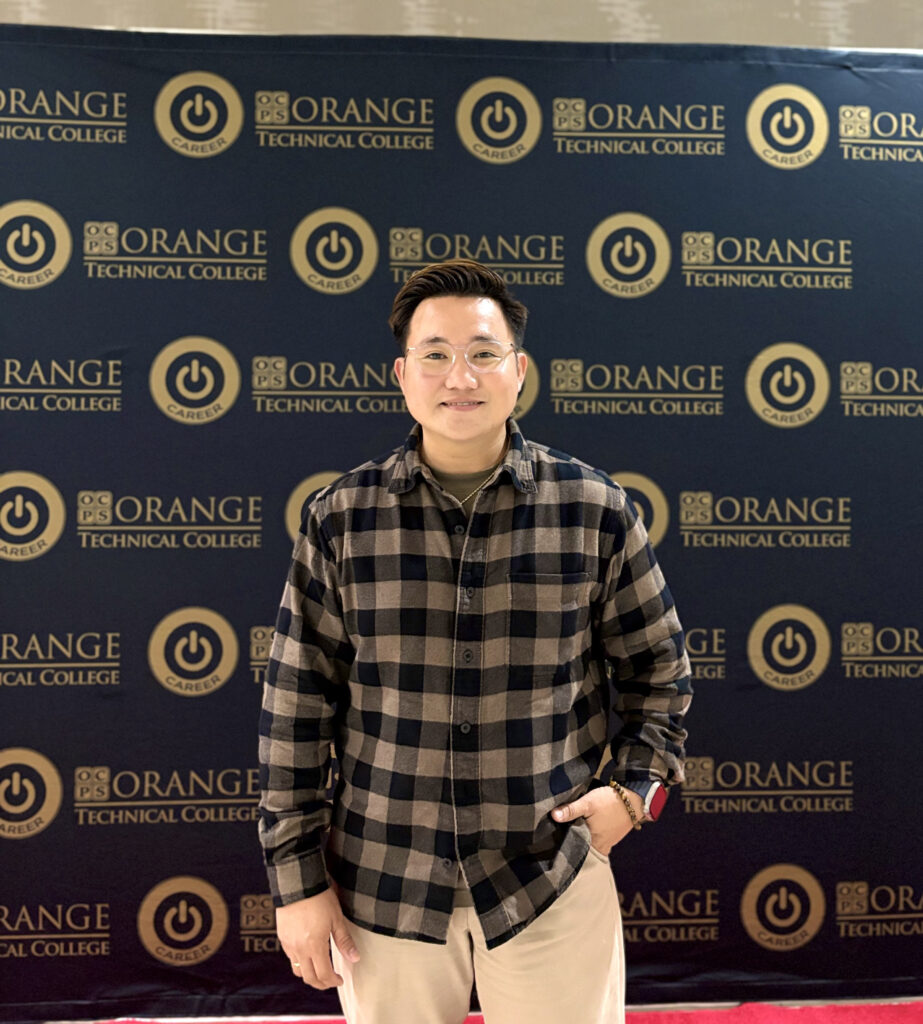
Leaving was not simple. It meant giving up a tenured academic post, stepping away from the people he loved, and, as it turned out, walking away from a long-term relationship that had anchored much of his adult life. “It was not an easy decision because it meant leaving behind a stable career, my family, and even my personal life,” he says. “However, I chose to put my family’s needs first.”
There was, beneath the sacrifice, a quieter professional hunger too. He held a master’s degree and was finishing a Ph.D., and he had spent years teaching evidence-based theory to aspiring educators. He wanted to test that theory against a real classroom he had not yet mastered. “I wanted to go beyond learning them in textbooks—I wanted to experience them firsthand in the classroom,” he says. Most of his prior experience had been with gifted learners; special education, the field he taught others to enter, was one he wanted to live inside himself.
From a mountain school to a middle school in Orlando
The path to Orlando was long and unglamorous, and Bialen tells it without embellishment. His teaching life began right out of college in a private school, where he spent three years teaching reading and language to first through third graders. When he set his sights on a Department of Education post and was not immediately offered one, he refused to wait idly. He tutored former students and community learners until a substitute position opened up — replacing, as it happens, a teacher who had gone to the United States for family reasons. He did not think much of the coincidence at the time.
His first permanent DepEd assignment sent him to a remote mountain school for six months. “Although the environment was challenging, it taught me adaptability, resourcefulness, and the value of serving learners regardless of location or circumstance,” he says. A transfer to a larger school closer to home followed, and there he found his footing in the Gifted and Talented Program, coaching Grade 6 students in journalism and academic competitions. Watching them advance from division to region to national contests in English radio broadcasting became, in his words, some of the most rewarding moments of his teaching career — because the achievements were shared.
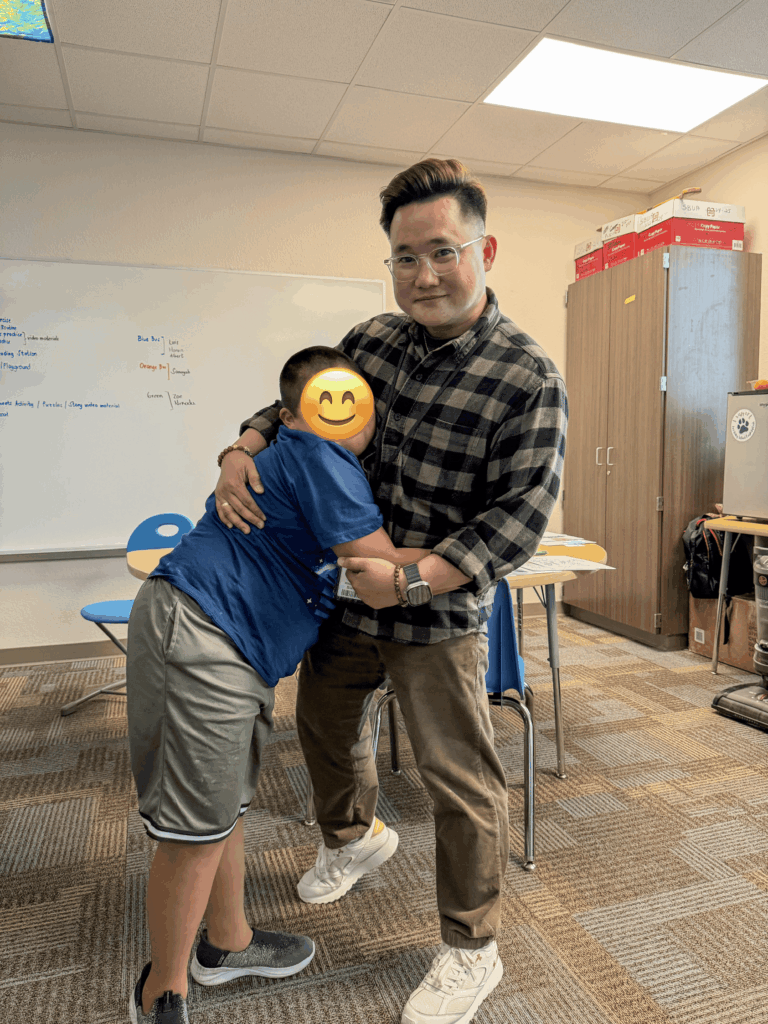
After his master’s degree, he returned to his own graduate university as an Instructor II, later rising to Assistant Professor III, while moonlighting as an evening lecturer at a private college teaching criminology and education majors. By the time he boarded a plane for the United States, he had taught nearly every rung of the educational ladder — young children, gifted pupils, university students, aspiring teachers. What he had not yet done was teach the learners who would come to define his time abroad.
Learning to teach all over again
Orlando reset the meter. As an Exceptional Student Education teacher at a middle school, Bialen supports students in Grades 6 through 8 with learning disabilities, serving primarily as a support facilitation teacher for English Language Arts and Mathematics. In practice, that means working shoulder to shoulder with general education teachers so that students diagnosed with ADHD, Autism Spectrum Disorder, Other Health Impairment, and other exceptionalities receive the accommodations and individualized strategies they need inside a mainstream classroom.
None of it came pre-loaded. “When I first arrived in the United States as a J-1 teacher, everything was new to me. I had to learn the curriculum, state standards, assessment systems, data analysis, the IEP process, and many instructional practices that were different from what I had previously experienced,” he says. There were moments, he admits, when the sheer volume of it felt overwhelming.
His approach to the overwhelm is telling. “I have always believed that I am an empty vessel with a constant desire to grow,” he says. “No matter how much I know, I never assume that I have all the answers. Instead, I ask questions, seek guidance, and remain open to learning from others.” He credits mentors, administrators, staffing specialists, therapists, and paraprofessionals for filling that vessel — a reminder, he says, that supporting students is never a solo act.
The chosen field was no accident. He gravitated toward special education because he finds a specific kind of fulfillment in students others might overlook. “Every learner has unique strengths, challenges, and potential, and I believe they deserve an educator who will advocate for them and believe in their abilities,” he says. The most satisfying part of the work, he adds, is watching that belief pay off — students advancing to higher performance levels on state assessments despite the challenges tied to their exceptionalities. “Those achievements are more than just test scores—they represent confidence gained, skills developed, and barriers overcome,” he says.

When the principal handed him more than he expected
Bialen’s first year in the U.S. delivered a curveball that turned out to be a gift. With the school’s Staffing Specialist position sitting vacant, his principal handed him the responsibilities of the role while he continued teaching. For several months, the newly arrived international teacher balanced two demanding jobs at once, leaning on the district staffing specialist and his mentor to learn the special education staffing process from the inside.
“That experience significantly broadened my perspective as an educator and strengthened my leadership skills,” he says. It was, in effect, a crash course in how special education services are coordinated across multidisciplinary teams in the American system — the kind of institutional knowledge most first-year international teachers never touch.
The trust compounded. By his second year, he was mentoring newly arriving J-1 teachers through their own rocky transitions, having weathered his. He was named “Mentor of the Month,” later received the “Unsung Hero Award” for the quiet, behind-the-scenes work that rarely makes headlines, and served as a guest speaker at a New Teacher Orientation Webinar. He is careful about how he measures all of it. “The highlights of my career are not defined solely by the awards I have received, but by the trust that leaders have placed in me, the opportunities to support fellow educators, and, most importantly, the chance to make a meaningful difference in the lives of students with disabilities,” he says.
The private cost of the public work
The hardest part of the journey, he is quick to clarify, never happened inside a classroom. He counts himself fortunate in his transition abroad — no major conflicts with colleagues or housemates, and a support system that felt like family from the start. A former teacher of his from the Philippines, now living in the U.S. with his wife, guided him through his first weeks. Filipino colleagues and housemates closed the distance from home.
But the emotional arithmetic of leaving was steep. As the breadwinner, going abroad meant missing family milestones and carrying the constant weight of being far from the people he was working to support. During the same stretch, a long-term relationship that had spanned years came to an end. “Healing while living alone in another country was not easy, but it taught me resilience, acceptance, and the importance of moving forward with hope,” he says.
When the loneliness pressed in, he turned to faith. “Prayer became my source of strength, comfort, and peace,” he says. “I constantly reminded myself that everything happens according to God’s perfect plan, even when I could not immediately understand the reasons behind certain experiences.” The struggles, he believes, did the shaping. “They reminded me that no one succeeds alone.”
The rewards have been concrete as well as spiritual. Working in the United States has let him pay off loans in the Philippines, build savings, fund his nephew’s education, and cover his father’s Alzheimer’s medications and the family’s health insurance. “Knowing that I can ease some of the burdens they carry gives me peace of mind and reminds me why I chose this journey,” he says. Living independently, he adds, taught him a humility he did not expect — the sense that every opportunity is a blessing rather than a given.
A center, a homecoming, and a bigger plan
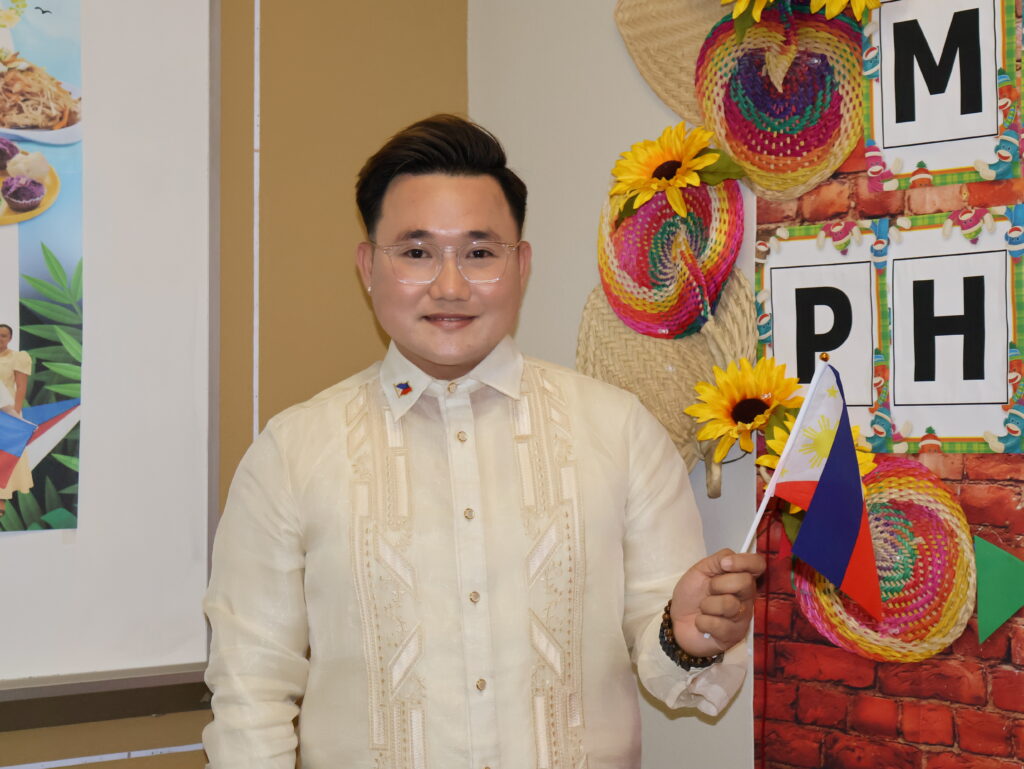
For all that Orlando has given him, the former university professor talks about the United States as a chapter, not a destination. His clearest goal is to bring what he has learned back home. “One of the reasons I embraced this journey as a J-1 teacher was not only to grow professionally but also to bring home the knowledge, best practices, and experiences I have gained from the U.S. education system,” he says. He would happily return to higher education, preparing the next generation of Filipino teachers with both the theory and the hard-won practice he now carries.
The dream closest to his heart is larger still. As he completes his Ph.D. this August, he plans to partner with a close friend — a licensed psychologist and fellow former J-1 teacher — to build a center offering educational assessment, evaluation, intervention, and support services for children with disabilities and their families. “Our goal is to create a place where every child is recognized for their strengths, receives the support they deserve, and is given the opportunity to reach their full potential,” he says.
His advice to fellow Filipinos abroad circles back to the values that got him through his own hardest stretch: keep your faith, manage your money wisely because overseas work has a timeline, and choose kindness over competition with your kababayan. “As Filipinos living far from home, we share many of the same sacrifices and struggles. Instead of competing with or taking advantage of one another, let us build each other up,” he says.
He would rather his journey be remembered for its return than its distance. If he can equip future teachers, stand up a center for children with exceptionalities, and lift education in the Philippines a little higher, he will count the years abroad as time well spent. The teacher who left a university post to keep his family afloat has since taught children, mentored adults, and earned the quiet trust of leaders in a country that was not his own — and the whole of it, he insists, was never really about how far he traveled. It was about what he intends to carry home.
