



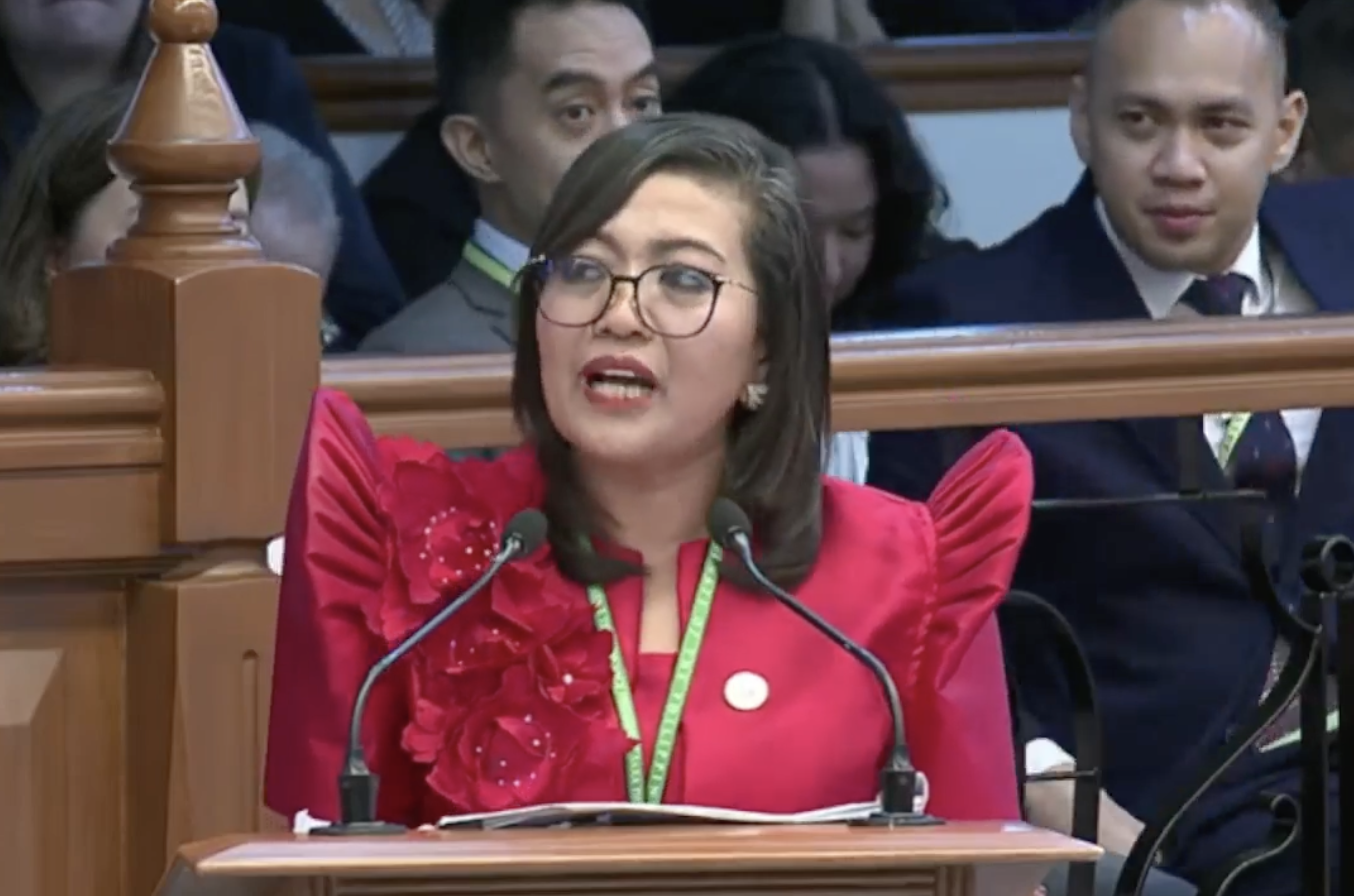

The first voice the impeachment court heard on Monday belonged to lead prosecutor Gerville Luistro, who used her opening statement to argue that the case against Vice President Sara Duterte is less about one official than about whether the country still enforces consequences on those at the top of government.

Luistro built her argument around a comparison ordinary Filipinos would recognize. A company employee who misuses funds is asked to explain. A barangay treasurer who cannot account for missing money is investigated. A school principal who pockets even a small sum of public money is punished. If that standard holds for the powerless, she asked, why would it not hold for the most powerful official in the land.
She anticipated the skepticism of Filipinos watching from jeepney routes, overseas job sites, and classrooms, acknowledging that many see an impeachment trial as remote from the daily struggle to feed a family or send children to school. Her answer was that the money at the center of the case belongs to those same people. The prosecution told the court it would take up the four Articles of Impeachment in a specific sequence, beginning with the alleged assassination threat against President Ferdinand Marcos Jr., followed by the misuse of confidential funds, the bribery of Department of Education officials, and the allegations of unexplained wealth and false asset declarations.
On the confidential funds, Luistro said the evidence would show that more than P612 million entrusted to the Office of the Vice President and the Department of Education was disbursed and liquidated under circumstances the prosecution considers indefensible. She pointed to liquidation documents she described as questionable and acknowledgment receipts bearing names that government records could not confirm, citing “Mary Grace Piattos, Milky Sikuya, Coco Y. Villamin” as examples she said insulted the intelligence of the public.
The prosecution’s decision to lead with the threat article was deliberate. Kabataan Party-list Rep. Renee Co, a spokesperson for the panel, said the order was meant to send a message that impunity would not be tolerated. Luistro drew a sharp line on that point, telling the court that political rivals may argue, compete, and criticize one another, but that democracy ends where violence begins.

On the second article, Luistro described financial transactions in the billions of pesos linked to Duterte and her husband. She framed the issue not as one of wealth itself but of explanation, asking why the figures would resist reconciliation if the money had been lawfully obtained. Reporting on the case has placed the scale of the flagged activity higher than the courtroom framing suggested. The Anti-Money Laundering Council identified accounts tied to Duterte and her husband, Manases Carpio, that were flagged for suspicious and covered transactions worth P6.77 billion between 2006 and 2025.
The bribery allegations, she said, concern whether loyalty inside government institutions was purchased rather than earned, with cash and gifts allegedly distributed to officials under the respondent’s supervision. She called it especially troubling that the conduct is alleged to have taken place within the education department.
Duterte was absent from the proceedings. Her lawyer, Atty. Michael Poa, said the Vice President chose to appear through counsel in accordance with the impeachment rules. The trial opened under a compressed calendar. A pre-trial order signed by Senate President Sherwin Gatchalian set the trial at 92 days, far shorter than earlier projections of seven to eight months, with 62 trial dates allotted to the prosecution and 30 to the defense.
Luistro closed by invoking the framers of the Constitution, arguing that they granted the House the power to impeach and the Senate the duty to judge precisely to guard the Republic when trust is broken. Power, she said, is never owned by an official but only borrowed from the people, and every borrowed power carries the obligation to account for its use.
