



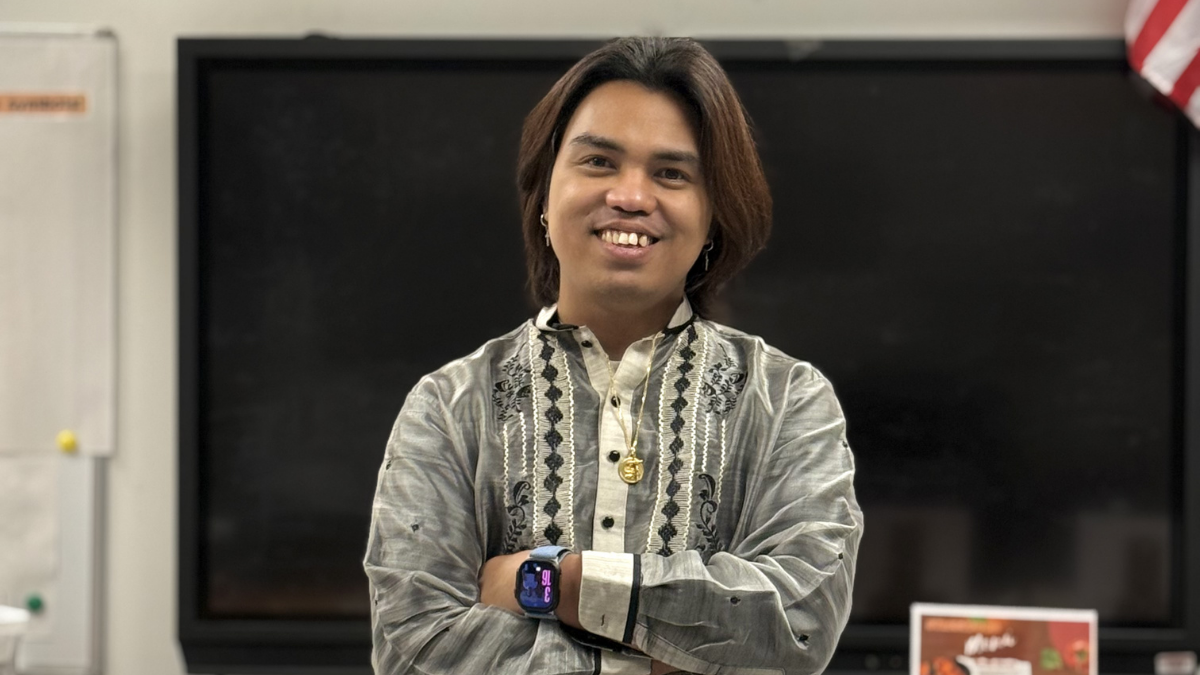

Most teachers in the Philippines dream of one promotion above all others: Master Teacher. It’s the rank that says you’ve arrived — that years in the classroom have been seen and rewarded, that you can spend the rest of your career shaping young minds in the country that raised you. That was the entire ambition of Vincent Alon Villegas, a public school teacher in Negros Occidental who had no intention of ever leaving.

Then the opportunity to teach in the United States landed in front of him, and he had to decide whether the dream he’d built was the only one worth having.
“Honestly, at first, I never saw myself working outside the Philippines,” he shares with TGFM. “My dream was simply to become a Master Teacher in my home country and continue serving Filipino students.” Four years later, the 33-year-old is a Special Education teacher at Arizona Autism Charter Schools in the United States — a role he never trained for, in a field he once feared he couldn’t handle, in a country he’d only seen in movies.
The breadwinner’s math
The decision didn’t come from restlessness. It came from arithmetic.
Vincent is the first person in his family to finish college, and as the breadwinner, he carried a particular kind of weight — the responsibility of being the one whose success could change everyone else’s circumstances. “I came from a humble background,” he says. “As the breadwinner, I felt a strong responsibility to help improve our family’s situation.”
The goals were concrete rather than grand: enough for daily needs, a decent and comfortable home, schooling for his younger brothers, and a way to repay parents who had sacrificed to get him through. When the U.S. offer arrived in July 2022, he took what he calls “a leap of faith” and applied. There was the practical pull of better pay, but also something harder to name — the old idea that hard work and persistence could build a future bigger than the one he was born into.
By then he was no novice. Before leaving, he had spent seven years teaching — two in higher education and five in the public school system, where he rose to the rank of Teacher III. At Mabini Farm School in Cadiz City, he taught Grade 7 English along with Research, Speech, and Oral Communication to senior high students, and stacked leadership roles on top of his teaching load: English Coordinator, Research Coordinator, school paper adviser, and journalism coach. The student journalists he mentored placed in regional broadcasting and writing competitions; he served as a resource speaker at teacher training sessions; he advised the Boy Scouts and Rover Scouts. He was, by any measure, exactly the kind of teacher the Master Teacher track was built for.
He left all of it for a job he wasn’t sure he could do.
Learning a language he didn’t speak
His first assignment at Arizona Autism Charter Schools was as an English Language Arts and general education teacher — familiar enough territory. Special Education was not. When the school’s Teacher Academy Program, run in partnership with the Arizona Department of Education, opened a path into the field, he walked through it without quite knowing what waited on the other side.
“When I first entered the field of Special Education, I had many hesitations,” he admits. “Coming from a general education background, I had little to no experience working with students with special needs, particularly students with autism. I was unsure if I would be able to meet their unique needs.”
What he describes next is less a training course than a re-education. He learned the technical machinery of the job — writing Individualized Education Programs, building accommodations and modifications, collecting data, monitoring goals — but the part that changed him was quieter. “I learned not only the technical aspects,” he says, “but also the importance of patience, empathy, and understanding.”
He earned his Special Education certification in 2023 and made the transition official. Somewhere in that stretch, the hesitation turned into something closer to devotion. The former English teacher started learning his students the way he’d once learned grammar — their strengths, their behaviors, their triggers, the particular ways each one communicated. “Seeing their growth, celebrating their achievements, and helping them overcome challenges have become some of the most rewarding experiences of my career.”

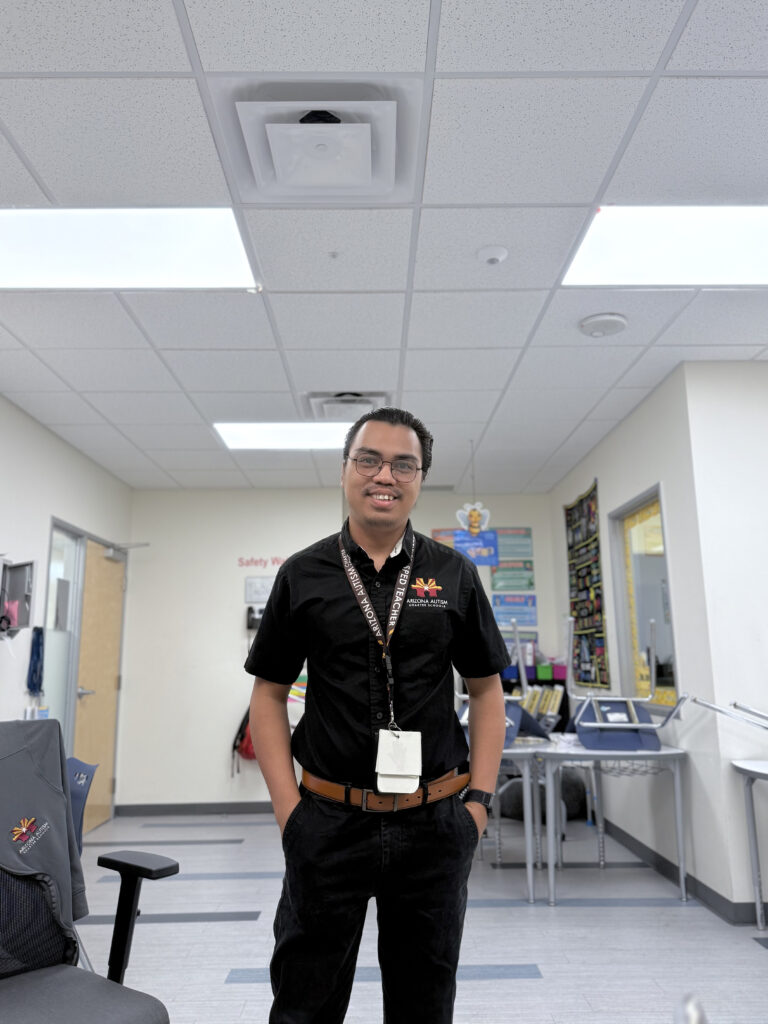
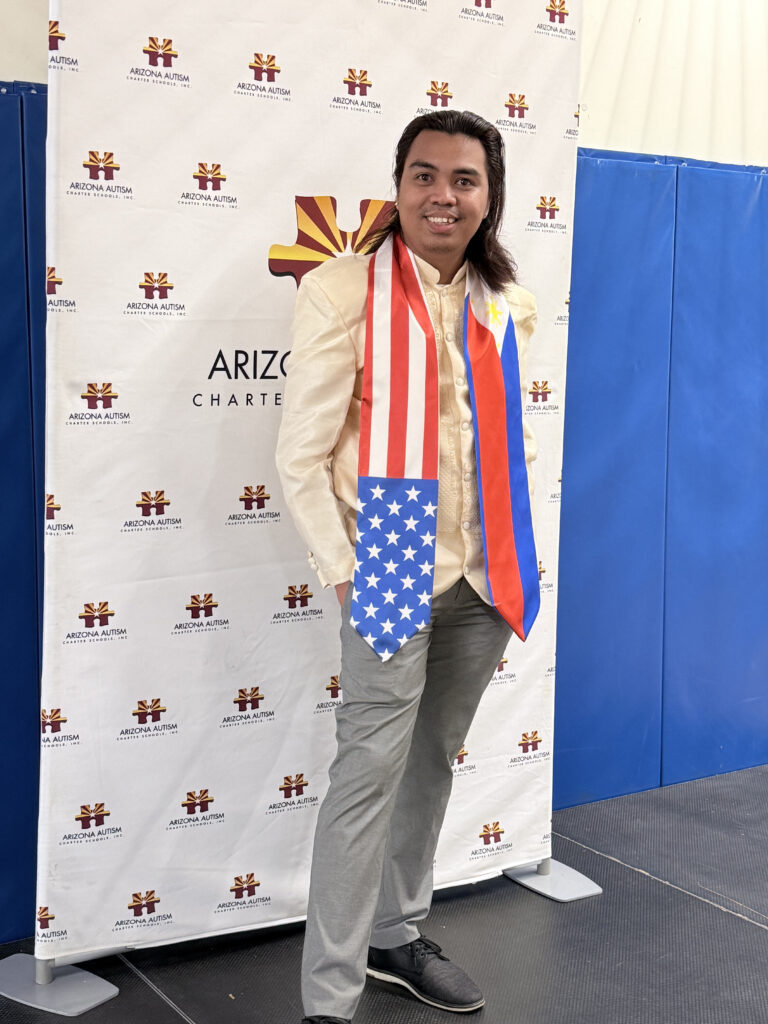
Ask him now what he appreciates most about the work, and he doesn’t lead with the students. He leads with the people who caught him when he was unsure. “I am grateful for the trust, encouragement, and collaboration I receive from my administrators, colleagues, paraprofessionals, and support staff.” The most satisfying part, he says, is simpler — knowing he’s made a difference for a student and their family, whether by helping someone meet an IEP goal, build confidence, or “simply feel valued and understood.”
The family you find when yours is far away
The professional transition had a scaffold around it. The personal one nearly didn’t.
The hardest part of moving wasn’t the new curriculum or the unfamiliar system. It was the absence of the people who’d shaped him. Coming from a close-knit Filipino family, he found the first months in Arizona heavy with homesickness — the missed gatherings, the celebrations he could only watch from a distance, the plain comfort of home that no apartment in a new country could replace. “There were moments when I questioned whether I could successfully adjust to my new life,” he says.
What saved him was that he hadn’t come alone. His best friend Cheryl made the move with him, and around the two of them a chosen family slowly assembled — roommates Shan, Fatima, and Anne, and the older Filipinos he calls “Ate” Marissa, “Kuya” Edgar, and “Ate” Anne, who guided the newcomers through the small bewilderments of life in a foreign place. Through them and the wider Filipino community, he found the thing he’d been most afraid of losing: a sense of belonging.
One name he returns to is Dee Dee, the behavior specialist at his school. “She treated me like family and cared for me as if I were her own son,” he says. “Her kindness, encouragement, and genuine concern helped me feel supported during some of my most challenging moments.” For a man who had crossed an ocean and left his actual mother behind, being mothered by a colleague was no small thing.
The lesson he draws from that period is unsentimental. Resilience and adaptability mattered, yes — but so did the deliberate work of building relationships in a place where none existed yet. You don’t survive abroad on grit alone. You survive on the people willing to make room for you.
The road back, and forward again
His plans now run in two directions at once. When his current tenure ends, he intends to return to the Philippines to fulfill what he describes as a two-year home residency requirement tied to his exchange status — a stipulation he frames less as an obligation than an opening. “While returning home is a requirement, I also see it as a valuable opportunity to give back to my country.”
What he wants to bring back is specific. He’s spent years now inside an education system with resources, technology, and individualized support that students in many Philippine classrooms can only imagine, and he wants to carry the practical knowledge home — instructional strategies, behavior support techniques, IEP development, data-driven decisions, inclusive practices. The advocacy underneath it is plain: “Every child, regardless of ability, deserves access to meaningful educational opportunities.”
After the two years, he plans to come back to Arizona and keep going. The ambition that once stopped at the Philippine border now stretches across two countries, with the same fixed point at its center — students, families, and the belief that he can be useful to both.
For the kababayans following the path he took, his advice circles back to where his own story began. Manage your money wisely and save consistently, he says, because most who leave are carrying dreams for more than just themselves. Keep learning. Be careful whom you trust, and be the kind of friend worth trusting. And don’t be too proud to ask for help — “one of the greatest strengths of Filipinos is our sense of community.”
Whatever steadies him underneath all of it traces back to the line he lives by: “Trust in the Lord with all your heart and everything will just follow.” It’s the logic of a man who once knew exactly what his life would look like, watched that picture dissolve, and discovered the replacement was larger than the original. He set out to become a Master Teacher in one country. He became something he’d never imagined in another — and he isn’t finished yet.
