



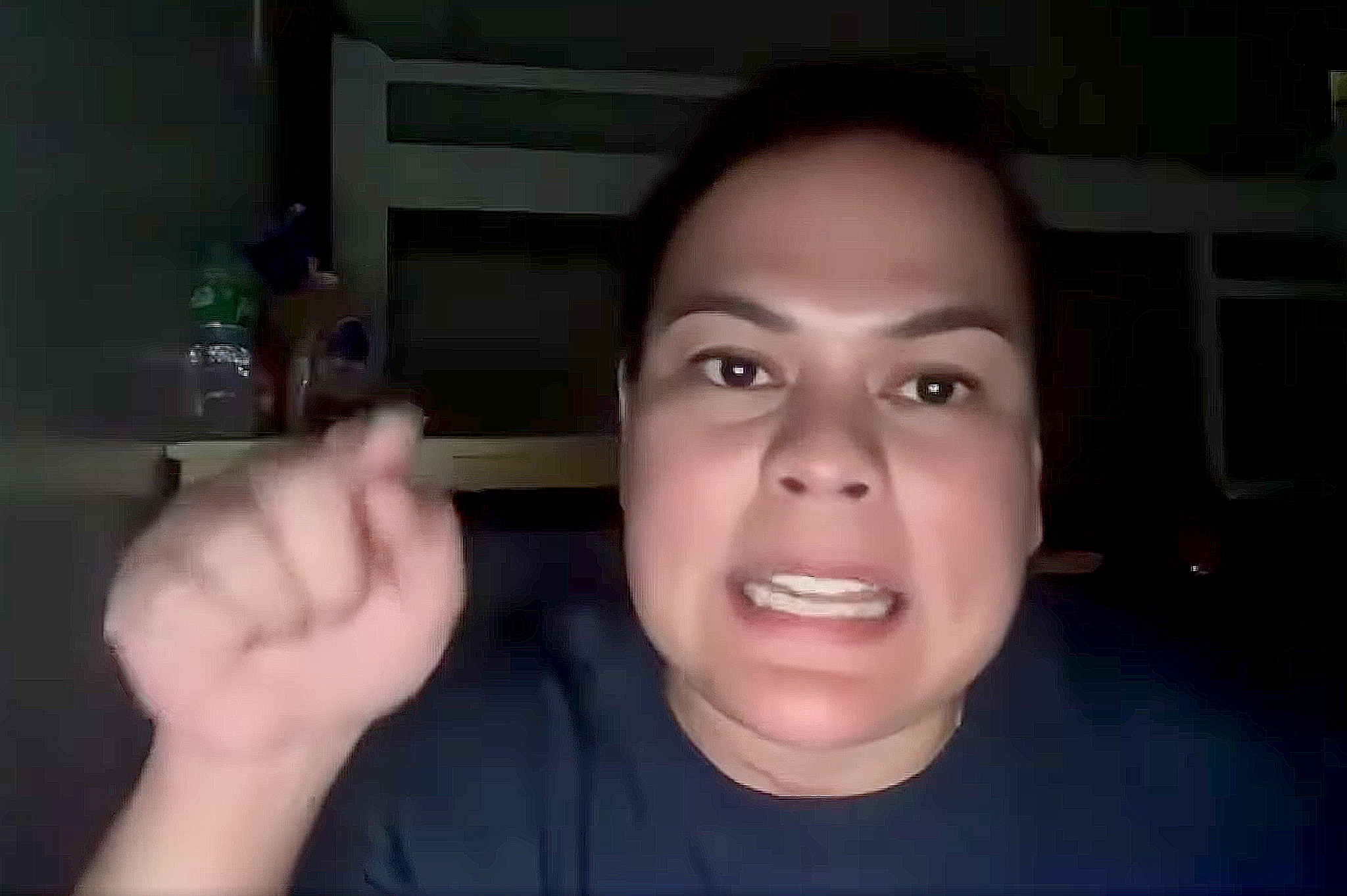

Lawyers for Vice President Sara Duterte have asked the impeachment court to throw out all four articles filed against her, arguing in a formal reply that the charges fall short of what the Constitution requires to remove a sitting official from office.

The defense laid out its objections in a document dated May 25, 2026, though the public initially saw only an executive summary that the legal team circulated after submitting the full reply. According to GMA News Online, the filing carried the signatures of attorneys Philip Sigfrid Fortun, Gregorio Narvasa II, Sheila Sison, and others representing the Vice President. The lawyers urged that “the articles of impeachment be dismissed for the reasons cited and discussed above and for failing to meet the constitutional requirements of an impeachment proceeding.”
Much of the response leans on questions of admissibility. On the accusation that Duterte improperly built up her family’s fortune, the defense moved to discredit material tied to former Senator Antonio Trillanes IV and the Anti-Money Laundering Council. Her lawyers contended that “the false claims of former Senator Antonio Trillanes IV” deserve no weight, and that any documents he obtained “violate the confidentiality of bank deposits under the Bank Secrecy Law and are therefore inadmissible.” Prosecutors had traced a jump in the net worth of Duterte and her husband, Atty. Manases Carpio, from P7.25 million in 2007 to P88.5 million by 2024, and pointed to AMLC findings flagging at least P6.7 billion in covered or suspicious transactions across that span—roughly P4.4 billion in inflows and P1.5 billion in outflows—with Trillanes attributing much of it to illegal sources including the drug trade. The defense countered that the AMLC never investigated the Vice President and that releasing the report broke the law, reserving the right to contest it later: “the disclosure by the AMLC of these supposed data is prohibited under the law, the respondent maintains her objection to the use of those reports and reserves her right to challenge it at a proper time.”
The November 2024 remarks aimed at President Ferdinand Marcos Jr., First Lady Liza Araneta-Marcos, and then-Speaker Ferdinand Martin Romualdez were cast by the defense as protected political speech rather than a genuine threat. The reply held that “respondent merely exercised constitutionally protected speech in opposition to the policies, conduct, actuations, and overreach of the current administration,” and stressed that the principle “applies not only to those who are favorably received but also to those that offend, shock, or disturb.” Her lawyers framed the comments as a reaction to a reporter’s question about a supposed operation against her family, asserting that “[there] is no threat because the respondent merely answered a reporter who asked her about a certain operation Romanov against her and her family.” They further maintained that nothing showed “the respondent actually contracted an assassin to kill the President, the First Lady, and the former Speaker of the House.” Prosecutors, in Article IV, had characterized her record of public statements as a pattern that “tends to undermine the safety of the President, as well as the peace and order of the country, and cause the destabilization of the government she has sworn to protect.”

On the roughly P600 million in confidential funds allocated to the Office of the Vice President and the Department of Education, the defense worked to undercut the credibility of Ramil Madriaga, a onetime aide who claimed he hand-delivered cash in Laguna and Quezon City. The reply noted that “Madriaga admitted himself that he bears a grudge against the respondent” over her alleged failure to help him with a kidnapping-for-ransom case in which he is now detained. Madriaga’s sworn statement of November 29, 2025, and a supplemental affidavit dated April 11, 2026, alleged that Duterte personally directed the deliveries and that the money moved in under 24 hours rather than the 11 days indicated elsewhere. The defense also argued that the Commission on Audit’s Notices of Disallowance underpinning the charge are not yet final, writing that “the entirety of the said Article rests solely upon Notices of Disallowances issued by the Commission on Audit, which are not yet final.” They maintained the funds were “lawfully obtained upon the recommendation of the Department of Budget and Management and approval of the Office of the President,” with no personal gain to the Vice President.
The bribery accusation drew a similar response. Duterte, who once led the Education Department alongside her vice presidency, denied steering departmental procurement through cash payments, with her counsel pointing to the absence of any witness backing the claim. The defense wrote that the articles “failed to substantiate the accusation that the money came from the respondent or that the latter committed acts of bribery,” adding that “records show that no such witness confirmed these accusations.” Prosecutors had alleged that three department officials received envelopes holding between P12,000 and P50,000, purportedly handed over by DepEd Assistant Secretary Sunshine Fajardo at Duterte’s direction.
The proceeding marks only the third impeachment trial in Philippine history, after those of former President Joseph Estrada in 2001 and former Chief Justice Renato Corona in 2012, with arguments set to open on July 6.
