



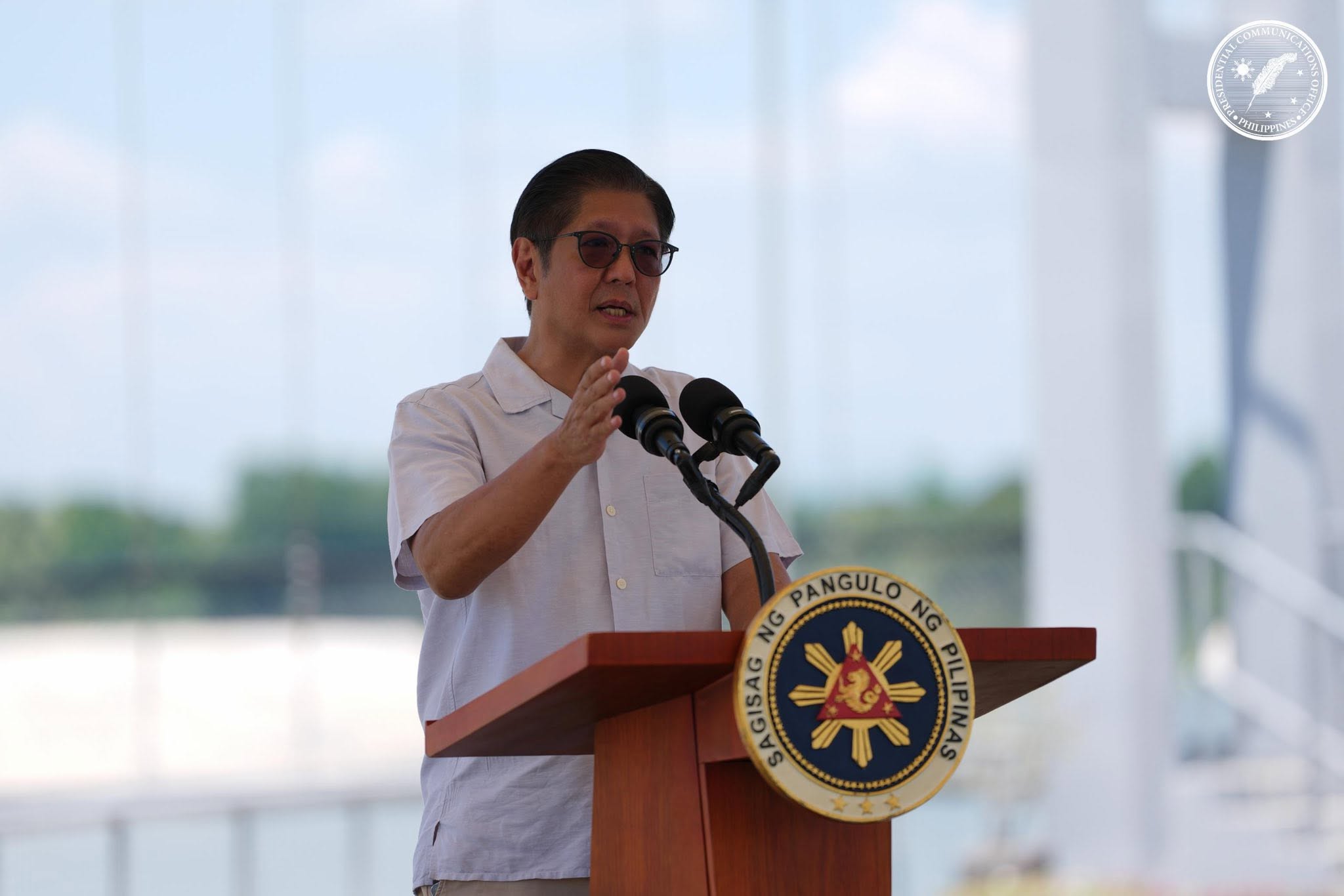

President Ferdinand Marcos Jr. on Friday, June 26, unveiled a digital tool designed to let ordinary citizens follow the trail of public money, declaring that no Filipino should be shut out of understanding how the government spends.

The platform, called the Centralized Open Monitoring Platform for Appropriations and Spending Statistics (COMPASS), falls under the Department of Budget and Management and gives the public a way to monitor the flow and use of state funds.
For Marcos, accessibility is the whole point. He argued that the technical density of fiscal documents should never become a barrier for an interested citizen. “We need to make government budget and spending easily accessible and understandable for any Filipino who has any interest whatsoever in finding out where their money is going,” he said, noting that “many of our citizens see government budgets as complex, inaccessible, and removed from their daily lives.” That gap, he insisted, “should not be the case.”
The President tied the effort directly to public confidence in government, saying transparency has to be something people can actually perceive. “Kung nais natin mapanumbalik ang tiwala ng taumbayan, dapat malinaw, bukas at nakikita ang ating ginagawa (If we want to restore the people’s trust, our actions must be clear, transparent, and visible),” he said.

He went further, framing accountability as meaningless without tangible results. “Hindi sapat na kumpleto at tama ang ating mga papel. Kailangan nararamdaman din ang budget ng taumbayan. Kailangang nakikita ng bawat Pilipino na tayo ay responsable dahil walang silbi ang pananagutan kung hindi ito isinasabuhay (It is not enough for our documents to be complete and accurate. The people must also feel the impact of the national budget. Every Filipino must see that we are acting responsibly, because accountability is meaningless unless it is put into practice),” Marcos said.
Beyond the launch, the event also served as the venue for Marcos to back the Philippines Public Financial Management (PFM) Reforms Roadmap 2024-2028 Midterm Update. The revised roadmap trims the original 41 reform interventions down to 18 priority measures, consisting of 14 mission-critical reforms and four quick wins, with all 18 slated for completion by 2028. The 23 remaining long-term items will move forward as institutional capacity, funding, and backing from development partners allow.
Marcos cast the often-technical work of financial management in distinctly human terms. “It determines whether schools are built on time, whether hospitals are equipped, whether farmers and fisherfolk are supported, whether infrastructure projects are completed efficiently, and whether assistance reaches its intended beneficiaries,” he said, describing the roadmap as the structure that ensures “every peso is carefully spent and accounted for.”
Alongside the call for transparency, the President laid out expectations for the bureaucracy itself, directing every department to match its spending to national priorities and to tighten procurement, reporting, and implementation. Each office, he said, “must be prepared to show where the funds went, and what they have achieved in improving the lives of every Filipino family.”
