



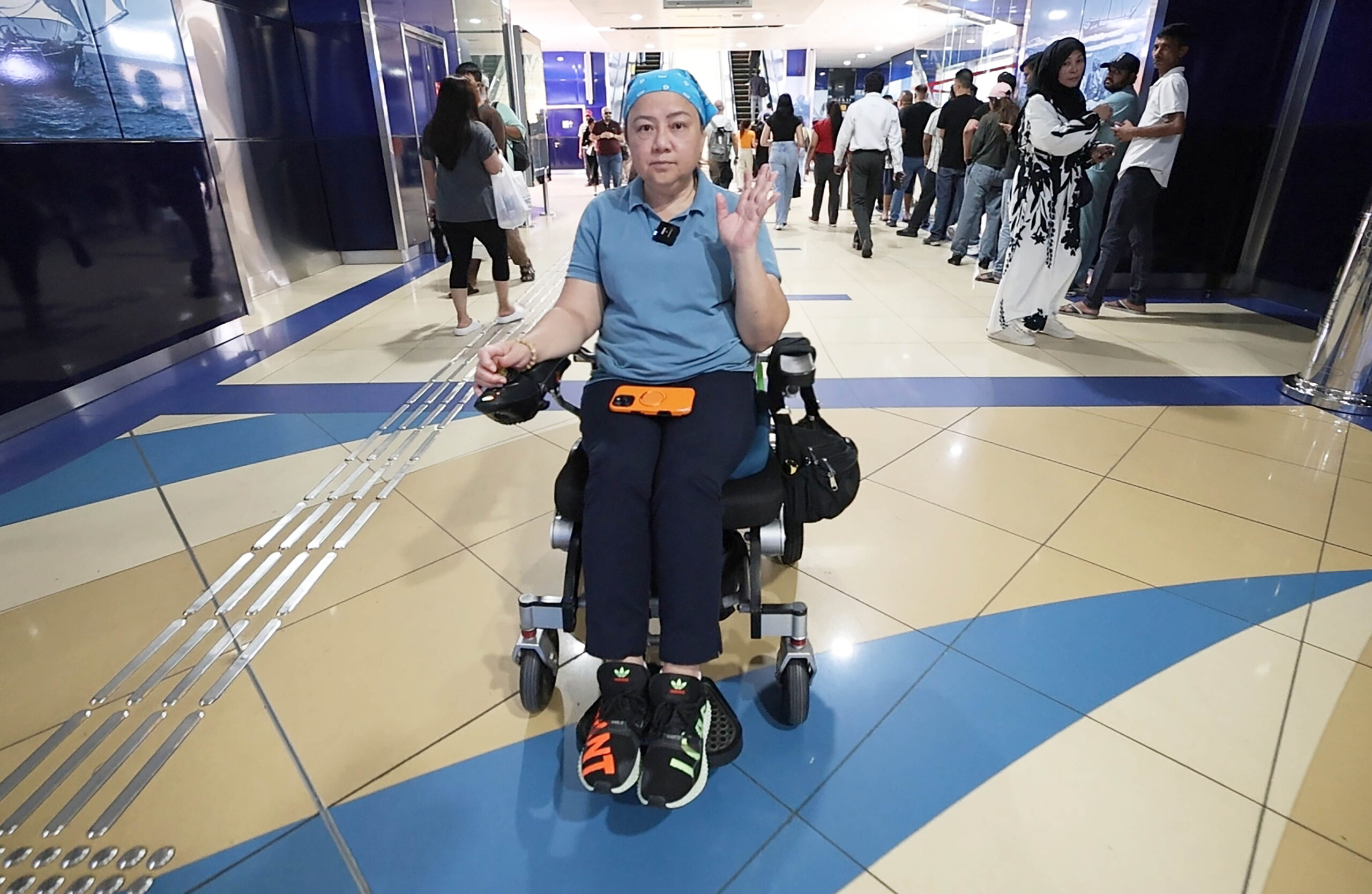

A wheelchair user’s journey from Al Furjan to Burjuman and Al Jadaf shows how ramps, lifts, clean stations, and thoughtful Metro staff turn accessibility into everyday freedom.

At Al Furjan Metro Station, my journey began with something simple: a ramp.
Not a grand gesture. Not a dramatic entrance. Just a ramp, a lift, and a clear path forward. But for a wheelchair user, simple things can decide the mood of an entire journey.
For many passengers, the Metro is routine. They tap their Nol card, follow the signs, wait for the train, and think about the day ahead. For me, and for many People of Determination, every journey begins with questions before it begins with movement.
Will the lift be working? Will the path be clear? Will there be enough space inside the train? Can I change lines without feeling lost? Will I arrive with the same ease and dignity as everyone else?
At Al Furjan Metro Station, the first answer came quietly.
Yes.
There was a ramp. There was a lift. There was a way to reach the concourse without feeling like I had to search for a hidden route or wait for someone to decide where I should go. The route was visible, and that visibility matters. It tells you that you were thought of before you arrived.
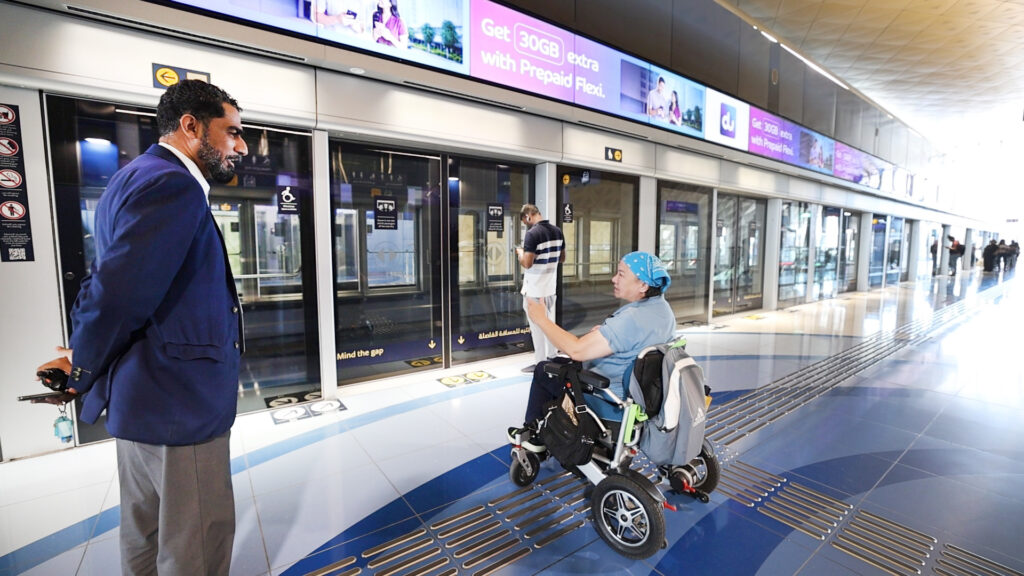
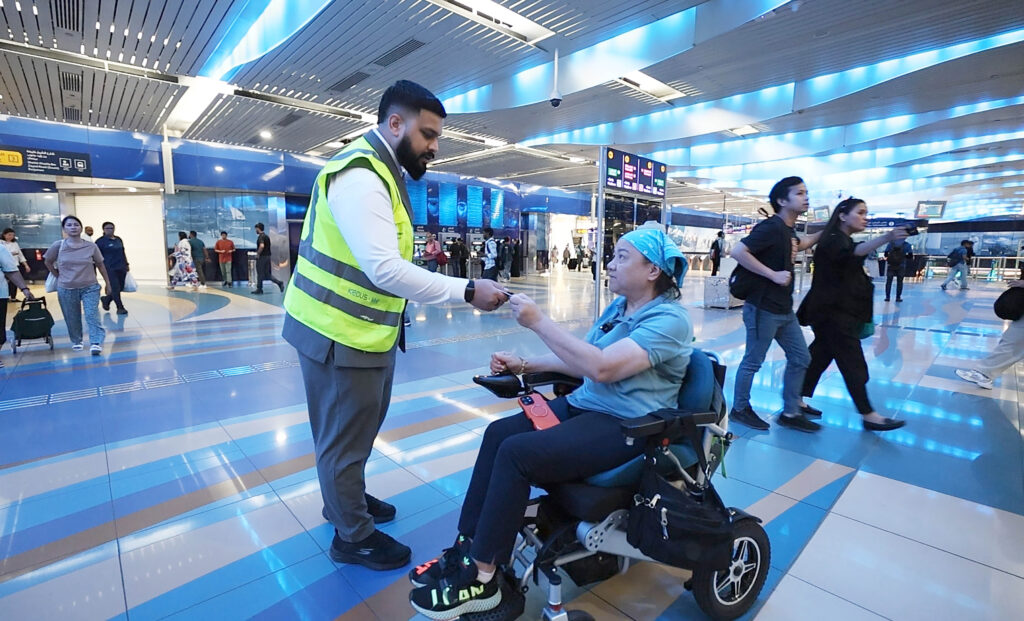
An RTA staff member assisted me until I boarded the train. The help was calm, respectful, and natural. It did not feel like a rescue. It felt like service. There is a difference.
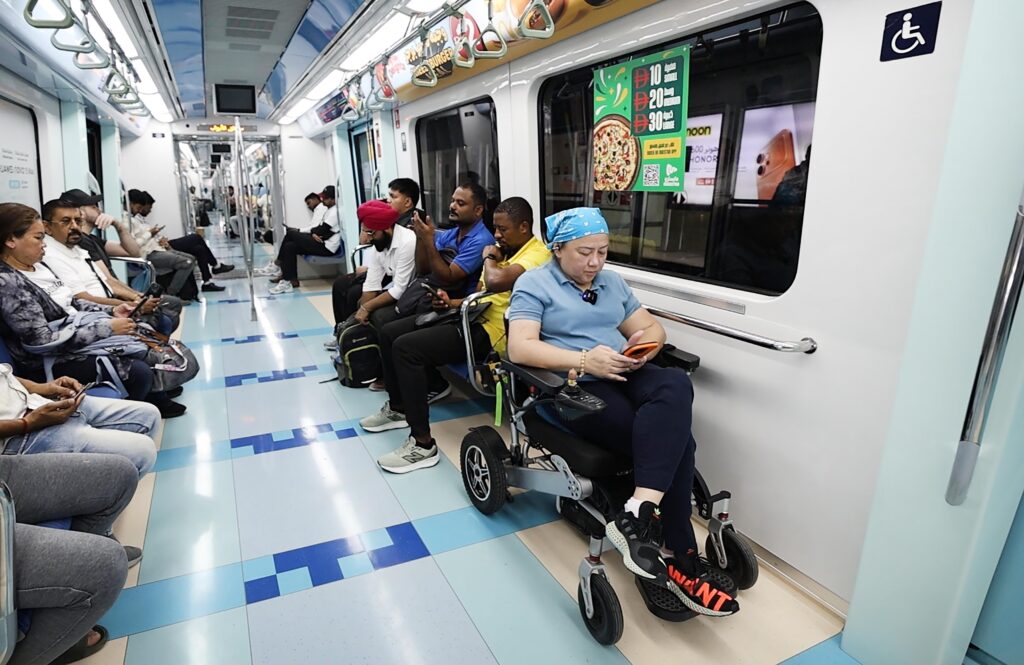
When the train arrived, the doors opened, and I moved inside to find the designated space for People of Determination. To some passengers, it may look like only a marked area inside a train car. To me, it felt like breathing room.
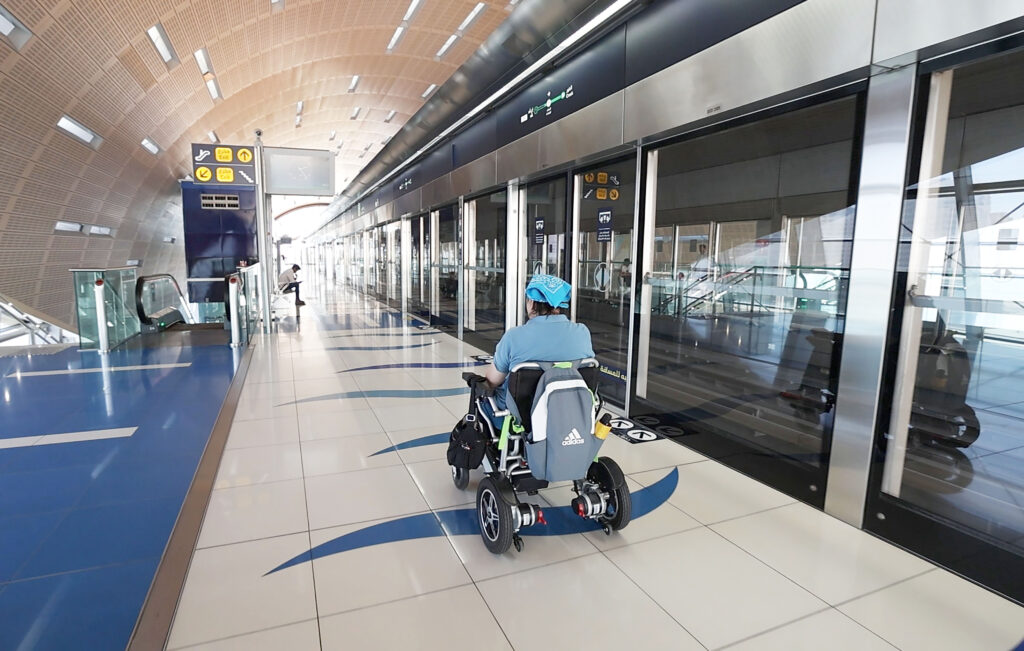
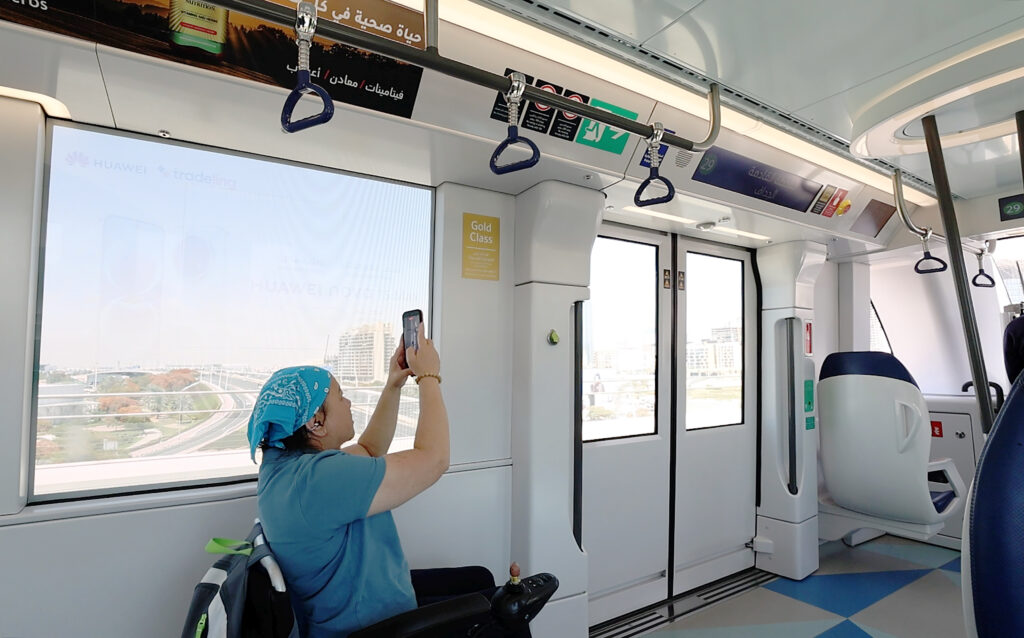
In a busy train, space becomes more than space. It becomes confidence. It means I do not have to worry about squeezing into a corner, blocking a pathway, or silently hoping that other passengers will adjust around me. The space is already there. It does not ask me to apologise for existing in the same public space as everyone else.
The train was clean. The station was clean. Around me was the familiar rhythm of Dubai Metro: passengers standing, sitting, checking their phones, looking out through the windows, moving quietly from one part of the city to another.
And for a moment, I was not thinking too much about access.
I was simply travelling.
That, perhaps, is what real accessibility should feel like. Not special. Not complicated. Just possible.
From Al Furjan Metro Station, I travelled to Burjuman Metro Station because I wanted to experience changing from the Red Line to the Green Line. A direct journey is one thing. A transfer is another test completely.
Burjuman Metro Station has its own energy. It is busy, layered, and always moving. People cross from one direction to another with the certainty of those who have done it many times before. In a station like that, it is easy to feel swallowed by the rush.
But the signs were there. The lifts were there. The path was there.
And again, the staff were there.
They guided me without making me feel dependent. They assisted without making me feel different. That is important to say, because independence is often misunderstood. For People of Determination, independence does not always mean doing everything alone. Sometimes independence means the system works well enough that you can move through it with confidence. Sometimes it means help is available without turning you into a spectacle.

At Burjuman Metro Station, I changed lines not as an exception, but as a passenger.
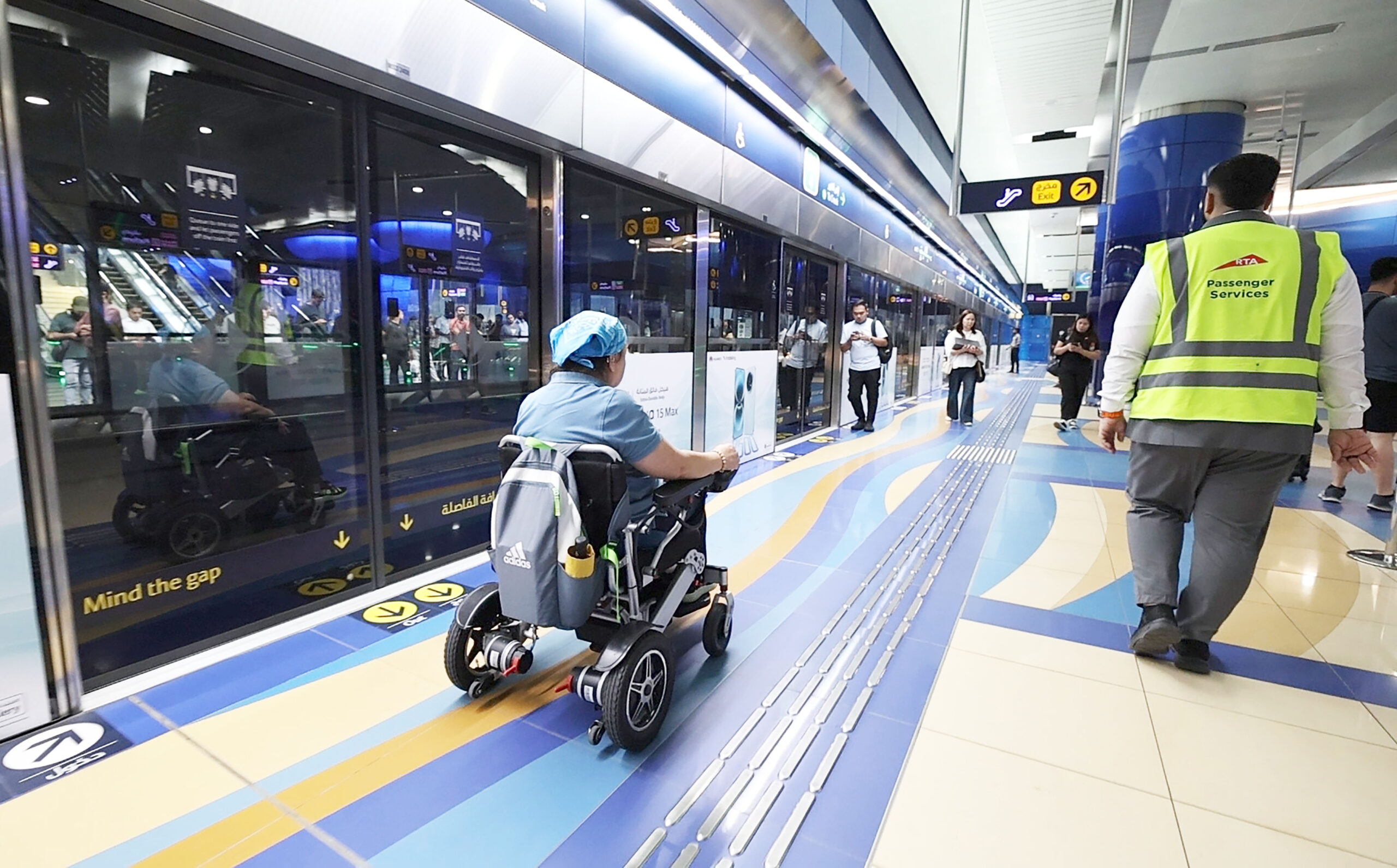
As I moved through the station, I noticed the textured strips on the floor. These are known as tactile paving, designed to guide visually impaired passengers. They are easy to overlook if you do not need them, but once you notice them, they become a quiet reminder of thoughtful design.
Accessibility is not only about wheelchairs. It is about different bodies, different needs, and different ways of reading a city.
Some people read signs. Some follow sounds. Some feel the path beneath them. Some look for ramps, lifts, and enough space to turn safely.
A truly accessible city understands all of them.
From the Red Line, I continued onto the Green Line and made my way to Al Jadaf Metro Station. After the movement of Burjuman, Al Jadaf felt quieter. Less crowded. Easier to observe. The pace changed, and with it, I noticed the details more clearly.
The staff gave their attention. The station felt clean and organised. The train cars were well kept. The signs were visible. Nothing felt neglected. For a wheelchair user, these details are not small. A clean platform, a working lift, a clear direction, and a staff member who knows what to do can turn a journey from stressful to smooth.
I also paid attention to the restrooms for People of Determination. A journey does not end when you board the train. It continues in the lift you need to find, the sign you need to trust, the restroom you hope will be usable, and the route you need to take back. Clean and dedicated facilities matter because they allow people to travel with less worry and more dignity.
By the time I reached Al Jadaf Metro Station, I realised the journey had become more than a test of transport. It had become a test of belonging.
Could I move through the city without feeling like an interruption? Could I transfer lines without fear? Could I rely on the system and still feel independent?
Again and again, the answer was yes.
What stayed with me most was not only the ramps, lifts, signs, tactile paving, dedicated spaces, clean stations, and clean train cars. It was the people.
The men and women of the Metro do more than help passengers reach their destinations safely. They notice. They guide. They make the journey easier without making the person feel smaller. They understand, perhaps in ways they do not always say, that public transport is not only about moving trains. It is about moving lives.
For passengers like me, their work means something personal. It means the city becomes less intimidating. It means distance feels less heavy. It means the question changes from “Can I go?” to “Where shall I go next?”
That is the power of accessibility when it is built with both structure and humanity.
For others, this may be just another Metro ride across Dubai.
For me, it was a reminder that independence can sound like sliding doors, feel like a smooth platform beneath my wheels, and appear in the simple kindness of someone in uniform pointing the way.
I took the Metro.
And somewhere between Al Furjan, Burjuman, and Al Jadaf, the city did not only feel bigger. It felt within reach.
